Hydroquinone
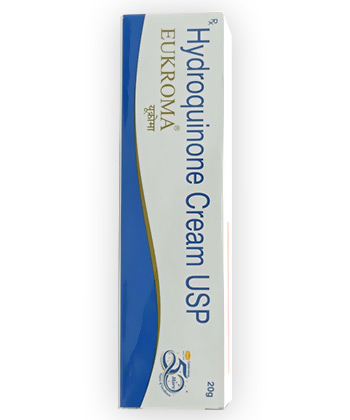
Hydroquinone
- Hydroquinone creams may be available from pharmacies and online retailers in Canada, but higher strengths are generally prescription-only; lower-strength products may be sold without a prescription depending on local regulations and product status.
- Hydroquinone is used to treat melasma, hyperpigmentation, lentigines, and post-inflammatory dark spots. It works by inhibiting tyrosinase, an enzyme involved in melanin production, which helps reduce skin pigment over time.
- The usual dose is a thin layer of 2% to 4% cream applied to the affected area once or twice daily, as directed. Treatment is typically limited to a few months and should be reviewed by a healthcare professional.
- The form of administration is topical use only, available mainly as a cream, and less commonly as a gel or lotion. It should be applied to clean, intact skin and kept away from the eyes and mucous membranes.
- Hydroquinone usually starts to show visible results gradually over several weeks, often around 4 to 8 weeks after regular use.
- The duration of action depends on continued use; treatment courses are usually 2 to 4 months, and some conditions may require up to 6 months under medical supervision.
- Alcohol does not have a direct known interaction with topical hydroquinone, but excessive alcohol use may worsen skin healing and irritation; follow your clinician’s advice if you are using other skin treatments.
- The most common side effects are skin redness, mild burning or stinging, dryness, and peeling. In some cases, irritation or allergic contact dermatitis may occur.
- Would you like to try hydroquinone without a prescription?
Basic Hydroquinone Information
- INN (International Nonproprietary Name): Hydroquinone
- Brand names available in Canada (English): Eldoquin, Lustra, Melanex, Melquin
- ATC Code: D11AX11
- Forms & dosages: Cream 2%, 4%, 5%; gel 2%, 4%; lotion 2%, 4%; combination products with tretinoin, corticosteroids, or sunscreen
- Manufacturers in Canada (English): Valeant, Brinton, Obagi
- Registration status in Canada (English): Prescription status can vary by concentration and provincial access; 2% is generally easier to access than 4% where permitted
- OTC / Rx classification: Rx in most regulated markets for 2% to 4% and higher concentrations; OTC for ≤2% in some regions
Availability And Price Landscape
Major National Pharmacy Chains
Looking for hydroquinone cream in Canada usually starts with a pharmacy check, because stock can change by province and by strength.
Chains such as Shoppers Drug Mart, Rexall, London Drugs, and Jean Coutu may carry it, but hydroquinone 4 percent is often pharmacist-controlled or special-order only, while 2 percent can be easier to source where local rules allow it.
A pharmacist consultation is common before dispensing prescription hydroquinone, especially if the product is being used for melasma or another pigmentation concern.
In practice, a patient asking for a skin lightening cream HQ 4 percent may be told to bring a prescription or to speak with the pharmacist about provincial requirements and safer use.
Online Pharmacy Trends In Canada
Licensed Canadian online pharmacies usually verify prescriptions, list DIN information, and provide clear labelling, which matters when you buy hydroquinone ointment online.
Marketplace-style sellers can be harder to verify, and cross-border US ordering may look simple but creates real problems with customs, returns, and product authenticity.
For any prescription hydroquinone product, DIN verification helps confirm that the item is a legitimate Canadian drug rather than an unapproved import.
In our online pharmacy, hydroquinone is available without a prescription, with discreet delivery to Canada in 5-14 days.
Price Ranges By Package Size
| Package Size | Typical Global Tube Size | Typical Price Range |
|---|---|---|
| Small tube | 15 g to 20 g | Usually lower end of the market |
| Standard tube | 30 g | Mid-range pricing |
| Large tube | 45 g to 60 g | Higher total cost, often better value per gram |
Globally, hydroquinone cream is sold in 2 percent, 4 percent, and 5 percent strengths, but Canadian pricing can differ by brand, province, and whether private insurance covers the medication.
Private coverage may reduce out-of-pocket costs, especially for patients using hydroquinone 4 percent under clinician supervision.
Canadian Patient Insights And Satisfaction Levels
People discussing topical hydroquinone on Reddit Canada, HealthBoards, and AskDocs-style forums usually focus on three things: how fast it works, whether the skin gets irritated, and how hard it is to access.
Some patients describe visible fading in melasma or post-inflammatory hyperpigmentation within weeks, while others say the first sign is dryness or stinging before any improvement appears.
In community health centre settings, it is common to hear frustration about cost or availability, then see patients switch to another hyperpigmentation cream when hydroquinone is not stocked.
- What patients like: lighter dark patches, clearer results for melasma treatment, and a familiar pharmacy option.
- What patients dislike: redness, peeling, access barriers, and worries about long-term use or stigma around “skin bleaching”.
Product Overview And Brand Variants
INN And Brand Names Used In Canada
The INN is hydroquinone, and the most familiar global brand names include Eldoquin, Lustra, Melanex, and Melquin.
Canadian package naming can vary by manufacturer, and some products are now harder to source than they were a few years ago.
Hydroquinone, hydroquinone 4 percent, and hydroquinone gel may appear under different labels depending on the supply chain.
- INN
- Hydroquinone.
- DIN
- Drug Identification Number used in Canada for product traceability.
- Brand name
- Marketed name such as Eldoquin.
- Strength
- Commonly 2 percent, 4 percent, or 5 percent.
Legal Classification Under Health Canada
Hydroquinone is regulated, and approval status can change by formulation and concentration.
In Canadian pharmacy practice, prescription hydroquinone is usually handled more cautiously than lower-strength products, and pharmacists may verify the indication before dispensing.
That is why one store may stock a hydroquinone cream while another only offers special ordering or pharmacist review.
Indications In Local Canadian Medical Practice
Approved Uses In A DIN Context
In Canadian practice, hydroquinone is mainly used for pigmentation concerns such as melasma, lentigines, and post-inflammatory hyperpigmentation.
Clinicians often pair treatment with sunscreen and trigger avoidance, because topical hydroquinone works best when the skin is protected from UV exposure.
For a patient with stubborn facial patches, the usual discussion is not just “which cream,” but also “what is causing the pigment and how can it be kept from coming back”.
Off-Label Patterns In Canadian Healthcare
Dermatology-led use is common for resistant hyperpigmentation, often in a short course rather than open-ended treatment.
Family physicians may prescribe for straightforward cases, while pharmacy counselling helps with application technique and safety.
| Indication | Typical Strength | Usual Duration |
|---|---|---|
| Melasma | 2 percent to 4 percent | 2 to 4 months, then review |
| Lentigines and age spots | 2 percent to 4 percent | Up to 3 months |
| Post-inflammatory hyperpigmentation | 2 percent to 4 percent | 2 to 6 months with reassessment |
How It Works In The Body
Layman’s Explanation
Hydroquinone reduces pigment production in targeted skin areas, which helps dark patches fade over time.
It is for topical use only, and it works best when combined with sun protection, since new pigment can form quickly after sun exposure.
That is why a patient may see improvement on the cheeks but little progress if the sunscreen step is skipped.
Clinical Detail From Health Canada-Style Resources
Hydroquinone is a phenol derivative, also described as benzene-1,4-diol, with a benzene ring and two hydroxyl groups.
Its dermatologic action is classified under ATC D11AX11.
Melanin Pathway Inhibition
Topical hydroquinone → reduced pigment formation in treated skin → gradual fading of hyperpigmentation
Prolonged or indiscriminate use is discouraged because of safety concerns, including chronic pigment changes.
Dosage And Administration
Standard Regimens Per Canadian Guidelines
Most regimens use 2 percent to 4 percent cream in a thin layer once or twice daily.
Lentigines are often treated once daily, while melasma and post-inflammatory hyperpigmentation may need one to two applications daily for a limited course.
Many clinicians prefer the shortest effective course, because the goal is pigment control, not indefinite use.
| Patient Group | Approach | Notes |
|---|---|---|
| Children | Not established under 12 years unless specialist-directed | Use only with medical advice |
| Older adults | Standard dosing | Watch for skin sensitivity |
| Liver or kidney impairment | No formal data | Caution advised |
How To Apply It
- Clean and dry the affected area.
- Apply a thin layer only to the dark patches.
- Avoid the eyes and mucous membranes.
- Do not use on broken, irritated, or sunburned skin.
- Use SPF 30+ every day.
If a dose is missed, apply it when remembered unless it is almost time for the next one, and do not double apply.
Contraindications And Side Effects
Common Side Effects
Most side effects are mild and include redness, burning or stinging, dryness, mild peeling, and temporary lightening of the treated skin.
Irritation is more likely if the cream is overused or placed on sensitive skin.
Rare But Serious Effects
Less common reactions include allergic contact dermatitis, irritant dermatitis, nail discoloration, and ochronosis with long-term or high-strength use.
Eye exposure can be harmful, and ingestion or large-surface exposure needs urgent medical help.
Use during pregnancy or breastfeeding should be avoided unless a specialist specifically advises otherwise, because controlled safety data are limited.
| Mild Effects | Serious Effects |
|---|---|
| Redness, mild burning, dryness, peeling | Allergic contact dermatitis, irritant dermatitis, nail discoloration, ochronosis |
Comparable Medicines In Canada
Alternatives Table
| Option | Typical Access | Main Role |
|---|---|---|
| Tretinoin | Prescription | Often combined with pigment therapy |
| Azelaic acid | Prescription or OTC depending on product | Gentler pigment support |
| Kojic acid | Often OTC | Cosmetic brightening |
| Arbutin creams | Often OTC | Derivative-based brightening |
| Corticosteroid-containing depigmenting creams | Prescription | Used in combination products |
| Tranexamic acid | Prescription | Melasma treatment in selected patients |
Hydroquinone has the strongest pigment-lightening reputation, but it also brings more irritation and safety scrutiny than some alternatives.
Gentler options may be easier to access, but they often work more slowly.
Current Research And Trends
Major Studies 2022 To 2025
Recent hydroquinone research has focused on short-course use, combination therapy, and ways to reduce risk while preserving benefit.
Triple combination cream remains popular in some regions, although Canadian use is usually more conservative and supervised.
Long-term safety is still debated, especially where concentration limits and prolonged use are concerned.
| Trend | What It Means |
|---|---|
| Short-course use | Use the lowest effective duration |
| Combination therapy | Hydroquinone may be paired with other agents |
| Risk reduction | Less prolonged exposure, more monitoring |
Common Patient Questions In Canada
Practical FAQ Topics
How long until it works? Many people notice change within weeks, but full results often take longer and depend on consistent use.
Can I use it with SPF? Yes, and daily sunscreen is essential during treatment.
Is it safe during pregnancy? Specialist guidance is recommended, and many clinicians avoid it unless the benefit clearly outweighs the risk.
Why did my pharmacist ask for a prescription? Canadian access depends on the product strength, indication, and provincial rules.
Is a US product better than a Canadian one? Not necessarily; Canadian labelling, DIN verification, and pharmacist counselling are often the safer path.
Regulatory Status
Health Canada Approval Process
Health Canada reviews topical products based on formulation, concentration, and therapeutic claim, which is why not every hydroquinone product is treated the same way.
Pharmacists often verify the indication and strength before dispensing, especially when the request is for hydroquinone cream 4 percent or another higher-strength product.
That distinction matters because a product may be approved in one form and not another, even when the active ingredient is the same.
DIN Number Relevance
A DIN is the Drug Identification Number used in Canada for authenticity, traceability, and product lookup.
It helps distinguish a legitimate pharmacy item from a product of unclear origin.
Coverage also varies across Ontario Drug Benefit, BC PharmaCare, RAMQ in Quebec, and private insurance plans.
Cross-border US sourcing may seem cheaper, but Canadian compliance and returns are different, and the product may not match Canadian labelling.
- Approved
- The product has met regulatory review for its market.
- DIN
- The Canadian drug identifier used for traceability.
- Pharmacy supply
- Stocked, ordered, or dispensed through licensed channels.
Visual Recommendations
Infographic Ideas For Canadian Context
A clear infographic can show how hydroquinone works, compare 2 percent versus 4 percent strengths, and include a pharmacy purchase checklist.
A side-by-side visual of in-store versus online buying works well, especially with a DIN check reminder.
Adding storage icons for Canadian homes is also useful, since temperature swings matter during winter transport and summer heat.
Buying And Storage Advice
In-Store Versus Online Canadian Purchase Tips
Licensed Canadian pharmacies are the safest place to compare hydroquinone options, check pricing, and confirm pharmacist advice.
Shoppers Drug Mart, Rexall, London Drugs, and Jean Coutu may have different stock patterns, so price comparison is worth doing before ordering.
Cross-border US websites can create shipping delays and non-Canadian labelling problems, which is why local verification matters so much for hydroquinone prescription products.
Proper Storage With Canadian Climate Considerations
Store hydroquinone below 25°C, protect it from light and moisture, do not freeze it, and keep it in the original tightly sealed container.
Winter mailboxes, hot cars in summer, and humid bathrooms are all poor storage spots.
| Storage Tip | Why It Matters |
|---|---|
| Keep below 25°C | Helps maintain product stability |
| Protect from light and moisture | Reduces degradation risk |
| Do not freeze | Prevents texture and stability problems |
Guidelines For Proper Use
Canadian Doctor And Pharmacist Advice Style
- Use only if the skin area is intact and not sunburned.
- Apply a thin layer to the dark patch only.
- Do not spread it onto normal skin unless directed.
- Wear sunscreen every day.
- Stop and seek advice if severe irritation, swelling, blistering, or eye exposure occurs.
- Review treatment after a few months to check progress and safety.
Hydroquinone should not be used indefinitely, because repeated or prolonged use can increase the risk of exogenous ochronosis and other chronic side effects.
If the skin is not improving, or if irritation is getting worse, it is time for a pharmacist or prescriber to reassess the plan rather than simply continuing the same cream.
Delivery Across Canada (English)
| City | Region | Delivery time |
|---|---|---|
| Toronto | Ontario | 5-7 days |
| Ottawa | Ontario | 5-7 days |
| Mississauga | Ontario | 5-7 days |
| Vancouver | British Columbia | 5-7 days |
| Victoria | British Columbia | 5-7 days |
| Calgary | Alberta | 5-7 days |
| Edmonton | Alberta | 5-7 days |
| Winnipeg | Manitoba | 5-7 days |
| Quebec City | Quebec | 5-7 days |
| Montreal | Quebec | 5-7 days |
| Halifax | Nova Scotia | 5-7 days |
| Saskatoon | Saskatchewan | 5-9 days |
| Regina | Saskatchewan | 5-9 days |
| St. John's | Newfoundland and Labrador | 5-9 days |
| Charlottetown | Prince Edward Island | 5-9 days |