
Protopic
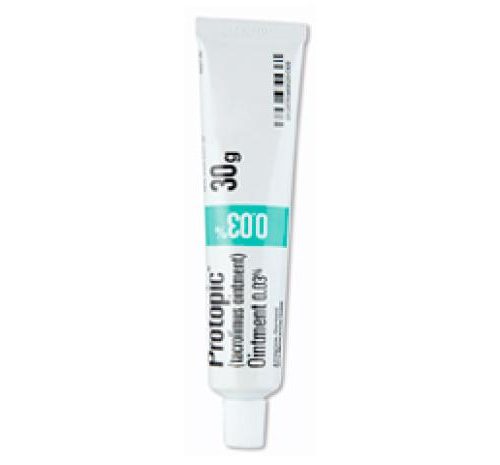
Protopic
- Protopic is a prescription-only medicine in virtually all markets and is supplied via pharmacies and licensed e-pharmacies; some online sellers may list it without requiring a prescription but that is not legal or recommended—always follow local regulations and obtain it with a valid prescription.
- Protopic (tacrolimus ointment) is used to treat moderate-to-severe atopic dermatitis (eczema); it is a topical calcineurin inhibitor that reduces T‑cell activation and cytokine release, decreasing skin inflammation.
- Usual dosage: apply a thin layer to affected areas twice daily. Adults may use 0.03% or 0.1% (0.1% generally for ≥16 years); children 2–15 years use 0.03% only; continue until lesions clear; maintenance can be once or twice weekly to prevent relapses.
- Form of administration: topical ointment (commonly 0.03% and 0.1% in tubes, e.g., 30 g or 60 g).
- Onset time: many patients notice symptom improvement within days (itch relief can occur within 24–48 hours for some), with clearer skin often seen within 1–3 weeks.
- Duration of action: effects are local and persist while treatment continues; maintenance once or twice weekly can reduce recurrences; long-term use has been studied in selected patients for up to four years.
- Alcohol warning: avoid applying alcohol-containing products to treated skin and be aware that some people report flushing or sensitivity with alcohol after application; there is no major systemic alcohol interaction but avoid excessive alcohol on treated areas and minimise UV exposure.
- The most common side effect is transient burning or stinging at the application site; itching, erythema and skin tingling are also common.
- Would you like to try “protopic” without a prescription?
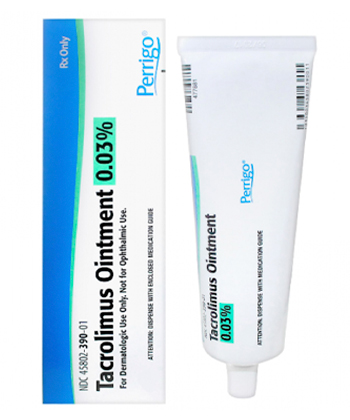
Basic Protopic Information
- INN (International Nonproprietary Name): Tacrolimus
- Brand Names Available In Canada (English): Protopic (Astellas) is the original topical tacrolimus brand referenced internationally; generic topical tacrolimus may be available under manufacturer names depending on distributor contracts and approvals (brands seen internationally include Tacrolimus Sandoz, Talimus).
- ATC Code: D11AH01 – Tacrolimus (Topical Calcineurin Inhibitors)
- Forms & Dosages: Ointment 0.03% (children ≥2 years and adults) and 0.1% (adults and adolescents ≥16 years); common tube sizes include 30 g and 60 g depending on market.
- Manufacturers In Canada (English): Astellas Pharma is the original manufacturer listed in international sources; generic suppliers vary by market and include Sandoz and several international manufacturers, with local availability depending on distributor agreements (not specified as exclusive Canadian manufacturers in the source data).
- Registration Status In Canada (English): Not specified in the provided data for a Canada-specific market authorisation; internationally, tacrolimus topical products are prescription-only and registered in regions such as the USA (FDA) and EU (EMA).
- OTC / Rx Classification: Prescription Only (Rx) — tacrolimus topical ointment is classified as Rx in virtually all referenced markets.
Availability & Price Landscape
Major National Pharmacy Chains (Shoppers Drug Mart, Rexall, London Drugs)
- Protopic (tacrolimus ointment 0.03% and 0.1%) is prescription-only in referenced regulatory sources; availability varies by chain and province.
- Shoppers Drug Mart, Rexall, London Drugs and Quebec’s Jean Coutu commonly dispense Protopic or will request equivalent generics from wholesalers when supplied.
- Some stores will order Astellas Protopic when available; others stock generic tacrolimus ointment when provided by Canadian distributors.
Online Pharmacy Trends In Canada (Including Provincial Restrictions)
- Licensed Canadian online pharmacies require a valid prescription before dispensing tacrolimus ointment.
- Cross-border purchasing from U.S. or international suppliers is common among Canadians seeking price savings, but importation rules and customs can restrict quantities and provincial drug plans may not reimburse these purchases.
- Telepharmacy and teledermatology services are increasingly used to obtain electronic prescriptions for pickup or shipping within provincial regulations.
Price Ranges By Package Size (With Provincial Differences)
| Province | 30 g Tube (Approx.) | 60 g Tube (Approx.) |
|---|---|---|
| Ontario | Higher in-store; online Canadian shops often 20–40% lower | Higher in-store; online Canadian shops often 20–40% lower |
| British Columbia | Varies by pharmacy mark-up; check BC PharmaCare rules | Varies by pharmacy mark-up; check BC PharmaCare rules |
| Quebec | Variable; Jean Coutu may stock brand or order generics | Variable; Jean Coutu may stock brand or order generics |
| Alberta | In-store typically above online Canadian price; provincial coverage requires DIN/special-authority | In-store typically above online Canadian price; provincial coverage requires DIN/special-authority |
| Manitoba | Prices vary; patient reports note 20–40% variance between sellers | Prices vary; patient reports note 20–40% variance between sellers |
Canadian Patient Insights & Satisfaction Levels
Forum And Review Platforms (Reddit Canada, HealthBoards, AskDocs)
- Patients post on Reddit communities such as r/CanadaPharmacy and r/eczema, and on HealthBoards and provincial Facebook support groups about access, cost and brand differences.
- Common discussion points include prescription delays, price differences between chains and online stores, and experiences comparing generic tacrolimus to Astellas Protopic.
- Local clinic and community health centre threads often describe dermatologists providing samples to help short-term access.
Reported Benefits And Challenges From Canadian Patients
"It helped my daughter’s eyelid eczema without thinning her skin like steroids did."
"Burned for a few nights but settled within a week; insurance required special-authority paperwork."
"Hard to get 0.1% for teens — pharmacist said strength/age limits affect supply."
Benefits frequently mentioned are steroid-free maintenance for delicate areas and reduced flare frequency compared with topical corticosteroids.
Challenges include transient burning or stinging on application, insurance denials requiring special-authority forms, and variable individual effectiveness.
Patients in colder provinces comment on the ointment feeling thicker in winter and remind others about storage below 25°C and avoiding freezing.
Product Overview & Brand Variants
INN And Brand Names Used In Canada
- INN
- Tacrolimus
- Brand Examples
- Protopic (Astellas) is the original topical brand; international generics include Tacrolimus Sandoz and Talimus.
Legal Classification Under Health Canada
| Form | Strength | DIN |
|---|---|---|
| Ointment | 0.03% | Not specified |
| Ointment | 0.1% | Not specified |
Topical tacrolimus is prescription-only according to market classifications in the provided data.
Indications In Local Canadian Medical Practice
Approved Uses (Health Canada DIN Context)
- Approved Indication
- Moderate-to-severe atopic dermatitis in patients aged ≥2 years who have not adequately responded to or are intolerant of conventional therapy (topical corticosteroids) — consistent with international labels referenced.
- Age/Strength Match
- 0.03% for children ≥2 years and adults; 0.1% for adults and adolescents ≥16 years as referenced in available product information.
Off-Label Patterns In Canadian Healthcare
- Maintenance prophylaxis with once- or twice-weekly application to previously affected areas is commonly used.
- Use on steroid-prone skin (face, neck, eyelids) is an accepted off-label pattern by clinicians seeking steroid-sparing options.
- Occasional off-label use as adjunct therapy for other inflammatory dermatoses (for example, in some cases of vitiligo or lichen sclerosus) is reported by dermatologists, with informed consent.
How It Works In The Body
Layman’s Explanation (Canadian Patient-Friendly Tone)
Tacrolimus ointment is a topical calcineurin inhibitor that reduces the skin’s immune reaction that drives eczema inflammation without causing steroid-related skin thinning.
The ointment is applied to affected areas where it calms local immune cells, lowering redness, itch and the chance of flares.
When used as directed, systemic absorption is minimal and most of the effect is local to the skin.
Clinical Detail From Health Canada Resources
- Mechanism
- Inhibits calcineurin in T-lymphocytes, preventing cytokine release and T-cell activation, which reduces inflammation.
- Onset
- Clinical trials referenced in product monographs show improvements for many patients within 1–3 weeks.
- Safety Notes
- Labelled cautions include local infections and a theoretical malignancy risk; local burning and stinging are common early effects.
Dosage & Administration
Standard Regimens Per Canadian Guidelines
| Patient Group | Strength | Frequency | Common Tube Sizes |
|---|---|---|---|
| Adults | 0.03% or 0.1% | Twice daily until clearing (often 1–3 weeks) | 30 g, 60 g |
| Children 2–15 yrs | 0.03% | Twice daily until clearing | 30 g |
| Elderly | 0.03% or 0.1% | Twice daily; individualise if skin is thin | 30 g, 60 g |
Adjustments By Patient Type (With Canadian Clinical Notes)
- Not approved for children under 2 years — safety and efficacy not established.
- No routine hepatic or renal dose adjustment for topical use, but exercise caution with very thin or damaged skin due to higher absorption risk.
- Avoid use in severely immunocompromised patients without specialist advice; discuss pregnancy and breastfeeding with prescriber.
Contraindications & Side Effects
Common (Health Canada-Approved List)
- Transient burning or stinging at the application site is very common.
- Itching, erythema and skin tingling are commonly reported and usually settle with continued use.
- Less commonly, folliculitis, acneiform eruptions and viral skin infections such as herpes simplex can occur.
Rare But Serious (With Canadian Pharmacovigilance Data)
| Contraindications | Precautions |
|---|---|
| Known hypersensitivity to tacrolimus or ointment excipients | History or family history of skin cancer — use with caution and monitor |
| Active skin infections (bacterial, viral, fungal) | Avoid in severely immunocompromised patients (e.g., post-transplant, uncontrolled HIV) |
Labelled warnings reference a theoretical increased malignancy risk, and Canadian adverse-event reporting is ongoing via regulatory vigilance systems.
Comparable Medicines In Canada
Alternatives Table (With DIN References)
| Medicine | Class | Typical Use | DIN | Strength/Forms |
|---|---|---|---|---|
| Elidel (pimecrolimus) | Topical Calcineurin Inhibitor | Mild-to-moderate atopic dermatitis | Not specified | Cream 1% |
| Topical Corticosteroids | Corticosteroid | First-line anti-inflammatory for flares | Varies by product | Multiple potencies and forms |
| Crisaborole (Eucrisa) | PDE4 Inhibitor | Mild-to-moderate atopic dermatitis | Not specified | Topical ointment/cream |
Pros And Cons List
- Tacrolimus pros: steroid-sparing, suited to sensitive areas like face and eyelids, useful for maintenance therapy.
- Tacrolimus cons: transient burning, prescription requirement, labelled cautions about immunosuppression and a theoretical cancer risk.
- Corticosteroids pros: fast anti-inflammatory effect; cons: risk of skin thinning with long-term or high-potency use.
- Pimecrolimus and crisaborole provide non-steroidal options with different formulations and tolerability profiles; choice depends on severity and patient preference.
Current Research & Trends
Major Canadian Or International Studies 2022–2025
Recent literature emphasises proactive maintenance regimens such as once- or twice-weekly tacrolimus application to previously affected sites to reduce relapses.
Long-term safety cohort reports indicate feasible multi-year management in selected patients under specialist follow-up.
Comparative tolerability studies contrast topical calcineurin inhibitors with pimecrolimus and topical PDE4 inhibitors, reporting similar benefit timelines and differing early irritation profiles.
Emerging Trends Relevant To Canadian Pharmacies
- Teledermatology is increasing prescriptions for topical agents and expanding access to specialist advice remotely.
- Growth in generic tacrolimus availability is affecting price dynamics and may change provincial formulary listings over time.
- Pharmacist-led counselling on steroid-sparing strategies, fingertip-unit dosing and storage advice is becoming a routine value-add in community practice.
Common Patient Questions In Canada
Top FAQs (Use-Case Focused)
- Can I get Protopic without seeing a dermatologist? No — a prescription is required, but family physicians, walk-in clinics and telemedicine providers can prescribe after assessment.
- Is it safe for facial use? Yes; tacrolimus is often recommended for sensitive areas such as the face and eyelids because it is steroid-free, though transient burning may occur.
- Will my provincial plan cover it? Coverage varies and often requires a DIN and special-authority approval from provincial formularies such as ODB, BC PharmaCare or RAMQ.
When To Contact Pharmacist Or Doctor
- Contact a pharmacist for counselling on application technique, fingertip-unit dosing and storage concerns.
- See a doctor if there is a severe local reaction, signs of skin infection, no improvement after 3–4 weeks, or if pregnant, breastfeeding or immunocompromised.
- Pharmacists can assist with special-authority paperwork for provincial reimbursement and can document dispensing details including DIN and indication.
Regulatory Status
Health Canada Approval Process
Health Canada assesses safety, efficacy and quality data submitted by a sponsor before granting market authorisation for medicinal products.
For topical tacrolimus products, the sponsor files clinical evidence and labelling; once approved the product is assigned a Drug Identification Number (DIN).
Any changes to indication, strength or formulation require regulatory submission and approval.
DIN Number Relevance
- DIN
- DINs uniquely identify marketed drugs in Canada and are required for provincial reimbursement claims and pharmacy dispensing records.
- Generic Substitution
- Generics have their own DINs and provincial substitution rules vary; confirm the DIN on product packaging or pharmacy invoice when checking coverage.
Visual Recommendations
Infographic Ideas For Canadian Context
- How To Apply Protopic — fingertip units and avoid mucous membranes.
- Which Strength For Which Age — clear chart for 0.03% vs 0.1%.
- Storage And Transport Tips For Canadian Seasons — don’t freeze, keep below 25°C, insulated shipping in winter.
- Provincial Coverage At A Glance — icons for ODB, PharmaCare, RAMQ with brief notes on special-authority requirements.
Product Page Imagery & Accessibility
Use a clear product shot of the ointment tube showing strength and tube size with accessible alt text.
Pharmacist-drawn diagrams for application technique and a 30–60 second counselling video improve patient understanding and adherence.
Buying & Storage Advice
In-Store Vs. Online Canadian Purchase Tips
- Always obtain tacrolimus ointment on a valid prescription from a licensed prescriber in Canada.
- In-store purchases allow face-to-face pharmacist counselling and immediate pickup; licensed provincial online pharmacies require prescriptions and can offer lower prices.
- Cross-border imports may save money but risk customs delays and are typically not reimbursed by provincial drug plans.
In our online pharmacy, protopic is available without a prescription, with discreet delivery to Canada (English) in 5-14 days.
Proper Storage With Canadian Climate Considerations
- Store below 25°C and do not freeze the tube.
- In winter, prevent tubes from freezing during mail delivery by choosing in-store pickup or insulated shipping options where available.
- In summer, avoid leaving tubes in hot cars and keep the cap tightly closed and protected from light.
Guidelines For Proper Use
Canadian Doctor/Pharmacist Advice Style
- Demonstrate fingertip-unit dosing and show a thin layer application to affected areas.
- Warn about transient burning and advise that it often decreases with continued use.
- Instruct to avoid mucous membranes, open wounds and occlusive dressings, and to document indication, strength and frequency on the dispensing label.
Practical Monitoring & Follow-Up
Recommend a clinical review at 2–4 weeks to assess response and tolerability and to consider a maintenance regimen if remission is achieved.
Escalate to dermatology when there is poor response, recurrent infections or diagnostic uncertainty.
Report adverse events to Health Canada via the standard vigilance channels and keep records to support formulary submissions where needed.
Delivery Across Canada (English)
| City | Region | Delivery Time |
|---|---|---|
| Toronto | Ontario | 5-7 days |
| Montreal | Quebec | 5-7 days |
| Vancouver | British Columbia | 5-7 days |
| Calgary | Alberta | 5-7 days |
| Edmonton | Alberta | 5-7 days |
| Ottawa | Ontario | 5-7 days |
| Winnipeg | Manitoba | 5-7 days |
| Halifax | Nova Scotia | 5-9 days |
| Victoria | British Columbia | 5-9 days |
| Regina | Saskatchewan | 5-9 days |
| Saskatoon | Saskatchewan | 5-9 days |
| St. John's | Newfoundland and Labrador | 5-9 days |
| Charlottetown | Prince Edward Island | 5-9 days |
Final Notes For Patients And Pharmacists
Protopic (tacrolimus ointment) is a steroid-free, prescription topical therapy used for moderate-to-severe atopic dermatitis and is particularly useful on delicate skin areas where steroid atrophy is a concern.
Always confirm the product DIN and consult provincial formulary guidance when seeking coverage or special-authority approval.
Pharmacists should screen for contraindications such as active skin infection or severe immunosuppression and counsel patients about expected early burning, storage below 25°C and safe transport in Canadian seasons.
When in doubt about a patient’s response or safety, arrange follow-up in 2–4 weeks or refer to dermatology for specialist assessment.