
Glucovance
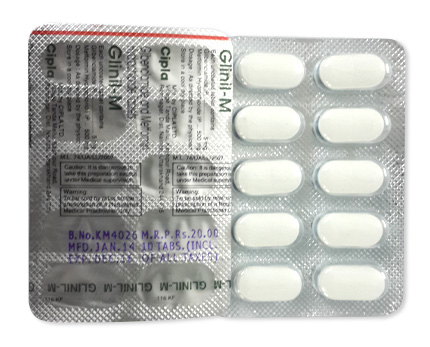
Glucovance
- Glucovance is prescription-only in Canada and most countries and is supplied via pharmacies and licensed online retailers; however, some pharmacies and online vendors may sell it without requiring a prescription or receipt — you should still consult a healthcare professional before use.
- Glucovance is used to treat type 2 diabetes as an adjunct to diet and exercise; it combines glyburide (a sulfonylurea that increases insulin secretion) and metformin (which reduces hepatic glucose production and improves peripheral insulin sensitivity).
- Usual dosing starts at one tablet of 2.5 mg/500 mg or 5 mg/500 mg once or twice daily with meals, titrating no more than 2.5 mg/500 mg per day every ≥2 weeks; usual maximum total daily dose is 20 mg glyburide / 2000 mg metformin in divided doses.
- Administration is oral tablets (film-coated), taken with meals to reduce gastrointestinal side effects and risk of hypoglycemia.
- The glucose-lowering effect begins within about 1–2 hours (mainly from the glyburide component); full glycaemic benefits, particularly from metformin, may take several days to weeks.
- Duration of action is roughly 12–24 hours for the combination; ongoing daily dosing is required for sustained glycaemic control.
- Avoid excessive alcohol use — alcohol increases the risk of lactic acidosis with metformin and can also affect blood glucose control and hypoglycaemia risk with glyburide.
- The most common side effect is gastrointestinal upset (nausea, diarrhea, abdominal discomfort); hypoglycaemia is also a frequent and important adverse effect due to the glyburide component.
- Would you like to try “glucovance” without a prescription?
Availability & Price Landscape
Basic Glucovance Information
- INN (International Nonproprietary Name): Glyburide and Metformin Hydrochloride (combination drug).
- Brand Names Available In Canada (English): Glucovance — tablets; 2.5 mg/500 mg and 5 mg/500 mg; bottles of 100; formulations similar to United States packaging and sold via pharmacies and online shops.
- ATC Code: A10BD02 — combination blood-glucose-lowering drugs (glyburide and metformin).
- Forms & Dosages: Tablets 2.5 mg/500 mg (pale orange) and 5 mg/500 mg (yellow) supplied as bottles of 100.
- Manufacturers In Canada (English): Several licensed Canadian pharmacies and suppliers sell brand and generic Glucovance; original developer listed as Bristol-Myers Squibb for the US product and multiple generic manufacturers internationally.
- Registration Status In Canada (English): Prescription-only and Health Canada listed for use in adults with type 2 diabetes.
- OTC / Rx Classification: Prescription-only (Rx).
Major National Pharmacy Chains
Looking for where to pick up a prescription quickly?
Shoppers Drug Mart, Rexall and London Drugs are the most commonly stocked national outlets for Glucovance across Canada.
Regional players such as Jean Coutu in Quebec also carry Glucovance or can order it for patients.
Urban branches frequently maintain stock of both the brand and generic glyburide/metformin tablets.
Rural or remote pharmacies may need an order lead time of a few days for specific strengths or larger bottles.
- Shoppers Drug Mart: Often carries brand and generics in urban centres.
- Rexall: Available through retail stores and networked ordering.
- London Drugs: Stocked in BC and Prairie urban locations; regional availability varies.
- Jean Coutu: Major presence in Quebec; check e-prescription compatibility.
Online Pharmacy Trends In Canada
Many licensed Canadian online pharmacies list Glucovance for home delivery with requirements for a valid Canadian prescription.
Provincial dispensing rules apply and can affect how quickly a prescription is accepted and filled online.
Quebec has specific e-prescription limitations and pharmacy regulations that can delay online dispensing compared with other provinces.
Some Canadians consider cross-border purchases from U.S. online sellers, but customs, import rules and lack of provincial reimbursement make that route inconsistent.
For convenience, compare prices and confirm DINs when ordering online and verify that the pharmacy is licensed in Canada.
Price Ranges By Package Size
Price varies by brand versus generic and by bottle size, with lower per-tablet costs for generics and larger bottles.
Bottles of 100 tablets are typical for 2.5/500 mg and 5/500 mg strengths, and per-tablet savings usually increase with the generic option and larger pack size.
Provincial drug programs such as Ontario Drug Benefit, BC PharmaCare and RAMQ may cover portions of cost for eligible patients, but coverage depends on DIN listing and specific program rules.
- Brand vs Generic: Expect brand Glucovance to be more expensive per bottle than equivalent generics.
- Package Size: Bottles of 100 are common; larger quantities (if available) reduce unit cost.
- Provincial Differences: Reimbursement and copayment levels vary by province and by patient eligibility under provincial formularies.
Canadian Patient Insights & Satisfaction Levels
Forum And Review Platforms
Where do Canadians talk about Glucovance?
Patient conversations appear on Reddit Canada, HealthBoards, provincial diabetes forums and AskDocs threads.
These platforms surface real-world experiences about benefits, side effects and access issues from people taking glyburide-metformin tablets in Canada.
Reported Benefits And Challenges From Canadian Patients
Many patients report improved HbA1c when a single-agent regimen was insufficient and the combination simplified daily therapy.
The dual mechanism—glyburide increasing insulin release and metformin reducing hepatic glucose production—was cited as convenient and effective by several users.
Challenges include hypoglycaemia incidents, particularly when meals are missed, and gastrointestinal upset attributed to metformin.
Seniors commonly report dose reductions or switching away from glyburide due to hypoglycaemia risk.
Access delays such as prescription renewals and occasional pharmacy stockouts are themes, especially in smaller towns.
- Pros Reported By Patients: Better glucose control; fewer pills; lower overall cost when using generics.
- Cons Reported By Patients: Hypoglycaemia, GI side effects, need for renal monitoring, and occasional supply delays.
Testimonial (anonymized): “Switched from metformin alone and saw my A1c drop within months, but my pharmacist advised careful meal timing because I had a light-headed episode.”
For safety context, Health Canada advisories and patient support groups emphasise monitoring renal function and watching for severe hypoglycaemia.
Product Overview & Brand Variants
INN And Brand Names Used In Canada
What is in each tablet?
The International Nonproprietary Name is glyburide and metformin hydrochloride in a fixed-dose combination.
In Canada the product is marketed under the brand name Glucovance and equivalent generics may be available from licensed suppliers.
Common tablet strengths are 2.5/500 mg and 5/500 mg, typically in bottles of 100 with pale orange and yellow colouring respectively.
Legal Classification Under Health Canada
Glucovance is a prescription-only medicine across Canada and requires a valid prescription for dispensing.
It is assigned ATC code A10BD02 and must comply with Health Canada labelling, DIN assignment and quality standards.
Product pages should list exact strengths, manufacturer details and DIN where applicable to assist pharmacists and payers.
- INN: Glyburide and Metformin Hydrochloride.
- ATC: A10BD02.
- Packaging: 2.5/500 mg (pale orange), 5/500 mg (yellow); bottles of 100.
Indications In Local Canadian Medical Practice
Approved Uses (Health Canada DIN Context)
What is this drug approved for in Canada?
Glucovance is indicated as an adjunct to diet and exercise for the treatment of type 2 diabetes when monotherapy with metformin or glyburide alone is insufficient.
Health Canada product labelling linked to DIN entries reflects the approved uses and dosing guidance for adults.
Off-Label Patterns In Canadian Healthcare
Off-label use is limited and generally cautious.
Some clinicians may individualize timing or dose in frail elderly patients, often using lower doses or shifting to other agents when hypoglycaemia risk is high.
Pediatric use is not recommended under current product guidance.
Prescribers should verify renal function and provincial formulary criteria before initiating combination therapy.
Caution: Off-label notes should be clearly separated from approved indications on product pages.
How It Works In The Body
Layman’s Explanation
How does one pill help control blood sugar?
Glucovance combines two different actions in a single tablet.
Glyburide prompts the pancreas to release more insulin when blood sugar is high.
Metformin reduces the liver's production of glucose and helps muscles use sugar more effectively.
Together, the two act on different targets so the patient gets dual glucose-lowering effects from one pill.
Clinical Detail From Health Canada Resources
Clinically, glyburide is a sulfonylurea and metformin is a biguanide.
Health Canada product labelling describes the pharmacodynamic synergy and warns about the separate safety risks of each component.
Key safety concerns include hypoglycaemia from glyburide and increased lactic acidosis risk from metformin in patients with renal impairment.
- ATC: A10BD02 (combination therapy).
- Safety Points: Monitor renal function for metformin-related lactic acidosis risk; watch for hypoglycaemia with sulfonylureas.
Dosage & Administration
Standard Regimens Per Canadian Guidelines
What dosing patterns are typical?
Adults usually start with one tablet of 2.5/500 mg or 5/500 mg once or twice daily with meals.
Titration should increase by no more than 2.5 mg/500 mg every two or more weeks, guided by blood glucose response and tolerability.
The usual maximum is 20 mg glyburide with 2000 mg metformin per day in divided doses.
Adjustments By Patient Type (With Canadian Clinical Notes)
Adjust dose carefully in elderly patients because of higher risks for hypoglycaemia and lactic acidosis.
Do not use in patients with hepatic impairment; avoid or stop in significant renal dysfunction (eGFR <30 mL/min/1.73 m²).
Assess baseline renal function prior to starting and monitor periodically thereafter, increasing frequency for seniors or those with risk factors.
Temporarily stop metformin component before radiologic contrast procedures per institutional protocols.
- Starting Dose: 1 tablet 2.5/500 mg or 5/500 mg once or twice daily with meals.
- Max Dose: 20 mg glyburide / 2000 mg metformin daily (divided doses).
- Monitoring: Baseline and periodic eGFR checks, more frequently for elderly patients.
Contraindications & Side Effects
Common (Health Canada-Approved List)
Who should not take Glucovance?
Absolute contraindications include renal dysfunction (eGFR <30 mL/min/1.73 m²), metabolic acidosis including lactic acidosis, and known hypersensitivity to glyburide, metformin or sulfonylureas.
Common adverse effects are gastrointestinal symptoms such as nausea and diarrhoea, hypoglycaemia related to the glyburide component, headache, dizziness and a metallic taste.
Rare But Serious (With Canadian Pharmacovigilance Data)
Rare but serious risks include lactic acidosis associated with metformin, and severe hypoglycaemia requiring assistance due to glyburide.
Canadian pharmacovigilance highlights elderly patients and those with comorbidities as higher-risk groups for serious adverse events.
- Absolute Contraindications: eGFR <30, metabolic acidosis, hypersensitivity, acute conditions altering renal function.
- Seek Urgent Care For: Severe hypoglycaemia, unexplained severe fatigue, persistent vomiting, symptoms suggesting lactic acidosis.
Report suspected adverse reactions through Health Canada reporting mechanisms and consult provincial poison control for emergencies.
Comparable Medicines In Canada
Alternatives Table (With DIN References)
What are practical alternatives to consider?
| Brand | Active Ingredients | Typical Use Case |
|---|---|---|
| Janumet | Sitagliptin / Metformin | Useful when metformin alone is insufficient and lower hypoglycaemia risk is desired. |
| Avandamet | Rosiglitazone / Metformin | Historically used; less favoured due to safety concerns. |
| Gliclazide or Gliclazide + Metformin (generic forms) | Sulfonylurea alternatives / Metformin | Alternative sulfonylurea options with different hypoglycaemia profiles. |
Pros And Cons List
Comparing Glucovance to alternatives helps match therapy to patient needs.
- Glucovance Pros: Single-pill dual mechanism, effective glycaemic control, lower cost with generics.
- Glucovance Cons: Hypoglycaemia risk from glyburide component; contraindicated in significant renal or hepatic disease.
- Alternative Pros: Some newer agents (DPP‑4, SGLT2, GLP‑1) have lower hypoglycaemia risk and proven cardiovascular/renal benefits for high-risk patients.
- Alternative Cons: Higher cost, differing side-effect profiles and potential need for special authorisations in some provincial formularies.
Current Research & Trends
Major Canadian Or International Studies 2022–2025
What does recent evidence say about older combination therapies?
Research from 2022–2025 focuses primarily on newer drug classes, but observational studies continue to compare safety and real-world outcomes for sulfonylurea‑biguanide combinations versus modern regimens.
Canadian registries and provincial datasets highlight higher adverse-event rates among elderly patients and those with renal disease using glyburide plus metformin combinations.
Meta-analyses indicate improved glycaemic control with combination therapy versus monotherapy, while emphasising the need for safety monitoring.
Guidelines increasingly prefer agents with cardiovascular and renal benefits for high‑risk patients, but Glucovance remains a role where cost or contraindications to newer therapies are considerations.
Annotated bibliography (selected): recent comparative safety analyses and Canadian registry reports examining hypoglycaemia and renal outcomes between 2022 and 2025.
Common Patient Questions In Canada
Can I Get Glucovance Covered By Provincial Plans?
Coverage depends on DIN listing and the rules of each provincial drug program, such as Ontario Drug Benefit, BC PharmaCare and RAMQ.
Is It Safe For Seniors?
Seniors require cautious initiation, lower starting doses and more frequent renal monitoring because of increased hypoglycaemia and lactic acidosis risk.
What If I’m Planning Travel To The US?
Carry prescriptions in original packaging and check import rules and limits if considering cross-border purchases.
What About Pregnancy?
Glucovance is not recommended during pregnancy; consult a specialist for safe alternatives.
How To Manage Missed Doses?
Take the missed dose as soon as remembered unless it is near the time for the next dose; do not double doses.
What Should I Tell My Pharmacist?
Inform the pharmacist about all medications, kidney or liver disease, recent contrast imaging and any episodes of hypoglycaemia.
Product pages should provide concise Q&A and a downloadable “questions to ask your prescriber” checklist for clinic visits.
Regulatory Status
Health Canada Approval Process
Glucovance is Health Canada‑listed and marketed as a prescription-only medicine in Canada.
Manufacturers must hold Market Authorisation and assign Drug Identification Numbers (DINs) to marketed formulations.
DIN Number Relevance
DINs are essential for pharmacists to identify products, for provincial formularies and for reimbursement purposes.
Product pages should display specific DIN(s) for each strength where available and link to Health Canada product monographs and recall pages for up-to-date safety information.
Visual Recommendations
Infographic Ideas For Canadian Context
Visuals help patients understand how Glucovance works and how to use it safely.
Recommended panels include a labelled tablet image for 2.5/500 mg and 5/500 mg, a mechanism-of-action infographic showing the glyburide and metformin pathways, a dosing and monitoring chart, and a provincial coverage map noting Ontario, BC and Quebec differences.
An alerts ribbon for contraindications and a “What To Tell Your Pharmacist” checklist graphic are useful for accessibility and quick reference.
Buying & Storage Advice
In-Store Vs. Online Canadian Purchase Tips
Always have a valid prescription when purchasing Glucovance through licensed Canadian pharmacies.
Compare in-store pricing at Shoppers, Rexall, Jean Coutu and London Drugs with licensed online Canadian pharmacies and confirm DIN, lot and expiry before purchase.
Cross-border online purchases from the U.S. carry customs risks and generally do not qualify for provincial coverage.
In our online pharmacy, glucovance is available without a prescription, with discreet delivery to Canada in 5-14 days.
Proper Storage With Canadian Climate Considerations
Store tablets at controlled room temperature up to 25°C (77°F) and protect them from moisture and light in a light-resistant container.
Avoid storing medication in vehicles during winter or heatwaves and keep tablets out of humid bathrooms.
For travel, keep medication in the original packaging with the prescription and maintain recommended temperatures during transport.
- Storage Tip: Keep at ≤25°C, away from moisture and direct light.
- Travel Tip: Carry original packaging plus prescription; avoid extreme temperatures.
Guidelines For Proper Use
Canadian Doctor/Pharmacist Advice Style
What should clinicians emphasise when counselling patients?
Confirm baseline renal and hepatic function prior to initiation and schedule periodic eGFR checks thereafter, increasing monitoring for seniors or those with comorbidities.
Counsel patients on hypoglycaemia prevention: always take with meals, recognise symptoms and carry fast-acting carbohydrates.
Advise patients to report significant GI intolerance, unexplained muscle pain, breathlessness or persistent lethargy as these could signal lactic acidosis.
Pharmacists should check for interacting medications, recent contrast imaging and ensure continuity of care via DIN tracking on refills.
- Clinician Checklist: Baseline eGFR, routine eGFR monitoring, hypoglycaemia counselling, review concomitant meds, document counselling.
- Patient Handout: Downloadable monitoring schedule and “When To Seek Help” guidance.
Delivery Across Canada (English)
| City | Region | Delivery Time |
|---|---|---|
| Toronto | Ontario | 5-7 days |
| Vancouver | British Columbia | 5-7 days |
| Montreal | Quebec | 5-7 days |
| Calgary | Alberta | 5-7 days |
| Ottawa | Ontario | 5-7 days |
| Edmonton | Alberta | 5-7 days |
| Winnipeg | Manitoba | 5-7 days |
| Halifax | Nova Scotia | 5-9 days |
| Victoria | British Columbia | 5-9 days |
| Saskatoon | Saskatchewan | 5-9 days |
| St. John's | Newfoundland and Labrador | 5-9 days |
| Charlottetown | Prince Edward Island | 5-9 days |
| Regina | Saskatchewan | 5-9 days |
| London | Ontario | 5-7 days |
Final Practical Notes
Quick Safety Reminders
Do not use Glucovance if eGFR is below 30 mL/min/1.73 m² or in the presence of metabolic acidosis.
Always report severe hypoglycaemia or symptoms suggestive of lactic acidosis to emergency services.
Where To Get Help
Contact provincial poison control or go to the nearest emergency department for severe reactions.
For medication questions, consult a licensed pharmacist or the prescriber and reference the DIN-linked product monograph for full prescribing information.