Xifaxan
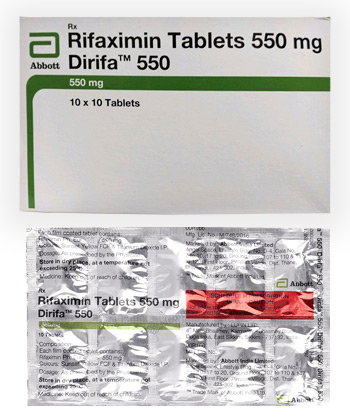
Xifaxan
- In most countries (including the USA, EU and Canada) Xifaxan is sold in pharmacies as a prescription-only (Rx) medication; availability and packaging vary by country, and in some local markets or pharmacies it may occasionally be supplied without a prescription—check local regulations and your pharmacy.
- Xifaxan (rifaximin) is used for travellers’ diarrhoea caused by non‑invasive E. coli, for irritable bowel syndrome with diarrhoea (IBS‑D), and for prevention/maintenance therapy in hepatic encephalopathy; it is a minimally absorbed (non‑systemic) rifamycin antibiotic that inhibits bacterial RNA synthesis by binding the beta subunit of bacterial DNA‑dependent RNA polymerase.
- Usual adult dosages: travellers’ diarrhoea 200 mg orally three times daily for 3 days; IBS‑D 550 mg orally three times daily for 14 days; hepatic encephalopathy 550 mg orally twice daily for chronic prevention. Pediatric use is generally ≥12 years for some indications; not established <12 years.
- Administered orally as tablets (commonly 200 mg and 550 mg) and in some regions as an oral suspension (100 mg/5 mL).
- Symptom improvement is often seen within 24–72 hours after starting therapy; for IBS‑D, meaningful relief may take several days and is typically assessed over the 2‑week treatment course.
- Duration depends on the indication: travellers’ diarrhoea regimens are 3 days; IBS‑D courses are 2 weeks with relief that may persist for weeks and repeat courses considered for recurrence; hepatic encephalopathy is treated with ongoing/chronic therapy as directed by a clinician.
- There is no specific disulfiram‑like alcohol interaction with rifaximin, but alcohol should be avoided or limited in patients with liver disease or hepatic encephalopathy; follow medical advice for alcohol use with any liver condition.
- The most common adverse effects are gastrointestinal — nausea, abdominal pain, flatulence and constipation; other common reactions include headache and fatigue; hypersensitivity and C. difficile infection are important cautions.
- Would you like to try xifaxan without a prescription?
Availability & Price Landscape
Basic Xifaxan Information
- INN (International Nonproprietary Name): Rifaximin.
- Brand Names Available In Canada (English): Xifaxan, tablets 200 mg and 550 mg, packaged in blister packs.
- ATC Code: A07AA11 — intestinal antiinfectives (rifaximin).
- Forms & Dosages: Oral tablets 200 mg and 550 mg; oral suspension 100 mg/5 mL exists in other regions but is not widely available in Canada.
- Manufacturers In Canada (English): Not specified in the provided data; global/main manufacturer listed as Salix Pharmaceuticals (Bausch Health).
- Registration Status In Canada (English): Registered products include Xifaxan tablets (200 mg and 550 mg) and are prescription-only; marketed products carry a DIN when approved.
- OTC / Rx Classification: Prescription-only (Rx) in Canada.
Canadians frequently ask where to find Xifaxan and how much it will cost out of pocket.
Major national chains such as Shoppers Drug Mart, Rexall and London Drugs commonly list Xifaxan tablets in 200 mg and 550 mg strengths at many locations.
Stocking varies by province and by individual store; some branches keep short-course packs for travellers while others order to fill a prescription.
Online pharmacies in Canada, both chain-run and independent, increasingly dispense prescriptions for rifaximin but must follow provincial dispensing rules and ID verification.
Expect prescription verification, provincial billing rules and possible prior-authorisation requests for certain indications when using online fulfilment.
Quebec pharmacies follow RAMQ-specific substitution and billing practices which can affect which brand or pack size is dispensed.
Price signals: branded Xifaxan typically has higher out-of-pocket cost than potential generics, and pharmacies may add a dispensing fee.
Package size and regimen change the total cost — a 3-day travellers’ diarrhoea course (200 mg TID) is much smaller than a 14-day IBS-D course (550 mg TID), and that shows in the dispensing price.
Provincial drug plans such as Ontario Drug Benefit, BC PharmaCare and RAMQ may cover rifaximin for specific indications like hepatic encephalopathy, but coverage rules and criteria differ.
Some Canadians consider cross-border sourcing to the United States for lower prices, but this introduces prescription, importation and DIN verification issues.
| Package / Typical Course | Common Availability | Price Signal |
|---|---|---|
| 200 mg TID x 3 days (traveller’s diarrhoea) | Often stocked in chain pharmacies or ordered | Lower total pill count; lower total cost than longer courses; brand usually more expensive than generic |
| 550 mg TID x 14 days (IBS-D) | Available by prescription; may require special order | Higher total pill count; higher out-of-pocket cost; prior authorisation possible |
| 550 mg BID ongoing (Hepatic Encephalopathy) | Often dispensed regularly; provincial plans may cover under criteria | Significant ongoing cost without coverage; public formularies may offset cost with prior approval |
Major National Pharmacy Chains (Shoppers Drug Mart, Rexall, London Drugs)
Shoppers Drug Mart, Rexall and London Drugs regularly list Xifaxan tablets in their inventories, but stock levels differ by location.
Some urban stores keep common pack sizes on hand for timely dispensing, while rural stores more often order to fill.
Chains typically provide online stock checks and will transfer or order a pack to a local branch on request.
Dispensing fees, special-order lead times and substitution policies vary between chains and between provinces.
Pharmacists at these chains can assist with prior-authorisation paperwork for provincial coverage when required.
Online Pharmacy Trends In Canada (Including Provincial Restrictions)
Canadian online pharmacies increasingly handle prescriptions for rifaximin but must comply with provincial dispensing laws and ID checks.
Cross-provincial shipping can be limited by provincial regulatory rules, and some pharmacies restrict dispensing to the province where the prescription was issued.
Quebec has specific RAMQ billing and substitution processes that affect online dispensing to Quebec addresses.
Patients should expect pharmacist consultation, valid prescription upload or fax, and possible prior-authorisation steps for certain indications.
Price Ranges By Package Size (With Provincial Differences)
Price differences depend on strength, pack size, brand versus generic and whether the pharmacy applies a dispensing fee.
Branded Xifaxan usually costs more out of pocket than potential generics if available in Canada.
Provincial formularies may cover hepatic encephalopathy or other approved uses under clinical criteria, reducing or eliminating patient cost.
When planning travel or repeat IBS-D courses, ask the pharmacist for a cost estimate for the exact pack size and for any public coverage options.
Canadian Patient Insights & Satisfaction Levels
Forum And Review Platforms (Reddit Canada, HealthBoards, AskDocs)
Canadian patients commonly share experiences with Xifaxan on Reddit Canada, HealthBoards and clinic forum threads.
These platforms feature practical reports about symptom relief, access issues and interactions with provincial coverage systems.
Discussion threads often note differences between brand and generic supply, pharmacy substitutions and prior-authorisation delays.
Reported Benefits And Challenges From Canadian Patients
Patients report rapid reduction in diarrhoea frequency and some improvement in bloating after 14-day courses of 550 mg TID for IBS-D.
Hepatic encephalopathy patients describe fewer encephalopathy episodes when maintained on 550 mg BID alongside lactulose.
Common complaints are high cost, need for repeat courses, and variability in provincial drug plan acceptance.
Side effects reported in community posts are generally mild and mirror product data: nausea, constipation and occasional headache.
Access barriers appear in rural communities where local pharmacies may experience stock-outs or delay courier deliveries.
Some patients express concern about antibiotic stewardship and the theoretical risk of Clostridioides difficile after any antibiotic exposure.
Delays caused by insurer prior-authorisation requests are a recurring frustration in online forum threads.
Product Overview & Brand Variants
INN And Brand Names Used In Canada
Rifaximin is the International Nonproprietary Name (INN) for the active ingredient in Xifaxan.
In Canada the product is marketed as Xifaxan in tablet strengths of 200 mg and 550 mg, commonly in blister packs.
Other international brands and formulations exist, such as Normix and oral suspensions in some countries, but these are not common in Canada.
Legal Classification Under Health Canada
Under Health Canada rules, rifaximin/Xifaxan is prescription-only and must be dispensed with a valid prescription.
Marketed products carry a Drug Identification Number (DIN) when approved, and pharmacies use the DIN for dispensing and provincial billing.
Health Canada regulates labelling, storage statements and adverse event reporting for rifaximin products sold in Canada.
Indications In Local Canadian Medical Practice
Approved Uses (Health Canada DIN Context)
Health Canada-aligned indications for rifaximin include travellers’ diarrhoea due to E. coli, IBS-D symptom relief and hepatic encephalopathy management.
Typical dosing documented by Canadian prescribers follows the international regimens: 200 mg TID for 3 days for travellers’ diarrhoea, 550 mg TID for 14 days for IBS-D, and 550 mg BID for chronic hepatic encephalopathy management.
Clinicians and pharmacists confirm indications and reimbursability by checking the product DIN linked to a marketed strength and pack size.
Off-Label Patterns In Canadian Healthcare
Off-label use exists but is selective; gastroenterologists may consider repeat short courses for recurrent IBS-D or trial rifaximin for suspected SIBO in certain cases.
Evidence for off-label indications varies and many clinicians balance potential benefits against stewardship concerns and formulary restrictions.
For hepatic encephalopathy, rifaximin is often prescribed alongside lactulose for secondary prevention, and many provincial formularies require documentation or prior authorisation.
How It Works In The Body
Layman’s Explanation (Canadian Patient-Friendly Tone)
Xifaxan works mainly in the gut and does not enter the bloodstream to any significant degree.
It reduces the number of problematic bacteria in the intestines that can cause diarrhoea and some IBS symptoms.
Because it stays mostly in the gut, patients tend to experience fewer systemic side effects compared with antibiotics that circulate widely.
Clinical Detail From Health Canada Resources
Pharmacologically, rifaximin belongs to the ATC class A07AA11 as an intestinal antiinfective and acts by inhibiting bacterial RNA synthesis in the gut.
Health Canada product information notes minimal systemic absorption and a low potential for drug interactions due to limited metabolism.
For hepatic encephalopathy the proposed benefit is reduction of ammonia-producing intestinal bacteria, helping prevent recurrent encephalopathy when given chronically at 550 mg BID.
Severe hepatic impairment requires caution and clinical monitoring despite the drug’s low absorption profile.
Dosage & Administration
Standard Regimens Per Canadian Guidelines
Travelers’ diarrhoea: 200 mg orally three times daily for three days is the standard adult course.
IBS-D: 550 mg orally three times daily for 14 days is the regimen used in trials and commonly prescribed in practice.
Hepatic encephalopathy: 550 mg orally twice daily as ongoing maintenance therapy is the commonly used chronic dose.
Adjustments By Patient Type (With Canadian Clinical Notes)
No renal dose adjustment is generally required because rifaximin is minimally absorbed systemically.
Elderly patients should have hepatic function monitored, and severe hepatic impairment warrants extra caution and follow-up.
Paediatric use is limited; evidence supports use in patients aged 12 years and older for some indications, but data are limited for younger children.
When repeat IBS-D courses are prescribed, clinicians often document clinical rationale to satisfy insurer or formulary requirements.
If a dose is missed, take it as soon as remembered unless it is close to the next dose, and do not double doses.
Contraindications & Side Effects
Common (Health Canada-Approved List)
Absolute contraindications include known hypersensitivity to rifaximin or other rifamycins such as rifampicin, rifabutin or rifapentine.
Treating bacterial diarrhoea accompanied by fever or bloody stools is contraindicated for rifaximin; systemic antibiotics or further evaluation may be needed.
Common side effects are gastrointestinal and mild: nausea, constipation and vomiting, plus headache and fatigue in some people.
Rare But Serious (With Canadian Pharmacovigilance Data)
Rare but serious adverse events reported in post-marketing surveillance include hypersensitivity reactions such as rash and pruritus.
Antibiotic-associated colitis including C. difficile infection has been reported with antibiotic therapy and is a risk to discuss, even though rifaximin’s absorption is low.
Pharmacovigilance reporting to Health Canada is standard practice for serious events, and pharmacists help patients report adverse reactions to the Canada Vigilance program.
Comparable Medicines In Canada
Alternatives Table (With DIN References)
| Medicine | Typical Indication | Pros | Cons | DIN (Example/Placeholder) |
|---|---|---|---|---|
| Lactulose | Hepatic Encephalopathy | Proven ammonia-lowering; low cost | GI side effects, dosing complexity | To Be Updated |
| Neomycin | Hepatic Encephalopathy (off-label) | Non-absorbed; alternative option | Potential ototoxicity/nephrotoxicity with systemic absorption, off-label use | To Be Updated |
| Loperamide | IBS-D Symptom Control | Immediate diarrhoea relief, inexpensive | Does not address underlying bacterial component | To Be Updated |
| Ciprofloxacin / Azithromycin | Travelers’ Diarrhoea | Effective for systemic pathogens | Systemic side effects, resistance concerns | To Be Updated |
Pros And Cons List
- Pros For Rifaximin: Targeted gut action, minimal systemic absorption, evidence for IBS-D and HE regimens.
- Cons For Rifaximin: Cost, antibiotic stewardship concerns, potential for C. difficile and limited paediatric data.
- When To Consider Alternatives: If formulary coverage is denied, for symptomatic-only control, or where systemic infection is suspected.
Current Research & Trends
Major Canadian Or International Studies 2022–2025
Recent randomized trials and meta-analyses from 2022–2025 continue to evaluate rifaximin for repeat IBS-D courses and long-term safety in hepatic encephalopathy.
Canadian gastroenterology centres have added observational real-world data on retreatment intervals and tolerability in routine practice.
International RCTs support symptom reduction in IBS-D using a 550 mg TID, 14-day course, with benefits for some patients and retreatment strategies under investigation.
Ongoing trials examine microbiome effects after rifaximin, potential roles in select inflammatory bowel disease subgroups and efficacy for SIBO in certain contexts.
Health technology assessments in several provinces have assessed cost-effectiveness of rifaximin for chronic HE and influence prior-authorisation criteria.
Common Patient Questions In Canada
Do I need a prescription for Xifaxan in Canada?
Yes, Xifaxan is prescription-only and must be dispensed by a pharmacist with a valid prescription.
Will my provincial drug plan cover it?
Coverage depends on the province, the indication and patient eligibility; hepatic encephalopathy is a common covered indication under clinical criteria, but prior authorisation is often needed.
Can I buy it online or from US pharmacies?
Canadian online pharmacies can dispense domestically with a valid prescription and pharmacist consultation, but cross-border purchases raise importation, DIN and authenticity issues.
What are common side effects?
Mild GI upset, constipation and headache are most common; serious allergic reactions are rare but require immediate care.
Can I drive while taking rifaximin?
Dizziness is uncommon but if you experience it you should avoid driving or operating machinery until symptoms resolve.
Regulatory Status
Health Canada Approval Process
Rifaximin products marketed in Canada undergo Health Canada review and must meet quality, safety and efficacy standards to receive marketing authorisation.
Manufacturers are responsible for post-market surveillance, labelling compliance and adverse event reporting to Health Canada.
DIN Number Relevance
The Drug Identification Number (DIN) uniquely identifies the product, formulation and manufacturer and is central to pharmacy dispensing, inventory control and provincial reimbursement claims.
Confirming the correct DIN helps avoid substitution errors between 200 mg and 550 mg strengths and ensures the product matches the prescriber’s intent and any formulary criteria.
Visual Recommendations
Infographic Ideas For Canadian Context
Clear visuals that help patients and prescribers include a dosing infographic: 200 mg TID for three days for travellers’ diarrhoea; 550 mg TID for 14 days for IBS-D; 550 mg BID ongoing for hepatic encephalopathy.
A provincial map highlighting common coverage rules (Ontario, BC, Quebec) with icons for prior authorisation or formulary notes is helpful for Canadian users.
A comparison card summarizing Xifaxan versus lactulose, loperamide and ciprofloxacin with pros and cons aids decision-making at the pharmacy counter.
A quick safety checklist card should list allergy screening, signs of C. difficile and storage conditions (store 20–25°C; protect from moisture).
Buying & Storage Advice
In-Store Vs. Online Canadian Purchase Tips
For urgent travel needs call larger chain pharmacies (Shoppers, Rexall, London Drugs) to check stock or request a transfer to your local branch.
Ask your pharmacist about generics, dispensing fees and whether your provincial drug plan or private insurer will cover the prescription for your indication.
Online Canadian pharmacies can deliver within provinces with pharmacist consultation and prescription verification.
In our online pharmacy, xifaxan is available without a prescription, with discreet delivery to Canada (English) in 5-14 days.
Cross-border purchases from the United States are sometimes used for price savings but introduce DIN, importation and authenticity concerns.
Proper Storage With Canadian Climate Considerations
Store Xifaxan tablets at 20–25°C (68–77°F) and protect from moisture, with permitted excursions of 15–30°C (59–86°F).
In cold Canadian winters avoid leaving medication in cars where freezing or condensation can occur, and in humid summers avoid bathroom storage that exposes tablets to moisture.
When travelling, carry medication in original packaging with the prescription and keep it in carry-on luggage to avoid temperature extremes in checked baggage.
Guidelines For Proper Use
Canadian Doctor/Pharmacist Advice Style
Confirm the indication and expected course length when you receive a prescription — for example, 3 days for travellers’ diarrhoea or 14 days for IBS-D.
Emphasize adherence: take the full course as prescribed and do not double doses if a dose is missed.
Explain common side effects and instruct patients to seek urgent care for fever, bloody stools, severe diarrhoea or allergic signs.
Discuss provincial coverage and whether prior authorisation will be needed, offering to help complete paperwork when possible.
Talk about antibiotic stewardship and the risk of C. difficile; document rationale for repeat courses when requesting insurer approval.
Provide storage and travel advice and give contact details for adverse event reporting to Health Canada or the dispensing pharmacy.
Delivery Across Canada (English)
| City | Region | Delivery Time |
|---|---|---|
| Toronto | Ontario | 5-7 days |
| Montreal | Quebec | 5-7 days |
| Vancouver | British Columbia | 5-7 days |
| Calgary | Alberta | 5-7 days |
| Edmonton | Alberta | 5-7 days |
| Ottawa | Ontario | 5-7 days |
| Winnipeg | Manitoba | 5-7 days |
| Quebec City | Quebec | 5-7 days |
| Halifax | Nova Scotia | 5-7 days |
| Victoria | British Columbia | 5-7 days |
| Hamilton | Ontario | 5-7 days |
| London | Ontario | 5-9 days |
| St. John's | Newfoundland and Labrador | 5-9 days |
Common Counselling Scripts And Quick Resources
When handing a prescription for Xifaxan, say: “This is rifaximin 550 mg; take one tablet three times a day for 14 days unless your prescriber tells you otherwise.”
Follow up with: “Store at room temperature away from moisture and tell us right away if you get a rash, difficulty breathing, or severe diarrhoea with fever or blood.”
If the patient is on therapy for hepatic encephalopathy, add: “Take lactulose as prescribed and keep regular follow-up with your specialist; rifaximin is often used together with lactulose.”
Provide a one-page handout summarizing dose, duration, common side effects and provincial coverage tips and encourage patients to call the pharmacy for prior-authorisation help.
Final Notes For Canadian Patients
Xifaxan (rifaximin) is an intestinal antiinfective used for defined indications with clearly described regimens in Canada.
Work with your pharmacist to confirm the exact formulation and DIN on the pack so the dispensed strength matches your prescription.
Ask the pharmacist about provincial coverage options, prior-authorisation requirements and whether a generic is available for cost savings.
Report serious side effects to the dispensing pharmacist or directly to Health Canada via the Canada Vigilance program.
For travel, check pharmacy stock ahead of time and carry prescription documentation in case you need to show it at the border or on arrival.