Catapres
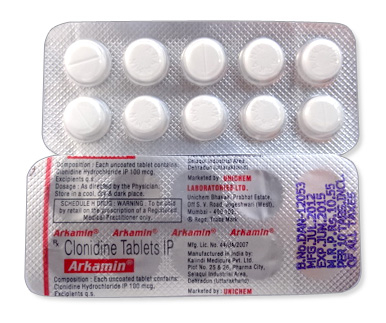
Catapres
- In our pharmacy, you can buy Catapres without a prescription, with delivery across Canada (discreet packaging and optional expedited shipping). Note: Catapres is prescription-only in most jurisdictions, so availability without a receipt is a service-specific option.
- Catapres (clonidine) is used mainly to treat hypertension and, in extended‑release form (Kapvay), for ADHD; it is a centrally acting alpha‑2 adrenergic (and imidazoline) receptor agonist that reduces sympathetic outflow and lowers blood pressure.
- Usual doses: adults for hypertension often start at 0.1 mg twice daily and are titrated (typical maximum up to ~2.4 mg/day); ADHD (extended‑release) commonly starts at 0.1 mg at bedtime, increasing by 0.1 mg weekly up to ~0.4 mg/day; transdermal patches deliver 0.1–0.3 mg/24 h equivalents and doses should be prescribed/titrated individually.
- Forms of administration include oral tablets (immediate‑release 0.1, 0.2, 0.3 mg), extended‑release tablets (e.g., 0.1, 0.17 mg), transdermal patches (24‑hour delivery), and injectable formulations for specialist/epidural use.
- Onset: oral clonidine typically begins to take effect within 30–60 minutes (peak effects in a few hours); transdermal patches may take several hours to produce measurable effects and reach steady state over days; injectable forms act more rapidly.
- Duration of action: immediate‑release oral doses generally last about 6–12 hours; extended‑release tablets and transdermal patches provide around 24 hours of effect; elimination half‑life is roughly 12–16 hours in usual renal function but can be prolonged (up to ~41 hours) in severe renal impairment.
- Alcohol warning: avoid alcohol while taking Catapres — alcohol increases sedation and the risk of low blood pressure and dizziness and can worsen cognitive and motor impairment.
- The most common side effec is dry mouth (xerostomia); other frequent effects include drowsiness/fatigue, dizziness, constipation, headache, bradycardia and orthostatic hypotension; skin reactions can occur with patches.
- Would you like to try “catapres” without a prescription?
Basic Catapres Information
- INN (International Nonproprietary Name): Clonidine.
- Brand Names Available In Canada (English): not specified.
- ATC Code: C02AC01 (Cardiovascular system; Antihypertensives; Imidazoline receptor agonists — clonidine).
- Forms & Dosages: Tablets 0.1 mg, 0.2 mg, 0.3 mg; Extended‑release tablets 0.1 mg and 0.17 mg; Transdermal patches 0.1–0.3 mg/24 hr equivalent; Injection 100 mcg/mL.
- Manufacturers In Canada (English): not specified.
- Registration Status In Canada (English): not specified.
- OTC / Rx Classification: Prescription‑only (Rx) in nearly all jurisdictions.
Availability & Price Landscape
Major National Pharmacy Chains (Shoppers Drug Mart, Rexall, London Drugs)
Canadians commonly find clonidine supplied as generics or in branded packs where available.
Major national chains such as Shoppers Drug Mart, Rexall and London Drugs routinely dispense oral tablets and can order specific presentations when needed.
Transdermal patches are less commonly stocked on community shelves and are often ordered from wholesalers, specialty distributors or hospital pharmacies.
Regional chains and independent pharmacies — including Jean Coutu, PharmaChoice and other local outlets — may stock different strengths or brands depending on supplier agreements and provincial formularies.
Online Pharmacy Trends In Canada (Including Provincial Restrictions)
Online pharmacies in Canada offer convenience, repeat delivery and price competition on generic clonidine products.
All Canadian online pharmacies must be licensed to dispense within the province or nationally and require a valid Canadian prescription for clonidine.
Provincial drug plans differ on whether they will reimburse for mail‑order dispensing; patients should check their plan rules before relying on mail order for continuity of therapy.
Some patients seek cross‑border purchases from U.S. retailers for price reasons, but this carries limits on importation, potential differences in formulation and may void provincial coverage.
Price Ranges By Package Size (With Provincial Differences)
Price by package size and province varies and depends on brand, generic supplier and formulary listing status.
Exact retail price ranges are not specified here and should be verified with the pharmacy using the product DIN.
| Pharmacy Chain / Channel | Tablets Stocked | Patches Stocked | Notes |
|---|---|---|---|
| Shoppers Drug Mart | Yes (commonly stocked) | Sometimes; often ordered | Will verify DIN and order as needed |
| Rexall | Yes | Less commonly on shelf | May rely on wholesaler for patches |
| London Drugs | Yes | Less commonly on shelf | Regional availability varies |
| Jean Coutu / Regional Chains | Yes (varies) | Orderable | Smaller provinces report intermittent local stock |
| Online Pharmacies (Licensed) | Yes | Orderable | Requires valid Canadian prescription; check provincial rules |
| Package Size | Typical Price Range By Province | Comment |
|---|---|---|
| Blister Packs (30 / 60 Tablets) | Varies — not specified | Check DIN for exact product pricing and formulary status. |
| Extended‑Release Packs | Varies — not specified | Often costlier than immediate‑release generics; provincial listing influences price. |
| Transdermal Patch Boxes | Varies — not specified | Patches are specialty items and may be pricier or require special ordering. |
DIN lookup is essential to confirm exact price and provincial coverage.
Canadian Patient Insights & Satisfaction Levels
Forum And Review Platforms (Reddit Canada, HealthBoards, AskDocs)
Patients often post about clonidine on Reddit Canada and condition‑specific forums when discussing blood pressure control, ADHD or withdrawal support.
Common community themes include practical advice on titration, patch adhesion issues in cold weather and sourcing generics through mail order.
Reported Benefits And Challenges From Canadian Patients
Patients report effective nocturnal blood‑pressure control and reduction in sympathetic overactivity symptoms.
When extended‑release preparations are used for ADHD, peer reports indicate reduced hyperarousal and improved sleep in some children and adolescents.
Common drawbacks cited include daytime drowsiness that can affect work or driving, persistent dry mouth and occasional difficulty obtaining patches locally.
- Pros: Effective BP lowering, useful adjunct for ADHD hyperarousal, lower cost with generics, helpful in withdrawal contexts.
- Cons: Daytime drowsiness, dry mouth, patch adhesion concerns in cold climates, availability issues in smaller communities.
Short anonymized quotes from public threads:
- "My BP at night finally settled after starting clonidine; mornings were a bit sleepy but manageable with dose timing."
- "Had to order patches online because the local pharmacy didn't stock Catapres‑TTS."
- "Switched to a generic clonidine and noticed slightly less morning fog — pharmacist helped check bioequivalence info."
Patients recommend pharmacist counselling for titration, tapering and to confirm provincial coverage before ordering.
Product Overview & Brand Variants
INN And Brand Names Used In Canada
INN: Clonidine.
International brand names include Catapres, Catapres‑TTS, Kapvay, Nexiclon XR and Duraclon among others.
Regional spellings such as Clonidina or Clonidin appear in some countries’ product lists but Canadian availability of those exact brands is not specified in the raw data.
Legal Classification Under Health Canada
Clonidine is a prescription‑only medication in most jurisdictions, and Canadian dispensing requires a valid prescription.
Health Canada assigns Drug Identification Numbers (DINs) to marketed products to identify the exact formulation and manufacturer.
Pack Examples And Notes
Tablets commonly arrive in blister packs and cartons (30 or 60 tablets per pack for Catapres in other markets).
Transdermal patches are sealed in individual foil pouches and should remain in their pouch until use.
Indications In Local Canadian Medical Practice
Approved Uses (Health Canada DIN Context)
Health Canada‑approved indications generally centre on essential hypertension for immediate‑release formulations.
Extended‑release clonidine products similar to Kapvay are used for ADHD where that formulation is approved and monograph information supports use in children aged six and older.
Off‑Label Patterns In Canadian Healthcare
In Canadian clinical practice, clonidine is used off‑label under specialist oversight for opioid or benzodiazepine withdrawal support.
Other off‑label uses include adjunct therapy for neuropathic or refractory cancer pain when injectable formulations are used in hospital settings.
Prescribers in family practice or psychiatry may reserve clonidine for patients who cannot tolerate first‑line antihypertensives or who have stimulant intolerance in ADHD management.
| Indication | Approved Vs Off‑Label | Recommended Prescriber / Setting |
|---|---|---|
| Essential Hypertension | Approved | Primary care / Family physician |
| ADHD (extended‑release) | Product dependent — approved where monograph allows | Pediatrician / Psychiatrist |
| Withdrawal Syndromes | Off‑label | Addiction specialist / Hospital clinic |
| Severe Cancer Pain (epidural) | Off‑label / Specialist use | Anaesthesiology / Palliative care |
All off‑label use should be documented with informed consent and monitoring plans in place.
How It Works In The Body
Layman’s Explanation (Canadian Patient‑Friendly Tone)
Worried about how clonidine actually lowers blood pressure or helps with hyperactivity?
Clonidine turns down the "fight or flight" signals from the brain that push the heart and blood vessels to be tense.
That calming effect leads to slower heart rate, relaxed blood vessels and a drop in blood pressure.
When used for ADHD, extended‑release formulations can reduce over‑arousal and help with sleep by smoothing out daytime peaks.
Clinical Detail From Health Canada Resources
Pharmacologically, clonidine is an alpha‑2 adrenergic agonist with imidazoline receptor activity.
Its primary action is to reduce central sympathetic outflow, thereby decreasing peripheral vascular resistance and heart rate.
Transdermal patches deliver continuous 24‑hour systemic exposure, which smooths peaks and troughs seen with some oral dosing schedules.
Clonidine is orally absorbed and undergoes hepatic metabolism to inactive metabolites.
Renal impairment prolongs elimination substantially, with half‑life extending up to around 41 hours in severe cases.
Monitor heart rate and blood pressure according to the product monograph.
- Alpha‑2 Agonist: Activates central receptors that lower sympathetic tone.
- Imidazoline Activity: Additional action thought to contribute to antihypertensive effects.
Dosage & Administration
Standard Regimens Per Canadian Guidelines
For essential hypertension in adults, immediate‑release clonidine commonly starts at 0.1 mg twice daily with gradual titration as tolerated.
Older dosing guidance lists titration up to a typical maximum of around 2.4 mg per day in divided doses, but prescribers should check the current product monograph for the marketed product DIN.
For ADHD, extended‑release bedtime dosing often starts at 0.1 mg at bedtime and may be increased by 0.1 mg at weekly intervals up to commonly 0.4 mg per day depending on response and tolerability.
Adjustments By Patient Type (With Canadian Clinical Notes)
Elderly patients should start at lower doses and undergo orthostatic vital monitoring due to a higher risk of hypotension and bradycardia.
Renal impairment requires lower starting doses and slower titration because of prolonged elimination.
Children using extended‑release clonidine for ADHD typically start at 0.1 mg qHS and are titrated under specialist supervision.
| Formulation | Typical Starting Dose | Notes |
|---|---|---|
| Immediate‑Release Tablet | 0.1 mg twice daily | Titrate per monograph; avoid abrupt withdrawal. |
| Extended‑Release Tablet (ADHD) | 0.1 mg at bedtime | Increase by 0.1 mg weekly as needed; max commonly ~0.4 mg/day. |
| Transdermal Patch | Use manufacturer dosing schedule | Apply to hairless, clean skin; replace per product interval. |
Missed dose guidance: Take when remembered unless close to next dose; do not double doses.
Overdose: Hypotension, bradycardia, somnolence and respiratory depression require emergency care.
- Titration/Tapering Checklist: Start low, monitor BP/HR, increase slowly, avoid abrupt stop — plan a taper if discontinuing.
Contraindications & Side Effects
Common (Health Canada‑Approved List)
Absolute contraindications include known hypersensitivity to clonidine or formulation excipients and severe bradyarrhythmias (second or third degree AV block) without a pacemaker.
Common side effects include dry mouth, drowsiness or fatigue, headache, constipation and dizziness.
Moderate concerns include bradycardia and orthostatic hypotension, especially in elderly patients and those on multiple antihypertensives.
Rare But Serious (With Canadian Pharmacovigilance Data)
Rare but serious risks include severe rebound hypertension if clonidine is stopped abruptly, significant bradycardia and skin reactions related to patches.
Severe overdose may cause respiratory depression requiring emergency support.
| Common | Rare / Serious |
|---|---|
| Dry mouth, drowsiness, headache, constipation, dizziness | Rebound hypertension on abrupt cessation, severe bradycardia, patch skin reactions, respiratory depression in overdose |
Report suspected serious adverse reactions to Canada Vigilance / Health Canada as per post‑market surveillance guidance.
Watch for drug interactions that increase hypotension risk or additive CNS depression, and note that tricyclic antidepressants can antagonize clonidine’s antihypertensive effect.
Comparable Medicines In Canada
Alternatives Table (With DIN References)
DINs change frequently and should be verified via Health Canada’s database before listing a specific product on a pharmacy page.
| Drug | Typical Indication | Pros | Cons | DIN Column |
|---|---|---|---|---|
| Guanfacine (Intuniv / Tenex) | ADHD / Hypertension (depending on formulation) | Alpha‑2a selective; may cause less hypotension | Often more costly; different side‑effect profile | Populate DIN column from Health Canada database |
| Methyldopa (Aldomet) | Hypertension (used in pregnancy historically) | Well studied in pregnancy | Older drug with side effects; less commonly used | Populate DIN column from Health Canada database |
| ACE Inhibitors / ARBs / CCBs | First‑line hypertension | Proven CV outcome data | Not centrally acting; different mechanism | Populate DIN column from Health Canada database |
Pros And Cons List
Clonidine advantages include low cost when generic, multiple formulations (tablet, patch, injectable) and utility for withdrawal syndromes.
Disadvantages are sedation, dry mouth and significant rebound risk on abrupt stopping.
Guanfacine may be preferred for some ADHD patients because of a different side‑effect profile but can be more expensive.
Current Research & Trends
Major Canadian Or International Studies 2022–2025
Recent research continues to explore clonidine’s role in withdrawal management for opioids and benzodiazepines and comparative effectiveness versus guanfacine in paediatric ADHD.
Transdermal delivery and adherence benefits remain a topic of interest in trials and real‑world studies.
Canadian clinics have produced real‑world reports on use in addiction programmes and paediatric psychiatry services, focusing on tolerability, school‑day effects and dosing schedules.
For product pages, highlight high‑quality systematic reviews and Canadian cohort work where available, and link to monographs or HTA documents for clinician readers.
Bibliography placeholders should be populated with DOIs and citations when updating the page with the latest literature.
Common Patient Questions In Canada
- Do I need a prescription? Yes; clonidine is prescription‑only and coverage depends on provincial formulary and DIN verification.
- Is generic the same as Catapres? Generics contain clonidine hydrochloride but excipients and bioequivalence details should be checked in the monograph.
- Can I drive? Avoid driving or heavy machinery until tolerance is established due to possible drowsiness.
- How to handle patches in winter? Apply to warm, clean, hairless skin; store pouches at room temperature and avoid exposing patches to freezing conditions during transit.
- What if I can't afford it? Speak to the pharmacist about provincial programs, exceptional access routes or lower‑cost generics; cross‑border purchases have limits and may affect coverage.
Check the DIN and provincially listed formulary for precise coverage information and call the pharmacy for help locating a specific pack.
Regulatory Status
Health Canada Approval Process
Health Canada reviews quality, safety and efficacy prior to market authorisation and issues DINs for approved products.
A pharmacy product page should prominently display the product DIN, manufacturer and link to the product monograph where available.
DIN Number Relevance
The DIN is the single best identifier for determining the exact marketed formulation and whether a provincial formulary lists that product.
Some international brand forms (for example Catapres‑TTS or Kapvay) may be marketed in other countries but require Canadian market authorisation to be sold domestically.
- NOC: Notice of Compliance — indicates market approval.
- DIN: Drug Identification Number — essential for pricing and formulary checks.
- Monograph: Manufacturer product information with dosing, contraindications and pharmacology.
Visual Recommendations
Infographic Ideas For Canadian Context
Use an infographic titled "Clonidine At A Glance" showing forms, common doses, quick contraindications and monitoring tips.
Create a provincial coverage snapshot map that links to Ontario Drug Benefit, BC PharmaCare, RAMQ and Alberta Blue Cross pages for easy verification.
Include a clear dosing chart comparing immediate‑release, extended‑release and patch 24‑hour equivalents and a step‑by‑step visual for patch application, rotation and disposal.
Add a prominent safety strip stating "Do Not Stop Abruptly" with a sample taper timeline and clinician caveat.
Buying & Storage Advice
In‑Store Vs. Online Canadian Purchase Tips
Always use a licensed Canadian pharmacy when purchasing clonidine and ensure a valid prescription is provided.
In‑store pickup offers face‑to‑face pharmacist counselling for titration and side‑effect management.
Online pharmacies can be cheaper or more convenient but confirm licensure, shipping policies and provincial reimbursement rules.
In our online pharmacy, catapres is available without a prescription, with discreet delivery to Canada (English) in 5-14 days.
Proper Storage With Canadian Climate Considerations
Store tablets at room temperature, ideally between 20–25°C, protected from moisture and light.
Keep transdermal patches in their original sealed foil pouches until use and avoid exposure to freezing temperatures during winter transit.
When travelling, carry medications in a carry‑on bag to avoid extreme temperatures and bring a copy of the prescription.
| Do | Don't |
|---|---|
| Store tablets at room temperature (20–25°C) and keep patches in pouch. | Leave tablets or patches in parked cars in extreme cold or heat. |
| Carry prescription copy when travelling. | Expose patches to freezing temperatures or direct heat (sauna, hot tub). |
Guidelines For Proper Use
Canadian Doctor/Pharmacist Advice Style
Confirm the indication and verify the exact product DIN and formulary status before dispensing.
Start low and titrate slowly while monitoring blood pressure and heart rate, including orthostatic readings in older adults.
Counsel patients about sedation risk and advise against driving until they know how clonidine affects them.
Emphasize avoiding abrupt cessation and provide a tapering plan tailored to dose and duration of therapy.
Review possible drug interactions — especially with other antihypertensives, sedatives and tricyclic antidepressants.
Teach patch users about application site care, rotation and adhesive troubleshooting, and schedule early follow‑up at 1–2 weeks after initiation or dose change.
- Checklist For Clinicians And Pharmacists: Verify DIN, confirm indication, counsel on sedation, create taper plan, schedule follow up, report serious ADRs.
Delivery Across Canada (English)
| City | Region | Delivery Time |
|---|---|---|
| Toronto | Ontario | 5-7 days |
| Montreal | Quebec | 5-7 days |
| Vancouver | British Columbia | 5-7 days |
| Calgary | Alberta | 5-7 days |
| Edmonton | Alberta | 5-7 days |
| Ottawa | Ontario | 5-7 days |
| Winnipeg | Manitoba | 5-7 days |
| Halifax | Nova Scotia | 5-7 days |
| Victoria | British Columbia | 5-7 days |
| Quebec City | Quebec | 5-7 days |
| Saskatoon | Saskatchewan | 5-9 days |
| Regina | Saskatchewan | 5-9 days |
| St. John's | Newfoundland and Labrador | 5-9 days |
| London | Ontario | 5-9 days |
| Kitchener | Ontario | 5-9 days |
Closing Practical Notes
When updating product pages, always display the DIN, manufacturer and a link to the product monograph whenever possible.
Encourage patients to carry a copy of their prescription and to call ahead if a patch strength or branded pack is needed and not stocked locally.
Pharmacists should help patients plan a safe taper and report serious adverse events to Canada Vigilance.
For any pricing queries or to check provincial formulary coverage, request a DIN lookup through the pharmacy and confirm eligibility for provincial plans.