
Premarin
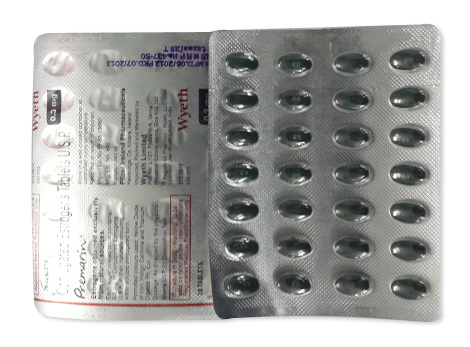
Premarin
- Premarin is officially a prescription-only medicine in Canada and most countries, but availability varies—some community pharmacies and online retailers may supply premarin without a prescription; check local pharmacy policies and regulations before purchase.
- Premarin (conjugated estrogens) is used for hormone replacement therapy to relieve vasomotor and urogenital menopausal symptoms, for prevention of postmenopausal osteoporosis, treatment of hypoestrogenism, and palliative therapy in certain cancers; it works as a mixture of estrogens that act as estrogen receptor agonists to replace or supplement endogenous estrogen.
- Usual adult doses range from 0.3–1.25 mg once daily (typical starting doses are 0.3 mg or 0.625 mg; osteoporosis prevention commonly uses 0.625 mg daily); higher doses may be used in palliative cancer care and doses should be individualized.
- Administered orally as tablets (available commonly as 0.3 mg, 0.625 mg, 0.9 mg and 1.25 mg) and, in hospital settings, as intravenous injection for short-term use.
- Some symptomatic relief (especially of hot flashes) can begin within 1–2 weeks, with more noticeable improvement over 4–8 weeks.
- Premarin is intended for daily dosing and maintains effect while taken; symptom relief is sustained with ongoing therapy and may diminish within days to weeks after stopping—treatment duration should be regularly reviewed by a clinician.
- Limit alcohol while taking premarin; alcohol can worsen side effects and may increase risks such as liver effects and thromboembolic complications—discuss safe alcohol use with your healthcare provider.
- The most common side effect is headache (other frequent effects include breast pain/tenderness, nausea, abdominal bloating, vaginal spotting, mood changes and fluid retention).
- Would you like to try premarin without a prescription?

Basic Premarin Information
- INN (International Nonproprietary Name): Conjugated estrogens (French: oestrogènes conjugués; German: konjugierte Östrogene).
- Brand Names Available In Canada (English): Premarin — tablet strengths 0.3 mg, 0.625 mg and 1.25 mg; Pfizer packaging typically bottle 100s in Canada.
- ATC Code: G03CA57 — Estrogens For Systemic Use, Conjugated Natural Estrogens.
- Forms & Dosages: Oral tablets 0.3 mg, 0.625 mg, 0.9 mg (select markets), 1.25 mg; injection forms for hospital use (IV) noted in other markets.
- Manufacturers In Canada (English): Global manufacturer Pfizer; local supply is managed via Pfizer affiliates or national pharmaceutical distributors.
- Registration Status In Canada (English): Registered with Health Canada; product monograph and market authorisation available through national regulator listings.
- OTC / Rx Classification: Prescription-Only Drug (Rx) in Canada.
Availability & Price Landscape
Major National Pharmacy Chains (Shoppers Drug Mart, Rexall, London Drugs)
Canadians often ask where premarin is stocked and how easy it is to get a refill.
Major chains such as Shoppers Drug Mart, Rexall and select London Drugs locations order Premarin through Pfizer distribution channels and will process pharmacist special orders when stock is not immediate.
Jean Coutu in Quebec is a commonly referenced chain for local access in that province.
Premarin tablets in Canada are available in the listed strengths 0.3 mg, 0.625 mg and 1.25 mg and are normally supplied in bottle-100 packaging per market data.
Pharmacists can confirm DIN and manufacturer on arrival and often place next-day or next-business-day orders depending on store logistics.
Common searchers look for premarin price or Premarin 0.625 mg tablets availability at these retailers.
Online Pharmacy Trends In Canada (Including Provincial Restrictions)
Online pharmacies in Canada list premarin but require a valid prescription for dispensing and verification before mailing.
Provincial rules differ; some provinces require local pharmacy verification or specific dispensing protocols before direct mail-out.
Quebec and Ontario have tighter pharmacy verification practices that can delay cross-provincial mail orders in some cases.
Patients often compare premarin price online versus in-store, balancing lower per-tablet prices for bulk bottles against pharmacist counselling value.
Be mindful that premarin remains classified Rx and that any legitimate Canadian online pharmacy will request a prescription for premarin tablets.
Price Ranges By Package Size (With Provincial Differences)
Price varies by store type, pharmacy chain and province; larger bottle 100s generally deliver a lower per-tablet cost than small blister packs elsewhere.
Provincial drug plans (Ontario Drug Benefit, BC PharmaCare, RAMQ) may cover HRT for eligible patients and require checking formularies or special authorisations.
Patients reporting price frustration on forums often cite refill and stockout-related variability between provinces and chains.
Short buying steps: confirm the DIN and manufacturer, present a valid prescription, ask about provincial reimbursement and compare bottle 100 vs smaller packs when available.
Canadian Patient Insights & Satisfaction Levels
Forum And Review Platforms (Reddit Canada, HealthBoards, AskDocs)
Patients in Canada use Reddit Canada, HealthBoards and provincial Facebook groups to share real-world experiences with premarin and HRT choices.
Posts typically reference pharmacy chains like Shoppers Drug Mart, London Drugs and Jean Coutu when discussing access or stockouts.
Common discussion topics include premarin tablets versus estradiol products, coverage questions and how quickly symptom relief appears.
Reviews often use search terms such as premarin reviews Canada or Premarin 0.625 mg tablets when comparing experiences.
Reported Benefits And Challenges From Canadian Patients
Commonly reported benefits include prompt reduction of hot flashes and night sweats when starting typical doses such as 0.3–0.625 mg daily.
Patients also describe improved sleep and fewer sleep interruptions within weeks of starting therapy.
Challenges raised repeatedly are prescription renewals, occasional pharmacy stockouts and the variability of premarin price across pharmacies and provinces.
Some users switch to estradiol options like Estrace or Divigel due to side effects or preference for bioidentical estradiol, noting different tolerability profiles.
Adverse effects reported mirror Health Canada lists: breast tenderness, nausea and mood changes are common, with rare serious events discussed in cautionary threads.
Overall satisfaction tends to be higher when prescribers individualise dose and document risk discussions about thromboembolism and stroke for higher-risk patients.
Product Overview & Brand Variants
INN And Brand Names Used In Canada
Premarin is marketed under the INN conjugated estrogens, a mixture of natural conjugated oestrogens manufactured globally by Pfizer.
In Canada the marketed tablet strengths are 0.3 mg, 0.625 mg and 1.25 mg, with packaging commonly in bottle 100s as noted in product listings.
Brand recognition for Premarin remains strong despite availability of other estrogen products and regional alternatives.
Legal Classification Under Health Canada
Premarin is a Health Canada–regulated prescription drug and is listed under ATC code G03CA57 for systemic estrogens.
Each marketed strength has a Drug Identification Number (DIN) and is subject to regulatory review, labelling and post-market surveillance.
Consumers should confirm the DIN on the bottle to verify authentic Pfizer supply when purchasing premarin tablets in Canada.
Indications In Local Canadian Medical Practice
Approved Uses (Health Canada DIN Context)
Health Canada–approved indications include hormone replacement therapy for vasomotor and urogenital menopausal symptoms and prevention of postmenopausal osteoporosis.
Premarin is also indicated for hypoestrogenism and may be used at higher doses in palliative oncology settings under specialist care.
Clinicians follow the product monograph and local formularies when recording DIN and indication for reimbursement or coverage applications.
Off-Label Patterns In Canadian Healthcare
Off-label uses sometimes seen in practice include systemic therapy for atrophic vaginitis when prescribers choose systemic rather than local treatment.
Oncology teams may use higher, titrated doses for palliative goals; these are specialist-led decisions documented carefully in patient charts.
Guidelines from bodies such as the Society of Obstetricians and Gynaecologists of Canada support lowest effective dose for shortest duration and individual risk assessment.
How It Works In The Body
Layman’s Explanation (Canadian Patient-Friendly Tone)
People commonly ask: how does premarin actually relieve hot flashes and vaginal dryness?
Premarin supplies conjugated estrogens, a mix of estrogen compounds that replace falling natural hormones after menopause.
Restoring estrogen signalling helps stabilise the brain centre that controls temperature, reduces bone loss and improves urogenital tissues.
Many patients notice symptom improvement within days to weeks depending on dose and individual response.
Clinical Detail From Health Canada Resources
Conjugated estrogens bind estrogen receptors ERα and ERβ, modulating gene transcription and physiological responses in brain, bone and vaginal tissue.
Oral systemic administration undergoes hepatic metabolism and enterohepatic cycling, which can affect clotting-factor synthesis and vascular risk profiles.
Health Canada product information lists contraindications including history of DVT/PE, stroke, MI and severe liver dysfunction; prescribers must assess vascular risk when choosing systemic estrogen therapy.
Dosage & Administration
Standard Regimens Per Canadian Guidelines
Typical adult dosing ranges from 0.3 to 1.25 mg daily for menopausal symptom relief, with common starting doses at 0.3 mg or 0.625 mg daily.
For osteoporosis prevention a commonly cited dose is 0.625 mg daily when systemic therapy is chosen.
Premarin tablets are taken orally once daily and may be used continuously or cyclically (for example, three weeks on, one week off) according to clinical decision.
Adjustments By Patient Type (With Canadian Clinical Notes)
Elderly patients should use the lowest effective dose with monitoring due to higher thrombotic and cerebrovascular risks.
Renal impairment requires caution and possible dose adjustment; severe hepatic impairment is a contraindication to use.
Missed-dose instructions: take the missed tablet as soon as remembered unless the next dose is near; do not double up.
For palliative oncology indications, dosing is specialist-directed and titrated to clinical effect and tolerability.
Contraindications & Side Effects
Common (Health Canada-Approved List)
Absolute contraindications include undiagnosed vaginal bleeding and known or suspected breast, uterine or estrogen-dependent neoplasia.
Other absolute exclusions are active or prior DVT/PE, stroke, myocardial infarction, severe liver dysfunction, pregnancy and breastfeeding.
Common side effects reported by patients and listed in the product information include headache, breast tenderness, abdominal bloating, vaginal spotting, nausea and mood changes.
Rare But Serious (With Canadian Pharmacovigilance Data)
Serious but uncommon events captured in post-market surveillance include venous thromboembolism, ischaemic stroke, myocardial infarction and hepatic dysfunction.
Pharmacists should counsel patients on warning signs such as sudden leg swelling or pain, chest pain, severe persistent headache or vision changes and advise immediate medical attention.
Canadian adverse event reporting is handled through Health Canada; pharmacists are encouraged to document and report suspected serious reactions.
Comparable Medicines In Canada
Alternatives Table (With DIN References)
Clinicians commonly compare premarin with estradiol-based products and local vaginal therapies when tailoring HRT.
Notable alternatives include Estrace, Estrofem and Divigel (estradiol), combined HRTs such as Femoston (where available), and vaginal-specific agents like Ovestin (estriol) for local symptoms.
At dispensing the pharmacist should provide DINs and packaging information; DIN lookup is essential for reimbursement and verification.
Pros And Cons List
- Premarin Pros: Established efficacy for vasomotor symptom control and osteoporosis prevention at standard doses.
- Premarin Cons: Oral systemic exposure may raise thrombotic risk in susceptible people; alternatives like transdermal estradiol may be preferred for vascular-risk reduction.
- Local Vaginal Therapy: Good for urogenital symptoms with low systemic exposure but limited bone protection.
Current Research & Trends
Major Canadian Or International Studies 2022–2025
Recent literature from 2022–2025 emphasises individualised HRT with lower starting doses and careful vascular risk stratification.
Growing interest exists in transdermal estradiol as a strategy to reduce thrombotic risk compared with oral estrogens such as premarin.
Comparative effectiveness studies continue to explore symptom control and metabolic outcomes between conjugated estrogens and estradiol formulations.
Canadian observational work monitors prescribing patterns and provincial formulary effects on access and switches between brands.
When summarising study takeaways for product pages, include guideline recommendations to use the lowest effective dose and reassess annually.
Common Patient Questions In Canada
FAQ
- Do I Need A Prescription? Yes — premarin is prescription-only in Canada and pharmacists will require a valid prescription before dispensing.
- Will It Be Covered? Coverage varies; check provincial plans such as Ontario Drug Benefit, BC PharmaCare or RAMQ and ask your pharmacist about special-authority requirements.
- Is Premarin Safe If I Smoke? Smoking increases vascular risk and may make prescribers favour alternatives like transdermal estradiol or non-hormonal options.
- Can I Buy From U.S. Sites? Cross-border purchasing occurs but can carry authenticity and import-rule risks; verify packaging and DIN differences if considering this route.
- How Soon Will I Feel Better? Symptom improvement often occurs within days to weeks at common starting doses such as 0.3–0.625 mg daily.
Regulatory Status
Health Canada Approval Process
Premarin is registered in Canada and reviewed by Health Canada for quality, safety and efficacy prior to market authorisation.
Health Canada maintains the product monograph and requires post-market surveillance and adverse reaction reporting.
DIN Number Relevance
Each marketed strength and package carries a Drug Identification Number (DIN) that confirms Health Canada review and authorisation.
Patients and pharmacists should check the DIN on the bottle to verify authentic product and to assist with reimbursement submissions.
Visual Recommendations
Infographic Ideas For Canadian Context
Suggested visuals include a bilingual product image with visible DIN on the bottle 100s, a “How Premarin Helps” organ-and-timeline infographic and a comparison card versus estradiol and local therapy.
Risk-alert cards listing contraindications and emergency signs are useful at point-of-sale and for downloadable counselling sheets.
Product Images And Compliance Labelling
Use high-resolution images of Canadian packaging showing manufacturer (Pfizer), DIN, lot number and bilingual labelling for Quebec audiences.
Ensure alt text for accessibility and a printable one-page counselling sheet with storage, missed-dose and warning information.
Buying & Storage Advice
In-Store Vs. Online Canadian Purchase Tips
Buy premarin through licensed Canadian pharmacies and confirm the DIN and manufacturer on the label when collecting your prescription.
In-store purchases let you speak to a pharmacist at pickup; online Canadian pharmacies will request an electronic or faxed prescription and display their licence.
A practical safety tip: avoid unverified international sellers to reduce counterfeit risk and to ensure the product matches Canadian DIN labelling.
In our online pharmacy, premarin is available without a prescription, with discreet delivery to Canada (English) in 5-14 days.
Proper Storage With Canadian Climate Considerations
Store premarin tablets at room temperature 15–30°C, protected from moisture and light, in the original packaging until use.
In Canadian winters avoid leaving medication in vehicles where freezing or condensation might occur.
During summer or transit, keep packages out of direct heat to prevent temperature excursions.
Guidelines For Proper Use
Canadian Doctor/Pharmacist Advice Style
Start with a full medical history documenting thrombotic risk factors, cancer history, smoking status and liver disease before initiating premarin.
Use the lowest effective dose and reassess symptoms and risk at least annually, documenting DIN, strength and package dispensed.
Counsel on expected benefits within days to weeks and common side effects such as breast tenderness, nausea and mood changes.
Provide clear missed-dose instructions: take missed dose if remembered unless it is close to the next scheduled dose; do not double up.
Give written information on storage (15–30°C), how to report adverse effects to Health Canada and when to seek urgent care.
Delivery Across Canada (English)
| City | Region | Delivery Time |
|---|---|---|
| Toronto | Ontario | 5-7 days |
| Montreal | Quebec | 5-7 days |
| Vancouver | British Columbia | 5-7 days |
| Calgary | Alberta | 5-7 days |
| Ottawa | Ontario | 5-7 days |
| Edmonton | Alberta | 5-7 days |
| Winnipeg | Manitoba | 5-7 days |
| Quebec City | Quebec | 5-7 days |
| Hamilton | Ontario | 5-9 days |
| Kitchener | Ontario | 5-9 days |
| Halifax | Nova Scotia | 5-9 days |
| London | Ontario | 5-9 days |
| Victoria | British Columbia | 5-9 days |