
Femara
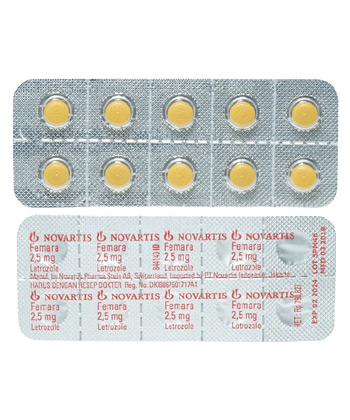
Femara
- Femara (letrozole) is a prescription-only medicine and should be obtained from a licensed pharmacy with a valid prescription; it is not legally OTC—while some unregulated sellers or some pharmacies may offer it without a receipt, purchasing or using it without medical supervision is not recommended or safe.
- Femara is used to treat hormone receptor‑positive breast cancer in postmenopausal women (early, adjuvant, extended adjuvant and advanced/metastatic disease). It is a non‑steroidal aromatase inhibitor that lowers estrogen production by inhibiting the aromatase enzyme, reducing tumour stimulation by estrogen.
- The usual dose is 2.5 mg once daily for adults (oral), commonly given for 5 years in adjuvant/extended settings or continued until progression in metastatic disease.
- Femara is administered orally as 2.5 mg film‑coated tablets (tablets in blister packs or bottles).
- Letrozole begins to reduce circulating estrogen levels within a few days; measurable biological effects are seen within days to weeks, while clinical benefits may take several weeks.
- The drug is taken once daily; the pharmacologic half‑life is approximately a couple of days, and therapeutic use is continued as prescribed (commonly up to 5 years for adjuvant therapy or until progression for metastatic disease).
- There is no specific contraindication to light alcohol use stated, but excessive alcohol should be avoided—use caution with liver disease, and avoid alcohol in pregnancy; discuss alcohol use with your prescriber.
- The most common side effect is hot flushes.
- Would you like to try “femara” without a prescription?
Basic Femara Information
- INN (International Nonproprietary Name): Letrozole
- Brand Names Available In Canada (English): Femara
- ATC Code: L02BG04
- Forms & Dosages: Oral film-coated tablets, 2.5 mg; typical packaging includes blisters or bottles in 7, 10, 14, 28, 30, or 100 tablets
- Manufacturers In Canada (English): Not specified
- Registration Status In Canada (English): Health Canada — Approved
- OTC / Rx Classification: Prescription Only (Rx)
Availability & Price Landscape
Major National Pharmacy Chains (Shoppers Drug Mart, Rexall, London Drugs)
Canadians generally find Femara stocked at major chains such as Shoppers Drug Mart and Rexall.
London Drugs has a strong presence in British Columbia, Alberta and Manitoba and may carry standard pack formats there.
Quebec patients commonly see Femara in retail chains and regional banners including Jean Coutu and independent oncology dispensaries.
Licensed generics from known suppliers commonly replace originator stock at community pharmacies because of Health Canada approval and DIN requirements.
Online Pharmacy Trends In Canada (Including Provincial Restrictions)
Online pharmacies and telepharmacy platforms are increasingly used for repeat oncology prescriptions and adherence support.
Most e‑pharmacies require an electronic or faxed prescription and must follow provincial pharmacy regulations and dispensing rules.
Provincial drug plans and private insurers influence out‑of‑pocket cost and may require prior authorisation for coverage.
Cross‑border ordering from U.S. e‑shops remains reported among Canadians seeking lower prices, but this carries customs, regulatory and safety risks.
In our online pharmacy, femara is available without a prescription, with discreet delivery to Canada (English) in 5-14 days.
Price Ranges By Package Size (With Provincial Differences)
Price depends on whether the product is originator Femara or a generic letrozole, pack size and individual pharmacy markup or dispensing fees.
Bulk dispensing and larger pack sizes commonly reduce per‑tablet cost but provincial dispensing limits and prior‑authorities may apply.
Exact prices are not specified here; customers should check real‑time price comparison tools on product pages and verify the DIN on dispensed packages.
| Pack Size | Typical Availability | Provincial Notes |
|---|---|---|
| 7–14 tablets | Common | Used for short courses or trial supplies; availability varies by pharmacy |
| 28–30 tablets | Most common | Standard monthly supply for chronic adjuvant therapy |
| 100 tablets | Available | Bulk option where permitted by provincial dispensing rules |
Canadian Patient Insights & Satisfaction Levels
Forum And Review Platforms (Reddit Canada, HealthBoards, AskDocs)
Patients share practical experience and peer support on Reddit Canada, HealthBoards and AskDocs as well as province‑specific Facebook groups.
Discussion threads commonly cover side‑effect management, pharmacy access challenges and strategies for cost savings.
On these platforms users compare branded Femara with generic letrozole and share tips for dealing with prior‑authorisation waits.
Reported Benefits And Challenges From Canadian Patients
- "I switched to the generic and noticed the same effect but my pharmacy handled the prior auth faster."
- "Daily dosing is simple, but joint pain affected my walking for months."
- "My oncology nurse helped get me a baseline DEXA and a referral for bone protection."
Common positive themes are perceived efficacy in hormone‑receptor positive disease and the convenience of once‑daily oral dosing.
Common negatives reported include arthralgia, hot flushes, fatigue and concern about long‑term bone density loss.
Canadians often discuss cost‑saving strategies such as generic substitution, bulk dispensing where allowed and exceptional access processes through provincial programs.
- Pharmacy Counselling Checklist: Verify DIN, confirm generic interchangeability, confirm prior‑auth paperwork, advise bone health monitoring and contraception counselling.
Product Overview & Brand Variants
INN And Brand Names Used In Canada
The international nonproprietary name is letrozole and the principal brand in Canada is Femara.
Licensed generics from multinational suppliers such as Teva and Sandoz are commonly distributed in many markets.
Packaging follows global norms with blister packs or bottles and pack counts typically ranging from single‑digit counts to 100 tablets.
Legal Classification Under Health Canada
Letrozole is classified as prescription‑only across all jurisdictions and must be dispensed with a valid prescription.
Health Canada approval means authorised products in Canada are assigned a Drug Identification Number that appears on packaging and pharmacy labels.
| Brand / Generic | Form | Strength | Typical Manufacturers |
|---|---|---|---|
| Femara | Film‑coated tablet | 2.5 mg | Novartis (originator) |
| Letrozole (generic) | Film‑coated tablet | 2.5 mg | Teva, Sandoz and other licensed generics |
Note: Femara/letrozole is never sold OTC and requires a valid prescription for legal dispensing.
Indications In Local Canadian Medical Practice
Approved Uses (Health Canada DIN Context)
Health Canada‑approved indications align with international guidance for hormone receptor‑positive breast cancer in postmenopausal women.
Typical approved roles include adjuvant therapy for early disease, first‑line treatment for advanced or metastatic disease, and extended adjuvant therapy commonly up to five years.
Indications in product monographs are tied to the product DIN used for formulary listing and reimbursement adjudication.
Off‑Label Patterns In Canadian Healthcare
Off‑label use of letrozole is limited and supervised in Canada, most notably occasional use in fertility clinics for ovulation induction under specialist care.
Provincial drug programs and oncology formularies may require physician documentation and prior authorisation for public coverage of specific regimens.
Product pages should clearly separate approved indications from off‑label uses and advise specialist consultation for off‑label prescribing.
How It Works In The Body
Layman’s Explanation (Canadian Patient‑Friendly Tone)
Letrozole is an aromatase inhibitor that reduces the body’s production of oestrogen in postmenopausal women.
Lowering oestrogen slows the growth of hormone‑driven breast cancers and helps reduce the chance of recurrence in appropriate patients.
The medicine is a once‑daily oral tablet and is effective specifically in postmenopausal women where peripheral aromatase is the main source of oestrogen.
Clinical Detail From Health Canada Resources
Pharmacologically letrozole is a non‑steroidal, reversible aromatase inhibitor with ATC code L02BG04.
Reduced oestrogen levels can contribute to decreased bone mineral density and increases in lipid concentrations, which is why baseline and periodic monitoring is recommended.
Exposure to letrozole is similar across adult age groups and routine dose adjustments are generally not required for mild to moderate hepatic or renal impairment.
Dosage & Administration
Standard Regimens Per Canadian Guidelines
Standard adult dosing is 2.5 mg once daily taken orally with or without food.
Adjuvant therapy commonly lasts five years and extended adjuvant strategies may contribute to a total treatment duration when sequenced with tamoxifen.
In advanced or metastatic disease therapy continues until disease progression or unacceptable toxicity.
Adjustments By Patient Type (With Canadian Clinical Notes)
No routine dose change is required for older adults and dose adjustments are not established for children.
Mild to moderate hepatic or renal impairment normally does not necessitate a dose change, but severe impairment requires specialist discretion.
Not indicated for premenopausal women unless used with ovarian suppression under specialist management.
- Missed Dose: Take as soon as remembered unless it is near the next dose; do not double up.
Contraindications & Side Effects
Common (Health Canada‑Approved List)
Absolute contraindications include premenopausal status, pregnancy and lactation, and known hypersensitivity to letrozole or excipients.
Common adverse effects reported in product monographs include hot flushes, musculoskeletal pain or arthralgia, fatigue, nausea and headache.
Long‑term use is associated with mild bone mineral density loss and possible increases in cholesterol levels.
Rare But Serious (With Canadian Pharmacovigilance Data)
Post‑marketing surveillance has reported rare but serious events including osteoporosis‑related fractures and significant hyperlipidaemia in vulnerable patients.
Severe hepatic dysfunction and rare hypersensitivity reactions have been reported and require immediate clinical assessment.
Recommended monitoring includes baseline bone mineral density and periodic lipid profiles, with consideration of bone‑protective therapy when clinically indicated.
Adverse events can be reported to Health Canada through Canada Vigilance and should also be discussed with the dispensing pharmacist.
Comparable Medicines In Canada
Alternatives Table (With DIN References)
| Drug | Class | Typical Adult Dose | Pros / Cons |
|---|---|---|---|
| Anastrozole (Arimidex / generics) | Non‑steroidal AI | 1 mg once daily | Similar efficacy to letrozole in many settings; slightly different side‑effect profile |
| Exemestane (Aromasin) | Steroidal AI | 25 mg once daily | Irreversible inactivator; used sequentially after non‑steroidal AIs in some regimens |
| Tamoxifen | SERM | Typical dosing varies | Suitable for premenopausal patients; different risks such as thromboembolism |
Pros And Cons List
- Letrozole: Strong evidence for postmenopausal adjuvant and metastatic use but greater bone‑density effects.
- Anastrozole: Comparable efficacy with a different adverse‑event profile; often interchangeable depending on clinician choice.
- Exemestane: May be preferable for sequential strategies; steroidal mechanism.
- Tamoxifen: Useful when oestrogen blockade by AIs is inappropriate, notably in premenopausal patients.
Current Research & Trends
Major Canadian Or International Studies 2022–2025
Recent studies have explored optimal durations of aromatase inhibitor therapy and strategies to prevent or treat AI‑related bone loss.
Canadian cohort analyses and provincial oncology reports contribute real‑world adherence and toxicity management data that inform extended adjuvant approaches.
International trials continue to evaluate sequencing of tamoxifen and aromatase inhibitors and to identify biomarkers that predict benefit and toxicity.
Emerging trends for Canadian patients include more telepharmacy‑based monitoring, province‑level formulary updates reflecting increased generic availability, and greater use of patient‑reported outcomes to guide supportive care.
Common Patient Questions In Canada
FAQ
Can I buy Femara online in Canada?
Only with a valid prescription; verify the pharmacy licence and the product DIN when ordering online.
Is Femara covered by provincial drug plans?
Coverage varies by province and plan; prior authorisation may be required for public coverage such as Ontario Drug Benefit, BC PharmaCare or RAMQ.
What if I’m premenopausal?
Letrozole is contraindicated in premenopausal women unless ovarian suppression is managed by a specialist—discuss options with your oncologist.
How do I manage joint pain?
Report symptoms to your care team; options include physiotherapy, analgesics, or alternative sequencing of endocrine therapy under specialist guidance.
What about pregnancy and contraception?
Letrozole is contraindicated in pregnancy and effective contraception is advised for patients of childbearing potential until therapy is discontinued and cleared by a specialist.
Can I switch to a generic?
Generics are widely used and typically less expensive; pharmacists can advise on interchangeability and confirm the DIN on the product.
How do I report side effects?
Report adverse reactions to Health Canada via Canada Vigilance and inform your dispensing pharmacist and oncology team promptly.
Regulatory Status
Health Canada Approval Process
Health Canada authorises drugs after review of safety, efficacy and manufacturing quality and assigns an approved product a Drug Identification Number.
Authorised products and their monographs are listed in the Drug Product Database and the DIN is used to confirm the product identity at dispensing.
DIN Number Relevance
Pharmacies and payers reference DINs when adjudicating formulary coverage and prior‑authorisation requests.
Products sourced outside Canada may lack a Canadian DIN, which can make them ineligible for provincial coverage and present regulatory and safety concerns.
Product pages should display Health Canada authorisation and encourage patients to verify the DIN on dispensed packaging.
Visual Recommendations
Infographic Ideas For Canadian Context
Create a simple mechanism‑of‑action infographic showing aromatase inhibition leading to lower oestrogen and reduced tumour growth in postmenopausal patients.
Design a dosing timeline graphic visualizing typical adjuvant and extended therapy durations from one to ten years when sequenced with tamoxifen.
Provide a provincial coverage map highlighting where prior authorisation commonly applies and directing users to provincial formulary pages.
Include a side‑effect monitoring checklist visual with baseline BMD and lipid panel timing, and a packaging carousel showing tablet imprint and DIN location.
Ensure all visuals use accessible colours, clear alt text and Canadian spelling and provide a downloadable counselling sheet for pharmacists and a printable patient checklist.
Buying & Storage Advice
In‑Store Vs. Online Canadian Purchase Tips
Always obtain letrozole with a valid prescription from a licensed Canadian pharmacy and confirm the DIN on the package at pickup or delivery.
Compare price estimates between local chains such as Shoppers Drug Mart, Rexall, Jean Coutu and London Drugs and accredited online pharmacies to find the best cost option.
Consider generic letrozole for potential savings and confirm substitution policies with your prescriber and insurer.
Be cautious with cross‑border purchases because non‑DIN products may not be eligible for coverage and can involve customs delays and regulatory risk.
Proper Storage With Canadian Climate Considerations
Store letrozole below 30°C and protect it from moisture and heat by keeping tablets in the original blister or bottle.
In Canadian winters avoid leaving medication in vehicles where extreme cold can affect stability and in summer avoid direct heat or sun exposure.
For travel use an insulated pouch if exposure to temperature extremes is expected and carry a copy of the prescription if crossing borders.
| Situation | Advice |
|---|---|
| At Home | Keep in original blister below 30°C, away from bathroom humidity |
| Winter Travel | Keep indoors and avoid storing in a cold car overnight |
| Summer Travel | Use a shaded insulated pouch if luggage may get hot |
Guidelines For Proper Use
Canadian Doctor/Pharmacist Advice Style
Confirm postmenopausal status before dispensing and verify the clinical indication and DIN on the prescription.
Review concomitant medications for potential interactions and flag potent CYP450 inducers or inhibitors to the prescriber.
Advise adherence strategies such as taking the tablet at the same time each day and using blister packs for dose tracking.
Recommend baseline DEXA scanning and periodic lipid checks and coordinate with the oncology team regarding bone‑protective therapy where appropriate.
Provide written patient information, counsel on contraception and pregnancy avoidance, and offer referrals to physiotherapy or pain management as needed.
Delivery Across Canada (English)
| City | Region | Delivery time |
|---|---|---|
| Toronto | Ontario | 5–7 days |
| Montreal | Quebec | 5–7 days |
| Vancouver | British Columbia | 5–7 days |
| Calgary | Alberta | 5–7 days |
| Edmonton | Alberta | 5–7 days |
| Ottawa | Ontario | 5–7 days |
| Winnipeg | Manitoba | 5–7 days |
| Quebec City | Quebec | 5–7 days |
| Halifax | Nova Scotia | 5–9 days |
| Victoria | British Columbia | 5–9 days |
| London | Ontario | 5–9 days |
| Kitchener | Ontario | 5–9 days |
| Hamilton | Ontario | 5–9 days |