Cabergoline
Cabergoline
- Cabergoline is officially prescription-only in most jurisdictions (FDA/EMA/Health Canada), but availability varies by country and some pharmacies or online suppliers may sell it without a receipt or prescription—check local regulations and pharmacy policies before purchase.
- Cabergoline is used primarily to treat hyperprolactinemic disorders (e.g., prolactinomas) and as an adjunct in Parkinson’s disease; it is a dopamine D2 receptor agonist that suppresses pituitary prolactin secretion.
- Usual dosing for hyperprolactinemia starts at about 0.25 mg twice weekly with gradual titration (maintenance varies; total weekly doses commonly 0.5–2 mg; rare cases up to 4.5 mg/week); for Parkinson’s adjunctive use starting regimens around 0.5 mg daily with slow titration.
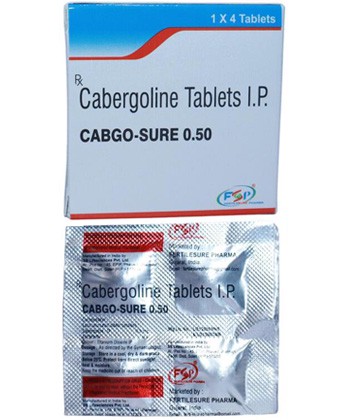
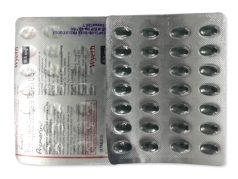
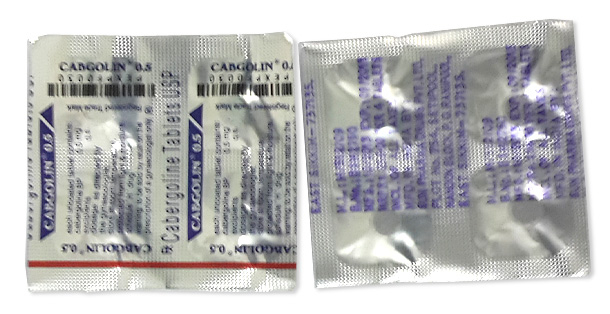
- Administered orally as tablets (common strengths 0.25 mg, 0.5 mg, 1 mg) in blister or strip packs.
- Biochemical reduction in prolactin is often seen within 24–48 hours; plasma levels peak within a few hours of dosing, while clinical symptom improvement may take several days to weeks.
- Cabergoline has a long elimination half-life (approximately 60–70 hours), allowing once- or twice-weekly dosing in many regimens; pharmacologic effects can persist for days to a week or longer after dosing.
- Avoid or limit alcohol while taking cabergoline, as alcohol can exacerbate dizziness, orthostatic hypotension and sedation associated with the drug.
- The most common side effect is nausea.
- Would you like to try cabergoline without a prescription?

Basic Cabergoline Information
- INN (International Nonproprietary Name): Cabergoline.
- Brand Names Available In Canada (English): ACT Cabergoline — Actavis Pharma; tablets 0.5 mg and 1 mg.
- ATC Code: G02CB03.
- Forms & Dosages: Tablets 0.25 mg, 0.5 mg, 1 mg in blister or strip packs (typical packaging 2–8 count).
- Manufacturers In Canada (English): Actavis Pharma markets ACT Cabergoline in Canada.
- Registration Status In Canada (English): Marketed presentation documented as ACT Cabergoline by Actavis Pharma; prescription-only as per marketed labelling.
- OTC / Rx Classification: Prescription only (Rx) in all jurisdictions.
Major National Pharmacy Chains
Are you wondering where to pick up ACT Cabergoline locally and what to expect at the counter?
Large national retailers such as Shoppers Drug Mart, Rexall, London Drugs and Jean Coutu typically stock prescription dopamine agonists or can order them into store for customers.
ACT Cabergoline is listed for Canada and is documented as ACT Cabergoline from Actavis Pharma in 0.5 mg and 1 mg tablets.
Availability varies by chain and by province, and some smaller outlets may only keep it by special order.
Pharmacies will require a valid prescription before dispensing cabergoline.
Pharmacists may ask to see patient identification when processing provincial coverage claims to confirm eligibility.
Stock shortages or shipping leads can create short waits for certain strengths, especially 0.5 mg in smaller community pharmacies.
Online Pharmacy Trends In Canada
Thinking about ordering cabergoline online and unsure how provincial rules apply?
Many Canadians now use licensed online pharmacies, including e-pharmacies operated by national chains, to order prescription medicines.
Cross-border purchasing from U.S. sites still occurs but raises questions about legality, customs, and whether the product has a Canadian Drug Identification Number (DIN).
Verify Health Canada notices and compare product details against the Drug Product Database when buying online.
Provincial rules may limit dispensing by vendors located outside the province, so confirm your local pharmacy’s ability to deliver and bill provincial plans.
Price Ranges By Package Size (With Provincial Differences)
Worried about how much cabergoline will cost out of pocket?
Prices depend on pack size, brand versus generic status, and the province where you live.
Larger blister packs tend to reduce the per-tablet cost compared with small strip packs.
Provincial drug plans such as ODB in Ontario, BC PharmaCare, and RAMQ in Quebec determine whether the medicine is fully covered, partially covered, or requires special-authority approval.
Private insurance plans add another layer of variability and may require prior authorization or supporting lab results.
Typical out-of-pocket scenarios range from minimal copays for covered patients to full retail price for those without coverage or when strict criteria are not met.
Canadian Patient Insights & Satisfaction Levels
What are other Canadians saying about cabergoline on forums and review sites?
Patient-reported experiences on platforms such as Reddit (including r/CanadaPharmacy and r/Endo), HealthBoards, and local support forums emphasise convenience from twice-weekly dosing schedules and generally fewer gastrointestinal effects than bromocriptine.
Common forum themes include variability in access between provinces and occasional wait times for specialist prescriptions.
Many posts specifically mention interest in ACT Cabergoline pricing and availability of 0.5 mg tablets versus 1 mg tablets at local pharmacies.
Overall sentiment skews positive for efficacy but mixed for access and coverage hurdles.
Reported Benefits And Challenges From Canadian Patients
Will cabergoline help symptoms quickly, and what trade-offs do people report?
Patients frequently report effective prolactin suppression and improvement in symptoms such as amenorrhea and galactorrhoea after starting cabergoline.
The long half-life and twice-weekly dosing improve adherence compared with daily alternatives.
Common challenges mentioned include orthostatic dizziness, navigating provincial insurance reimbursement, and concerns about long-term cardiac valvular risk.
Some patients find the 0.5 mg strength harder to find in smaller pharmacies compared with 1 mg tablets.
Product Overview & Brand Variants
Which names and strengths will you see on the label in Canada?
The international nonproprietary name is cabergoline.
In Canada, ACT Cabergoline from Actavis Pharma is the documented brand and is supplied as tablets in 0.5 mg and 1 mg strengths.
Other international trade names and spellings exist, such as Cabergolin and Cabergolina, but Canadian dispensing generally lists ACT Cabergoline when sourced locally.
Legal Classification Under Health Canada
Do you need a prescription to get cabergoline in Canada?
Cabergoline is prescription-only across jurisdictions and marketed products carry a Drug Identification Number (DIN) when approved in Canada.
The ATC classification is G02CB03 which places it among prolactin inhibitors.
Pharmacies must dispense it only against a valid prescription and maintain usual record-keeping for controlled sales.
Indications In Local Canadian Medical Practice
Why do Canadian doctors prescribe cabergoline and for which conditions?
Health Canada–marketed products are labelled for hyperprolactinemic disorders such as prolactinomas and pituitary adenomas.
Clinicians use cabergoline to normalise prolactin levels and to reduce tumour size when indicated.
Typical dosing follows established titration schemes adjusted to biochemical response and symptom relief.
Off-Label Patterns In Canadian Healthcare
Are there other uses for cabergoline in Canada beyond the label?
Off-label but observed uses include select fertility clinic applications for prolactin-related infertility and rare adjunctive use in Parkinson’s disease internationally.
Quinagolide and bromocriptine remain alternative options, with bromocriptine often considered when pregnancy planning is a priority due to longer safety experience.
How It Works In The Body
How does cabergoline lower prolactin in plain language?
Cabergoline is a dopamine receptor agonist that tells the pituitary gland to make less prolactin.
Lower prolactin levels reduce symptoms like irregular periods and inappropriate breast milk production and can shrink prolactin-secreting pituitary tumours.
Because cabergoline has a long half-life, it is usually taken only twice weekly which helps with adherence.
Clinical Detail From Health Canada Resources
What is the specific mechanism clinicians watch for in lab tests?
Cabergoline has high affinity for D2 dopamine receptors in lactotroph cells of the anterior pituitary and suppresses prolactin secretion.
Clinical monitoring relies on serial serum prolactin measurements and symptom assessment.
Dosage & Administration
How should cabergoline be started and adjusted in adults?
Standard adult starting dose for hyperprolactinemia is 0.25 mg twice weekly with gradual titration based on response.
Titration commonly increases by 0.25 mg twice weekly every four weeks guided by prolactin levels and tolerability.
Maintenance doses often fall in the 1–2 mg per week range for most patients.
Rare cases may require higher doses, while Parkinson’s dosing is typically daily and less commonly used for that indication in Canada.
Adjustments By Patient Type
Do older adults or people with liver or kidney problems need special dosing?
Elderly patients should start low and titrate slowly to reduce orthostatic hypotension and psychiatric side effects.
Renal impairment generally does not require routine dose adjustment except in severe cases, and hepatic impairment calls for caution and consideration of lower starting doses.
Children are not routinely recommended to use cabergoline due to lack of established safety and efficacy data.
Contraindications & Side Effects
Who should not take cabergoline and what side effects should patients expect?
Absolute contraindications include uncontrolled hypertension, known hypersensitivity to cabergoline or ergot derivatives, history of fibrotic disorders (pulmonary, cardiac valvular, retroperitoneal), and pregnancy unless benefits clearly outweigh risks.
Common side effects are nausea, headache, constipation, fatigue, dizziness and dyspepsia.
Moderate reactions can include orthostatic hypotension, sleep disturbances, peripheral oedema and mood changes.
Rare But Serious Events And Pharmacovigilance
Are there rare risks that need active monitoring?
Serious but uncommon events include orthostatic hypotension, psychiatric effects such as hallucinations or impulse-control disorders, and cardiac valvulopathy or fibrotic reactions with long-term or high-dose therapy.
Baseline and periodic cardiac assessment should be considered for patients on prolonged therapy or with risk factors.
Suspected adverse events should be reported to Health Canada’s Canada Vigilance program.
Comparable Medicines In Canada
What are the main alternatives to cabergoline and how do they compare?
Bromocriptine (Parlodel) is the most common alternative in Canada and has a longer history of use, especially in pregnancy planning.
Quinagolide (Norprolac) exists in some markets but is less commonly available in Canada.
Cabergoline is often preferred for its longer half-life and better gastrointestinal tolerability versus bromocriptine.
Pros And Cons List
Which points should guide a discussion about switching or starting therapy?
Pros of cabergoline include convenient twice-weekly dosing, effective prolactin suppression and generally fewer GI side effects.
Cons include cost variability and signals of valvular fibrosis risk at high cumulative exposure in some studies.
Bromocriptine’s pros include extensive pregnancy safety data and established use, while its cons are more frequent dosing and higher rates of GI intolerance.
Current Research & Trends
What are clinicians watching in new studies and advisories between 2022 and 2025?
Recent research has focused on long-term cardiac safety and valvulopathy signals, strategies to minimise dose while maintaining remission, and fertility outcomes after cabergoline withdrawal.
Canadian-specific data are limited and most evidence comes from European and multinational registries and observational cohorts.
Practitioners should monitor cohort updates, Health Canada communications, and Canadian endocrine society statements for practice-changing guidance.
Common Patient Questions In Canada
Will my provincial drug plan cover cabergoline?
Coverage depends on provincial formularies and clinical criteria with programs such as ODB, BC PharmaCare and RAMQ requiring different documentation or special-authority requests.
Can I buy cabergoline online from the United States?
Cross-border purchases raise customs and safety concerns and may lack Canadian labelling or a DIN, so licensed Canadian pharmacies are generally preferred.
What about pregnancy and breastfeeding?
Pregnancy is a contraindication unless treating a large tumour where benefits justify the risk, and cabergoline suppresses lactation which affects breastfeeding plans.
How fast does cabergoline work?
Biochemical prolactin reductions can be seen within weeks while clinical symptom improvement may take longer and varies by individual.
Regulatory Status
How is cabergoline regulated in Canada and why does the DIN matter?
Products marketed in Canada undergo Health Canada review and carry a Drug Identification Number that links the product to approval and labelling.
DINs help pharmacists verify legitimate products, bill provincial plans, and check for recalls or notices in Health Canada’s Drug Product Database.
Visual Recommendations
Which visuals help patients understand dosing and coverage quickly?
Recommended infographics include a twice-weekly dosing calendar, a provincial coverage map with common special-authority pathways, and a side-effect severity matrix from common to rare.
Other useful visual blocks for product pages are comparison tables (cabergoline vs bromocriptine), a pack-size pricing grid, and a checklist card for what to bring to the pharmacy.
Buying & Storage Advice
Should you buy cabergoline in-store or online and how should it be stored?
Buy from licensed pharmacies and confirm the product DIN and pharmacy licensing when ordering online.
In-store purchases allow for direct pharmacist counselling and simpler claims to provincial drug plans such as ODB, BC PharmaCare, and RAMQ.
In our online pharmacy, cabergoline is available without a prescription, with discreet delivery to Canada (English) in 5-14 days.
Store cabergoline below 25°C (77°F) in the original packaging to protect from moisture and light.
Avoid freezing during winter transit in cold provinces and avoid leaving tablets in hot cars in summer.
Keep the medicine out of reach of children and carry the prescription label when travelling.
Guidelines For Proper Use
What should your prescriber and pharmacist set up before and during treatment?
Obtain baseline serum prolactin and pregnancy test if applicable before starting therapy.
Consider baseline cardiac assessment if long-term or higher dose treatment is anticipated.
Monitor serum prolactin 4–6 weeks after dose changes and then every 3–6 months during maintenance.
For missed doses, take cabergoline when remembered unless it is close to the next scheduled dose and do not double up.
For overdose, seek emergency care; symptoms may include severe nausea, vomiting, hallucinations or profound hypotension.
Reconcile other medications, as interactions with dopamine antagonists or other agents may affect effectiveness or safety.
Delivery Across Canada (English)
| City | Region | Delivery Time |
|---|---|---|
| Toronto | Ontario | 5-7 days |
| Montreal | Quebec | 5-7 days |
| Vancouver | British Columbia | 5-7 days |
| Calgary | Alberta | 5-7 days |
| Edmonton | Alberta | 5-7 days |
| Ottawa | Ontario | 5-7 days |
| Winnipeg | Manitoba | 5-7 days |
| Quebec City | Quebec | 5-7 days |
| Hamilton | Ontario | 5-9 days |
| Kitchener | Ontario | 5-9 days |
| Halifax | Nova Scotia | 5-7 days |
| Victoria | British Columbia | 5-7 days |
| St. John's | Newfoundland and Labrador | 5-9 days |
Final Practical Notes
Make sure the prescription matches the DIN on the package when you receive ACT Cabergoline.
Ask the dispensing pharmacist to document baseline labs and monitoring recommendations on your profile for easier follow-up.
Discuss cost-saving options such as larger pack sizes or generic equivalents with your pharmacist if available.
Report any worrying side effects promptly and ensure regular follow-up with your prescriber.