
Minipress
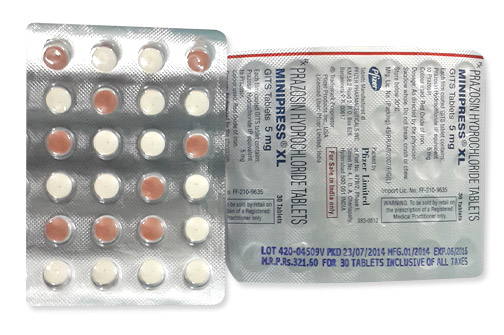
Minipress
- Minipress is a prescription-only medicine in Canada and most countries; pharmacies and official suppliers require a prescription. Some pharmacies or online vendors may offer it without a receipt, but this is not legal or safe — always follow local regulations and seek medical advice.
- Minipress (prazosin) is used to treat hypertension and, off-label in some settings, PTSD-related nightmares; it is an alpha-1 adrenergic blocker that causes vasodilation and lowers peripheral vascular resistance.
- Usual dosing: initial 1 mg orally two to three times daily, with maintenance typically 6–15 mg/day in divided doses and an uncommon maximum up to about 20 mg/day; lower starting doses and careful titration are recommended for elderly or hepatic impairment.
- Administered orally as capsules or tablets (strengths vary by market, commonly 1, 2, 5 mg; some countries have 0.5 mg and other strengths).
- Onset of effect is usually within about 30–90 minutes, with peak effects around 1–3 hours; a pronounced drop in blood pressure can occur after the first dose or when restarting therapy.
- Duration of action is generally about 6–12 hours, so prazosin is often given two to three times daily.
- Alcohol warning: avoid or use caution with alcohol — alcohol increases the risk of dizziness, sedation and severe postural hypotension when taking Minipress.
- The most common side effect is dizziness (especially on standing); other frequent adverse effects include headache, drowsiness, nausea, palpitations, weakness and nasal congestion.
- Would you like to try “minipress” without a prescription?

Basic Minipress Information
- INN (International Nonproprietary Name): Prazosin
- Brand Names Available In Canada (English): Not specified
- ATC Code: C02CA01
- Forms & Dosages: Capsules 1 mg, 2 mg, 5 mg; tablets 0.5 mg, 1 mg, 2 mg, 5 mg (availability varies)
- Manufacturers In Canada (English): Not specified
- Registration Status In Canada (English): Prescription (Rx) only; Canadian DINs apply to authorised products
- OTC / Rx Classification: Prescription-only (Rx)
Availability & Price Landscape
Worried about finding minipress or prazosin at a local store or online?
In Canada, prazosin is prescription-only and availability varies by province and pharmacy chain.
Major national pharmacy chains such as Shoppers Drug Mart, Rexall and London Drugs commonly dispense prazosin generics rather than the Pfizer Minipress brand.
Independent community pharmacies may stock generics or order the original-brand Minipress by special request from distributors.
Online Canadian pharmacies sell prazosin with prescription verification, but provincial dispensing rules and shipping restrictions affect delivery windows and pricing.
Provincial drug plans — for example Ontario Drug Benefit, BC PharmaCare and RAMQ — set formulary listings that determine which DINs are covered and how much patients pay out of pocket.
Expect price ranges for a monthly supply to vary by strength and package size, with small blister packs or 30-capsule packs commonly costing roughly CAD 5–40 depending on generic vs brand and provincial reimbursement.
Cross-border purchasing from the United States is a route some patients use to obtain the Minipress brand, but Health Canada DINs and import rules should be checked before ordering.
Online trends in Canada show steady growth in prescription verification services and home delivery, with urban stores quicker to special‑order brand stock than remote outlets.
Preferable visuals for a product page include a price-comparison table by province and pharmacy, and a checklist of steps to check prescription coverage and obtain a DIN-linked product monograph.
Online Pharmacy Trends In Canada (Including Provincial Restrictions)
Patients often ask whether ordering prazosin online is safe and fast.
Licensed Canadian online pharmacies will verify a prescription and display the DIN when the product is listed for sale.
Shipping rules are affected by provincial college of pharmacists regulations, which can require dispensing from a licenced pharmacy in the patient’s province.
Delivery times and available strengths may vary because some provinces restrict cross-provincial dispensing or require a local pharmacist review before shipment.
Remote communities can expect longer transit times and may be advised to choose insulated shipping during extreme seasonal temperatures in Canada.
Price Ranges By Package Size (With Provincial Differences)
Patients want clear expectations on cost for a monthly supply.
Generics are usually the least expensive option and are typically available in 30-capsule or blister pack formats in strengths of 1 mg, 2 mg and 5 mg.
Retail price for a monthly supply commonly sits between CAD 5 and CAD 40 depending on dose, generic vs branded product, and whether a provincial drug plan covers the DIN.
Provincial formularies influence out-of-pocket cost; some plans will list preferred DINs that result in lower patient copayments.
When the brand Minipress is needed, expect higher cost and possible special-order fees if the product does not hold a Canadian DIN or is not listed on a provincial formulary.
Major National Pharmacy Chains (Shoppers Drug Mart, Rexall, London Drugs)
Customers ask whether a quick trip to a chain will get them prazosin today.
Chain pharmacies routinely stock generics and will substitute equivalent DINs as permitted by provincial substitution rules.
Urban locations may be able to order Pfizer’s Minipress by special request, while smaller outlets commonly dispense the generic product immediately.
Pharmacist counselling at busy Shoppers Drug Mart outlets can sometimes involve longer wait times, and patients in remote areas often rely on community health centres for titration support.
Price-Comparison Visual Recommendation
Include a simple table on the product page listing typical retail ranges by province and pharmacy with DIN next to each SKU to help customers check coverage before purchase.
LSI Keywords Used
minipress, prazosin Canada, prazosin prescription
Canadian Patient Insights & Satisfaction Levels
What do Canadians say about their experience with minipress or prazosin?
Forum and review platforms such as Reddit Canada, HealthBoards and AskDocs contain many patient-reported experiences that are useful but anecdotal.
Many patients report effective blood‑pressure reduction at low doses when prazosin is taken as prescribed.
Patients using prazosin off-label for PTSD-related nightmares frequently describe improved sleep and fewer nightmares at low, carefully titrated doses.
A common theme is the pronounced first‑dose effect, with dizziness or even syncope on standing, particularly in older adults or when doses are increased too quickly.
Posts often note that pharmacies substitute generics instead of dispensing Pfizer’s Minipress, and that this substitution affects satisfaction for patients who preferred the original packaging or capsule appearance.
Users in remote communities comment on reliance on community health centres for counselling and slower titration support, which can shape satisfaction and adherence.
Adverse events are usually reported anecdotally on forums, and patients are advised to report suspected serious reactions through Health Canada’s Canada Vigilance Program.
Preferable visuals for this section include a bullet list of common patient-reported pros and cons and a small table summarising forum frequency of specific side-effect reports.
Forum And Review Platforms (Reddit Canada, HealthBoards, AskDocs)
These platforms highlight practical issues such as medication substitution, wait times for pharmacist counselling and real‑world titration patterns in Canadian clinics.
Reading forum threads can help patients prepare questions for their prescriber or pharmacist but should not replace clinical advice.
Reported Benefits And Challenges From Canadian Patients
Reported benefits include effective blood-pressure control and off‑label reductions in nightmare frequency for some patients with PTSD.
Reported challenges include the first‑dose hypotension effect, generic substitution surprises, and regional differences in access or formulary coverage.
Community feedback commonly emphasises careful slow titration and close monitoring for older adults to reduce fall risk.
LSI Keywords Used
Minipress, prazosin Canada, patient experiences
Product Overview & Brand Variants
What exactly is contained in a minipress product and how is it labelled?
The international nonproprietary name (INN) is prazosin and the original reference brand is Minipress produced by Pfizer in several markets.
Common capsule strengths for the reference brand are 1 mg, 2 mg and 5 mg, and multiple generic manufacturers supply prazosin products in other jurisdictions.
In Canada, the market is dominated by generics labelled prazosin or prazosin hydrochloride, while availability of Pfizer’s Minipress brand depends on distributor importation and provincial formulary listings.
Under Health Canada, prazosin products are prescription-only and authorised products display a Drug Identification Number (DIN) on the label.
Pharmacists and online retailers should list the DIN for each SKU to maintain regulatory transparency and enable formulary checks.
INN And Brand Names Used In Canada
INN: prazosin.
Brand names in other regions include Minipress (US, Romania), Hypovase (UK/Europe) and various generics in India and elsewhere.
For Canada specifically, brand availability is not specified in the raw product data and is influenced by provincial procurement and special orders.
Legal Classification Under Health Canada
All prazosin products are prescription-only in Canada and approved products carry a DIN that appears on packaging and provincial databases.
Provincial colleges of pharmacists regulate substitution and dispensing rules, so pharmacists should document the exact DIN dispensed.
Preferable Visuals
Use a short definition list clarifying INN versus brand versus generic, and a small table listing available strengths and likely manufacturers where applicable.
LSI Keywords Used
prazosin, Minipress Canada, prazosin DIN
Indications In Local Canadian Medical Practice
What will a Canadian prescriber typically use prazosin for?
Health Canada-approved product labels for prazosin focus on hypertension as the primary indication consistent with ATC C02CA01 classification.
Canadian clinicians prescribe prazosin primarily for blood-pressure control, though many favour longer-acting agents for once-daily convenience in chronic management.
Provincial formularies determine which DINs are reimbursed and influence prescribers’ product choices.
Off‑label use of prazosin is common in some Canadian mental‑health settings, particularly for PTSD-related nightmares and sleep disturbance, usually started at low doses and titrated carefully.
Off‑label prescribing should be documented with informed consent and monitored, and outcomes reported to inform practice where appropriate.
Approved Uses (Health Canada DIN Context)
Approved uses listed on DIN-linked monographs centre on hypertension management and related cardiovascular indications as supported by historic clinical trials.
Check the product monograph linked to the DIN for exact approved wording for each marketed SKU.
Off-Label Patterns In Canadian Healthcare
Mental‑health clinicians and some veterans’ services trial prazosin for nightmare reduction in PTSD at lower doses than used for hypertension.
These off‑label regimens are not Health Canada‑approved indications and should include consent and monitoring plans documented in the medical record.
Preferable Visuals
Provide a small table mapping approved indications against common off‑label uses and typical starting doses for each scenario.
LSI Keywords Used
prazosin indications, Minipress hypertension, prazosin PTSD off-label
How It Works In The Body
Patients often ask how prazosin lowers blood pressure and why it can cause dizziness.
Prazosin is an alpha‑1 adrenergic blocker that relaxes the small muscles in blood vessel walls, producing vasodilation and lowering peripheral vascular resistance.
Vasodilation reduces blood pressure and decreases the heart’s workload.
The first‑dose effect describes a sudden drop in blood pressure on standing after the initial dose or after resuming therapy following a break, which explains transient dizziness or fainting.
Clinically, prazosin selectively antagonises postsynaptic alpha‑1 receptors, and pharmacokinetic details such as onset and half-life are provided in the DIN-linked product monograph for each formulation.
Proposed mechanisms for PTSD-related benefit involve central alpha‑1 receptor modulation that can improve nightmares and sleep architecture, although this use remains off‑label and the evidence is evolving.
When counselling, pharmacists should advise about rising slowly from sitting or lying positions and about the timing of doses to reduce hypotension risk.
Clinical Detail From Health Canada Resources
Health Canada product monographs and DIN entries describe mechanism of action, dosing, contraindications and safety monitoring for each authorised product.
Pharmacists should reference the DIN-linked monograph when providing patient counselling or handling substitution queries.
Preferable Visuals
Offer a simple physiological diagram and a short definition list covering mechanism, onset, peak and half‑life as available in the monograph.
LSI Keywords Used
prazosin mechanism, alpha-1 blocker, Minipress pharmacology
Dosage & Administration
How should prazosin be started and adjusted for different patients in Canada?
Typical starting regimens follow established dosing patterns: begin at 1 mg orally two to three times daily with gradual titration to a usual maintenance range of 6–15 mg per day in divided doses.
Some patients may require up to 20 mg per day in rare cases under close supervision.
Canadian prescribers commonly start with a low dose and increase slowly to minimise the first‑dose phenomenon and reduce fall risk.
For hypertension, divided dosing helps avoid postural hypotension compared with larger single doses.
Prazosin frequently requires multiple daily doses, unlike some longer‑acting alpha‑blockers that permit once‑daily dosing.
Adjustments By Patient Type (With Canadian Clinical Notes)
Children: Safety and efficacy are not established and routine use is not recommended.
Elderly: Start lower, for example 0.5–1 mg at bedtime, and titrate cautiously because of higher syncope and fall risk.
Hepatic Impairment: Use lower starting doses and titrate more slowly while monitoring for hypotension.
Renal Impairment: Generally safe, but severe renal disease may require dose adjustment and closer monitoring.
When co‑prescribing other antihypertensives, pharmacists should flag potential additive hypotension and recommend home or clinic blood‑pressure checks after dose changes.
Preferable Visuals
Include a dosing table showing starting, maintenance and maximum doses and a stepwise titration checklist for patient handouts.
LSI Keywords Used
prazosin dosage, Minipress dosing Canada, prazosin titration
Contraindications & Side Effects
What should patients watch for and when should they seek urgent care?
Absolute contraindications include known hypersensitivity to prazosin or related quinazolines and a history of prazosin‑related postural hypotension or syncope.
Common adverse effects listed in product monographs and reported by patients include dizziness, lightheadedness (especially on standing), headache, drowsiness, nausea, palpitations, weakness and nasal congestion.
These effects are often most prominent after the first dose or after dose increases and are referred to as the first‑dose phenomenon.
Rare but serious events reported in post‑marketing surveillance may include severe hypotension, syncope with injury, and exacerbation of cardiac conditions such as angina or heart failure.
Severe allergic reactions and hepatic concerns are uncommon but should be considered if symptoms arise.
Healthcare professionals and patients in Canada should report suspected serious adverse reactions to Health Canada’s Canada Vigilance Program.
Preferable Visuals
Use a two‑column list (common vs serious) and a boxed checklist describing when to seek urgent medical attention.
LSI Keywords Used
prazosin side effects, Minipress contraindications, prazosin hypotension
Comparable Medicines In Canada
Patients sometimes ask whether an alternative alpha‑1 blocker might be a better fit.
Doxazosin and terazosin are commonly available alternatives in Canada, and alfuzosin is used mainly for BPH rather than hypertension.
Doxazosin (Cardura) is longer acting and often allows once‑daily dosing, which can improve adherence for some patients.
Terazosin (Hytrin) is frequently chosen when urinary symptoms of BPH are also a concern.
Each alternative has its own DIN(s), formulary status and side‑effect profile, so substitution decisions should reference specific DINs and provincial coverage rules.
Alternatives Table (With DIN References)
On a product page include a comparison table listing INN, brand names, ATC codes, dosing frequency and example DINs where available to assist prescribers and patients in checking coverage.
Pros And Cons List
Pros: Some alternatives offer once‑daily dosing, broader evidence in BPH, and different tolerability profiles.
Cons: Differences in efficacy for blood‑pressure control, distinct adverse events and specific contraindications may make switching complex for older patients at risk of falls.
LSI Keywords Used
prazosin alternatives, doxazosin vs prazosin, Minipress competitors
Current Research & Trends
Where does the evidence stand for prazosin in 2024–2025?
Hypertension evidence for alpha‑1 blockade is long-standing and supports blood‑pressure lowering, but recent research focuses on comparative effectiveness and real‑world adherence versus longer‑acting antihypertensives.
For PTSD, trials and observational studies through 2023–2024 show mixed results; some small RCTs report reduced nightmare frequency while others show limited benefit versus placebo.
Systematic reviews conclude evidence for PTSD remains tentative and heterogeneous, prompting calls for larger, well‑powered trials.
Canadian research activity leans toward pharmacoepidemiology, safety surveillance and formulary impact studies rather than large new RCTs.
Emerging trends include pragmatic clinic‑embedded trials, patient‑reported outcome measures and interest in pharmacogenomic markers of response.
Pharmacy pages should signpost key systematic reviews and active clinical trials registries and note that the evidence landscape may change as new trials and advisories appear.
Preferable Visuals
Create a timeline of key studies and a short evidence‑grade table that summarises trial size, outcome and level of evidence.
LSI Keywords Used
prazosin studies, Minipress research, prazosin PTSD trials
Common Patient Questions In Canada
What do customers ask most when considering minipress or prazosin?
Will my provincial drug plan cover it?
Coverage varies by province and by DIN; check ODB, BC PharmaCare or RAMQ listings to confirm reimbursement.
Generic or brand?
Generics are most commonly dispensed in Canada; the Pfizer Minipress brand may be available by special order depending on distributor stock and DIN status.
How to avoid dizziness?
Start low, dose at bedtime when possible, rise slowly and have blood pressure checked after dose changes to monitor for hypotension.
Can prazosin treat PTSD nightmares?
Some Canadian clinicians use it off‑label for PTSD nightmares, but evidence is mixed and use should involve discussion of risks, monitoring and informed consent.
What about interactions?
Additive hypotension with other blood‑pressure medications is common; pharmacists will review the full medication list before dispensing.
Can I import from the US?
Cross‑border purchases do occur but check Health Canada import rules and whether the product has a Canadian DIN; personal importation may have restrictions.
Before Starting Prazosin Checklist
Have a current prescription with indication and dose documented, confirm provincial coverage and DIN, arrange for a blood‑pressure monitoring plan and understand first‑dose precautions.
LSI Keywords Used
prazosin Canada FAQ, Minipress questions, prazosin coverage
Regulatory Status
How are prazosin products authorised and tracked in Canada?
Prazosin products are regulated by Health Canada through New Drug Submission pathways for originator brands and Abbreviated New Drug Submissions for generics.
Approved products receive a Drug Identification Number (DIN) that must appear on packaging and in provincial drug databases.
DINs allow pharmacists and patients to identify the exact product, strength and manufacturer and connect to the product monograph in Health Canada’s database.
Provincial drug plans and pharmacy systems use DINs to determine reimbursement and permitted substitutions.
For special orders or cross‑border imports of Pfizer’s Minipress, confirm whether the product holds a Canadian DIN to avoid importation complications.
DIN Number Relevance
The DIN is central to dispensing, formulary coverage and product monograph lookups, and it should be displayed on product pages and labels for transparency.
Preferable Visuals
Simple flowchart from approval to DIN issuance and a labelled package mock‑up showing where the DIN appears help patients verify product legitimacy.
LSI Keywords Used
prazosin DIN, Health Canada prazosin, Minipress regulatory
Visual Recommendations
What visuals help Canadian customers decide and stay safe?
Suggested assets include a strength-and-form chart with DINs, a dosage titration graphic with first‑dose precautions, adverse‑effect icons showing when to seek care, and a coverage flowchart for ODB/PharmaCare/RAMQ steps.
Also include pharmacy availability icons for Shoppers Drug Mart, Rexall, London Drugs and independents, and packaging colour callouts to help patients distinguish brand capsules from local generics.
Make visuals bilingual for Quebec where appropriate and ensure accessible colour contrast and alt text for screen readers.
Preferable Combined Infographic
A single printable infographic combining dosage, side effects and coverage steps is useful for patient counselling and pharmacy handouts.
LSI Keywords Used
Minipress images, prazosin infographic, DIN visuals
Buying & Storage Advice
How should Canadians buy and store prazosin safely?
Present a valid prescription to any licensed Canadian pharmacy; provincial rules will govern substitution and dispensing.
In-store purchases allow immediate pharmacist counselling, while online retailers may offer lower prices and home delivery with verified prescriptions.
Confirm DIN, expiry and original packaging when ordering online to ensure authenticity and ease with provincial reimbursement claims.
Store prazosin at controlled room temperature, generally 15–30°C, protect it from moisture and light and keep capsules in their original packaging.
In Canadian winters avoid leaving medication in cold vehicles, and in summer avoid hot cars or direct sunlight which can push temperatures beyond recommended storage ranges.
For remote northern deliveries consider insulated transit options and discuss shipment timing with the pharmacy to avoid prolonged exposure to extreme temperatures.
In our online pharmacy, minipress is available without a prescription, with discreet delivery to Canada (English) in 5-14 days.
Storage Tips For Canadian Climate
Do not leave medication in cars overnight during freezing temperatures, and avoid storing pills in bathrooms where humidity is high.
When travelling, carry medication in cabin luggage and use insulated pouches for extremes of heat or cold.
LSI Keywords Used
prazosin storage, Minipress Canada purchase, prazosin online pharmacy
Guidelines For Proper Use
What practical counselling should a Canadian prescriber or pharmacist give before starting prazosin?
Verify indication, medication history and renal and hepatic status prior to initiation and document informed consent for any off‑label PTSD use.
Start low—often 1 mg divided or lower in elderly patients—and consider taking the first dose at bedtime to reduce the first‑dose phenomenon.
Provide a stepwise titration schedule and arrange blood‑pressure checks after dose changes, and advise patients to rise slowly from sitting or lying positions.
Recommend avoiding alcohol on dose initiation and caution with driving or operating machinery until tolerance is established.
Pharmacists should supply a written plan including dose, timing and missed‑dose instructions, and confirm the DIN and brand dispensed for the patient record.
For seniors, include fall‑risk mitigation strategies and liaise with prescribers about alternative agents if recurrent syncope or falls occur.
Document counselling in the provincial pharmacy record and encourage reporting of adverse events to Canada Vigilance.
Preferable Visuals
Supply a printable counselling checklist for patients and a pharmacist counselling script template to ensure consistent messaging across staff.
LSI Keywords Used
prazosin counselling, Minipress how to take, prazosin monitoring
Delivery Across Canada (English)
| City | Region | Delivery Time |
|---|---|---|
| Toronto | Ontario | 5-7 days |
| Montreal | Quebec | 5-7 days |
| Vancouver | British Columbia | 5-7 days |
| Calgary | Alberta | 5-7 days |
| Ottawa | Ontario | 5-7 days |
| Edmonton | Alberta | 5-7 days |
| Winnipeg | Manitoba | 5-7 days |
| Halifax | Nova Scotia | 5-9 days |
| Victoria | British Columbia | 5-9 days |
| Saskatoon | Saskatchewan | 5-9 days |
| Regina | Saskatchewan | 5-9 days |
| St. John's | Newfoundland and Labrador | 5-9 days |
| Kelowna | British Columbia | 5-9 days |
Final Notes For Canadian Customers
When choosing between brand and generic, check the DIN and provincial formulary to avoid unexpected costs at the counter.
Report any serious adverse reactions to your prescriber and to Health Canada’s Canada Vigilance Program so regulators and clinicians can track safety signals.
Always follow prescribed titration schedules and take precautions against first‑dose hypotension, particularly if you are elderly or on multiple blood‑pressure medications.
Contact your pharmacist for a written dosing plan, blood‑pressure monitoring advice and assistance with coverage checks before placing an order.
When in doubt, ask your prescriber or pharmacist to review your full medication list and provide a plan tailored to your health status and provincial coverage rules.