Imodium
Imodium
- In our pharmacy you can buy imodium without a prescription; it is available OTC in Canada and many other countries, with pharmacy pickup and home delivery options and discreet packaging.
- Imodium is used for acute nonspecific diarrhoea, some forms of chronic diarrhoea (including symptomatic relief in IBS) and to reduce ileostomy output. It works peripherally as a μ‑opioid receptor agonist in the gut to slow intestinal motility and increase fluid and electrolyte absorption.
- The usual dose for adults is 4 mg initially, then 2 mg after each loose stool (maximum 16 mg/day). Pediatric dosing is lower and age‑dependent (not for children under 2 years; typical pediatric maximum ~6 mg/day depending on age/weight and local guidelines).
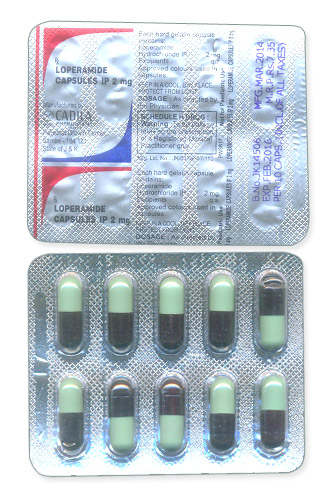
- Form of administration: oral — tablets and capsules (commonly 2 mg), oral solution (1 mg/5 mL) and orally disintegrating films; taken by mouth.
- Onset time: Imodium usually begins to work within about 1–2 hours, with some patients noticing improvement sooner.
- Duration of action: Effects typically last several hours and may persist up to 8–24 hours depending on dose and individual factors; adhere to maximum daily dosing.
- Alcohol warning: Avoid excessive alcohol while treating diarrhoea; alcohol can worsen dehydration and dizziness—use caution with other sedatives or CNS depressants.
- The most common side effect is constipation; other frequent effects include abdominal cramps, nausea, flatulence and dizziness; rare but serious risks include severe constipation/toxic megacolon and cardiac effects in overdose.
- Would you like to try imodium without a prescription?

Basic Imodium Information
- INN (International Nonproprietary Name): Loperamide
- Brand Names Available In Canada (English): Imodium; generic loperamide or Loperamide Hydrochloride from manufacturers such as Perrigo, Teva, Apotex; other global brands include Diamode and Loperamid-ratiopharm® (availability varies by SKU)
- ATC Code: A07DA03
- Forms & Dosages: Tablets 2 mg; Capsules 2 mg; Oral Solution 1 mg/5 mL; Orally Disintegrating Film 2 mg (films less common domestically)
- Manufacturers In Canada (English): Johnson & Johnson (brand holder for Imodium), Perrigo, Teva, Apotex, ratiopharm and various regional manufacturers or generic suppliers
- Registration Status In Canada (English): not specified
- OTC / Rx Classification: OTC (Over-The-Counter) for most adult formulations; some pediatric or high-dose forms may be Rx-only or require pharmacist oversight
Major National Pharmacy Chains
Canadians most often find imodium in big national chains and regional networks.
Shoppers Drug Mart, Rexall and London Drugs commonly stock branded Imodium and generics in 6, 12 and 24 tablet blister packs.
Regional chains such as Jean Coutu in Quebec, Medicine Shoppe and Pharmasave also carry loperamide products.
Some corporate stores choose which formulations to shelf, so availability of oral solution or orally disintegrating films can vary between locations and provinces.
Branded Imodium tends to be priced higher than generics supplied by Perrigo, Teva or Apotex.
Online Pharmacy Trends In Canada
Online Canadian pharmacies sell OTC loperamide nationwide, but some pediatric formulations or prescription-strength packages may be restricted online.
Certain provinces require a pharmacist consultation before shipping, and some online retailers limit delivery of liquid or paediatric packs.
Cross-border shopping from U.S. retailers is common among Canadians looking for lower prices or specific formats, but customs, missing DINs and different labelling are risks to watch for.
In our online pharmacy, imodium is available without a prescription, with discreet delivery to Canada (English) in 5-14 days.
Price Ranges By Package Size
Expect typical retail pricing in Canada to range from about $6 to $12 CAD for small 6–12 tablet packs, with branded Imodium at the higher end and generics cheaper.
Bulk packs of 24 tablets reduce per‑tablet cost but have higher upfront price; oral liquid formats cost more per dose than tablets.
Provincial drug plans such as Ontario Drug Benefit, BC PharmaCare or RAMQ rarely cover OTC loperamide, so out-of-pocket purchase is normal unless listed on a special program.
- 6–12 Tablets: ~$6–$12 CAD depending on brand and retailer.
- 24 Tablets: ~$10–$18 CAD; generics cheaper per tablet.
- Oral Solution (small bottle): higher cost per dose, variable by supplier.
Canadian Patient Insights & Satisfaction Levels
What do Canadians say when they search for relief on forums and review sites?
Reddit Canada threads, HealthBoards and provincial health forums frequently recommend Imodium for travel-related and acute non-specific diarrhoea because it works fast and is easy to carry.
Many patients report that a standard 2 mg tablet regimen quickly reduces stool frequency and restores comfort for work or travel.
Parents and caregivers often express concern about pediatric dosing and follow Health Canada and international advisories noting contraindication under 2 years.
Commonly reported downsides include constipation, occasional cramps and uncertainty about dosing in liver disease or when combined with multiple medicines.
Patients in smaller towns sometimes struggle to source oral liquid or child‑friendly formats and therefore turn to online pharmacies or cross‑border options.
Safety conversations on forums often reference cardiac and CNS risks when loperamide is misused or taken with strong CYP3A4/P‑gp inhibitors.
- Top Pros: rapid diarrhoea relief, travel convenience, OTC access in major chains.
- Top Cons: constipation risk, pediatric dosing confusion, limited liquid availability locally.
Product Overview & Brand Variants
Which products will customers see on Canadian shelves or online listings?
The INN is loperamide and the most recognisable brand is Imodium from Johnson & Johnson.
Generics are sold under loperamide or loperamide hydrochloride by suppliers such as Perrigo, Teva and Apotex.
Common retail forms in Canada match global practice: 2 mg tablets or capsules and 1 mg/5 mL oral solution.
Orally disintegrating films exist internationally (for example, Loperamid-ratiopharm®) but are inconsistently available across Canadian pharmacies.
Health Canada classification typically permits OTC sale of adult formulations, while paediatric forms or higher-dose presentations may require additional controls or pharmacist oversight.
All products marketed in Canada should carry a Drug Identification Number (DIN) on the package to confirm Health Canada registration.
Indications In Local Canadian Medical Practice
When is loperamide used according to product monographs and common practice?
Health Canada–aligned indications include acute nonspecific diarrhoea in adults and, with age limits, in children aged two years and up.
Chronic diarrhoea management such as IBS‑D or ileostomy output reduction is used under physician supervision with titrated dosing.
Pharmacists are advised not to recommend loperamide when invasive bacterial enterocolitis, pseudomembranous colitis or dysentery are suspected.
Off‑label patterns in Canadian care include specialist‑supervised use for short bowel syndrome or chemotherapy-related diarrhoea where symptom control is needed and monitoring is in place.
- Approved Uses: acute nonspecific diarrhoea (adults, children ≥2 years per monograph), chronic diarrhoea under supervision, ileostomy output reduction.
- Common Off‑Label Uses: adjunctive care in short bowel, certain chemotherapy-induced diarrhoeas with specialist oversight.
How It Works In The Body
Curious how imodium stops diarrhoea without making you sleepy?
Loperamide works on opioid receptors in the gut to slow intestinal movement, so stools pass more slowly and become firmer.
At recommended doses it acts peripherally and does not cross into the brain to produce central opioid effects.
Pharmacologically, loperamide is a synthetic phenylpiperidine acting at peripheral μ‑opioid receptors in the intestinal wall to decrease motility and increase fluid absorption.
Systemic bioavailability is minimal because of strong P‑glycoprotein efflux, but interaction with strong CYP3A4, CYP2C8 or P‑gp inhibitors can increase systemic exposure.
Typical adult symptom control begins shortly after the initial dose, with a common dosing approach of 4 mg initially then 2 mg after each loose stool up to 16 mg/day for acute use.
- Definitions: P‑gp — P‑glycoprotein transport protein that limits absorption; CYP3A4 — liver enzyme involved in drug metabolism.
Dosage & Administration
People often ask: how much and how long can I take imodium safely?
Standard adult dosing commonly used in Canada is an initial 4 mg followed by 2 mg after each loose stool with a maximum of 16 mg per day.
For acute diarrhoea many OTC monographs recommend short courses of 1–2 days and stopping if there is no improvement within 48 hours.
Pediatric dosing is age and weight dependent and many products are contraindicated under two years of age.
An example pediatric approach from international monographs used in Canada is an initial 2 mg then 1 mg after each loose stool with a typical maximum around 6 mg/day depending on age.
Lower end dosing is recommended for patients with liver impairment because reduced metabolism increases exposure risk.
Elderly patients generally do not require automatic dose reduction but need monitoring for constipation and ileus.
- Quick Cheat-Sheet: Adult: 4 mg then 2 mg after each stool (max 16 mg/day). Child: follow DIN monograph; avoid <2 years.
Contraindications & Side Effects
Which situations make imodium unsafe?
Absolute contraindications include children under two years, known hypersensitivity, acute dysentery (bloody diarrhoea with high fever), acute ulcerative colitis, invasive bacterial enterocolitis and pseudomembranous colitis.
Products are also contraindicated where abdominal pain is present without diarrhoea.
Common side effects reported include constipation, abdominal cramps, nausea, flatulence, dizziness, dry mouth and tiredness.
Rare but serious events documented in global pharmacovigilance and relevant to Canada include toxic megacolon from severe constipation, hypersensitivity reactions and cardiac arrhythmias such as QT prolongation or torsades, especially in overdose or with interacting drugs.
Overdose in children has led to CNS depression and respiratory depression; immediate emergency care is required in suspected overdose.
Advise patients to stop treatment and seek urgent care for severe abdominal pain, distension, fever, bloody stools or palpitations.
Comparable Medicines In Canada
What are the alternatives when loperamide is not suitable?
Comparable antidiarrhoeal options include diphenoxylate/atropine (Lomotil — prescription), bismuth subsalicylate (sold OTC in some markets), racecadotril (less common in Canada) and supportive probiotics.
Loperamide remains the most widely used OTC antimotility agent in Canada.
| Medicine | Class | Typical Use | Prescription Status In Canada | Example DIN |
|---|---|---|---|---|
| Loperamide (Imodium / generics) | Antipropulsive | Acute nonspecific diarrhoea, chronic diarrhoea under supervision | OTC for most adult forms | varies by SKU |
| Diphenoxylate/Atropine (Lomotil) | Opioid derivative combination | Symptomatic control of diarrhoea | Prescription | varies by SKU |
| Bismuth Subsalicylate (Pepto-Bismol) | Antisecretory / antacid | Traveller’s diarrhoea, dyspepsia | OTC in some markets | varies by SKU |
Pharmacists should weigh the pros and cons—efficacy, age limits and cardiac or salicylate cautions—before recommending an alternative.
Current Research & Trends
What have recent studies and advisories focused on?
Research from 2022–2025 emphasises safety concerns, misuse and pharmacokinetic interactions that raise systemic exposure when loperamide is combined with P‑gp or CYP inhibitors.
Regulatory advisories have recommended limiting unit‑dose blister packaging to reduce overdose risk and to improve monitoring.
Case reports of cardiac arrhythmias in overdose have informed cautious labelling and pharmacist counselling.
Canadian audits in ileostomy clinics show loperamide can reduce output when titrated carefully under specialist care.
Comparative studies continue to examine loperamide versus other agents or adjunctive probiotics, but loperamide remains standard symptomatic therapy for uncomplicated acute diarrhoea.
Common Patient Questions In Canada
Is Imodium available without a prescription in Canada?
Most adult formulations are OTC but check the product DIN and pharmacist guidance; some pediatric or higher-dose forms may be restricted.
Can I use Imodium for travellers’ diarrhoea?
It is suitable for symptomatic relief of non-bloody acute diarrhoea while travelling, but avoid use when high fever or bloody stools occur and seek medical care for severe traveller’s diarrhoea.
Is loperamide safe for children?
Products are contraindicated under two years; older children require strict age/weight dosing per the product monograph—consult a pharmacist or paediatrician.
Can I take loperamide with other medicines?
Avoid combining with strong CYP3A4/CYP2C8 or P‑gp inhibitors without pharmacist review as these raise loperamide levels and risk.
How long before I should stop using it?
Stop if symptoms continue beyond 48 hours or worsen and seek medical attention.
- Troubleshooting Tip: Rehydrate with oral rehydration solutions and use antidiarrhoeal agents short-term for symptom control.
Regulatory Status
How does Health Canada regulate Imodium and loperamide products?
Health Canada issues Drug Identification Numbers (DINs) for approved medicines and every imodium or loperamide product sold in Canada should display a DIN on the label to indicate registration.
Manufacturers submit safety, quality and efficacy data for Health Canada review before a DIN is issued and the product monograph is published.
OTC reclassifications, paediatric restrictions or labelling changes follow evolving evidence and post‑market surveillance findings.
Adverse events should be reported to Health Canada’s Canada Vigilance Program; pharmacists often assist patients with reporting when needed.
Visual Recommendations
Which images and graphics help customers decide and use imodium safely?
Create an infographic showing how loperamide works in the gut, with a clear dosing flow for adults and children and provincial notes for availability.
Use a dosing quick reference table as a responsive visual and include a red-flag “When To Seek Help” panel for urgent symptoms.
Provide a pharmacy availability map highlighting where branded versus generic stock is common across provinces.
File types: provide SVGs for infographics, PNGs for icons and accessible alt text in English (Canada).
Buying & Storage Advice
Should you buy in-store or online?
For immediate needs, visit Shoppers Drug Mart, Rexall or London Drugs where imodium and generics are commonly stocked.
Online Canadian pharmacies provide convenience and a wider SKU selection, but verify the pharmacy licence, DINs on product pages and pharmacist consultation availability before purchasing.
Cross-border U.S. purchases are common but watch for customs delays, label differences and missing DINs which can complicate safe use.
Store imodium below 25°C, protected from moisture and heat, and never freeze oral liquids.
In Canadian winters avoid leaving liquids in cars to prevent freezing and in summer avoid high temperatures in vehicles.
Guidelines For Proper Use
How would a pharmacist counsel you when recommending imodium?
Start by assessing for red flags: high fever, severe abdominal pain, bloody stools or recent antibiotic use suggest avoiding antimotility agents and seeking medical review.
For uncomplicated adult acute diarrhoea recommend the product monograph dosing—initial 4 mg then 2 mg after each loose stool up to 16 mg/day—and advise stopping if no improvement within 48 hours.
For children always verify age limits and prefer product formulations with clear dosing devices; do not recommend use under two years of age.
Review the patient’s medicine list for CYP3A4/CYP2C8 or P‑gp inhibitors and advise caution in hepatic impairment.
Recommend oral rehydration solutions as primary supportive care and use probiotics as adjuncts where appropriate.
- Pharmacist Counselling Points: DIN check, dosing cheat-sheet, interaction check, red-flag symptoms and storage advice.
Delivery Across Canada (English)
| City | Region | Delivery Time |
|---|---|---|
| Toronto | Ontario | 5-7 days |
| Montreal | Quebec | 5-7 days |
| Vancouver | British Columbia | 5-7 days |
| Calgary | Alberta | 5-7 days |
| Edmonton | Alberta | 5-7 days |
| Ottawa | Ontario | 5-7 days |
| Winnipeg | Manitoba | 5-7 days |
| Halifax | Nova Scotia | 5-9 days |
| Regina | Saskatchewan | 5-9 days |
| Saskatoon | Saskatchewan | 5-9 days |
| St. John’s | Newfoundland and Labrador | 5-9 days |
| Fredericton | New Brunswick | 5-9 days |
| Victoria | British Columbia | 5-7 days |
| Whitehorse | Yukon | 5-9 days |
Closing Practical Notes
Imodium (loperamide) is a reliable OTC option for short-term control of non-bloody acute diarrhoea in adults and in children according to monograph age limits.
Check the DIN on packaging to ensure local registration and consult a pharmacist when in doubt about interactions or paediatric dosing.
Store products below 25°C and keep oral solutions from freezing in cold Canadian winters.
If symptoms are severe, persistent beyond 48 hours or accompanied by fever or bloody stools, stop antimotility therapy and seek medical care immediately.
Pharmacists can help choose between branded Imodium, loperamide generics and alternatives such as bismuth subsalicylate or prescription diphenoxylate/atropine when appropriate.