Salazopyrin
Salazopyrin
- In most countries salazopyrin (sulfasalazine) is a prescription-only medicine; availability varies by jurisdiction and some pharmacies may sell Salazopyrin without a receipt — check local regulations. In our pharmacy it is possible to buy salazopyrin without a prescription and we offer delivery within Canada.
- Salazopyrin is used to treat ulcerative colitis, rheumatoid arthritis and juvenile idiopathic arthritis. It is a prodrug metabolized by colonic bacteria to 5‑aminosalicylic acid (anti‑inflammatory in the gut) and sulfapyridine (antibacterial and immunomodulatory), contributing to its therapeutic effects.
- Usual dosages: Ulcerative colitis — initial 1–2 g/day in divided doses, maintenance ~2 g/day (severe up to 4 g/day); Rheumatoid arthritis — start ~0.5 g/day and titrate to ≈2 g/day (max ~3 g/day); Juvenile RA (≥6 yrs) — ~30–50 mg/kg/day divided, up to about 2 g/day.
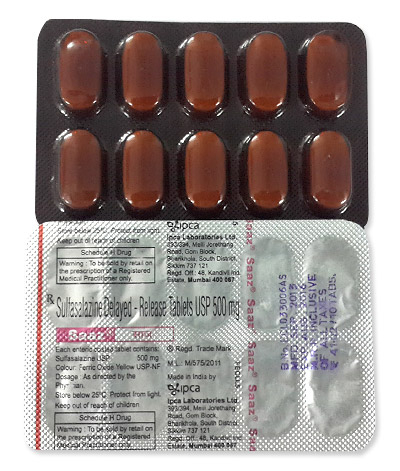
- Form of administration: oral tablets (immediate‑release 500 mg and delayed‑release/enteric‑coated 500 mg EN‑tabs); oral suspension formulations exist but are less common.
- Onset time: clinical benefit usually takes weeks — for ulcerative colitis effects often begin in 3–6 weeks; for rheumatoid/JIA improvement may take 6–12 weeks.
- Duration of action: requires daily dosing (typically divided into 2–4 doses); therapeutic effect is maintained with continued treatment and is used long‑term for maintenance/relapse prevention.
- Alcohol warning: avoid excessive alcohol — alcohol may increase the risk of liver toxicity and worsen side effects; consult your healthcare provider before drinking alcohol while taking salazopyrin.
- The most common side effect is nausea and other gastrointestinal upset (also possible: headache, dizziness, rash, reversible yellow‑orange urine/skin pigmentation, and mild hematologic changes).
- Would you like to try “salazopyrin” without a prescription?
Basic Salazopyrin Information
- INN (International Nonproprietary Name): Sulfasalazine.
- Brand Names Available In Canada (English): Azulfidine; Azulfidine EN-tabs (enteric-coated delayed-release), both typically 500 mg tablets.
- ATC Code: A07EC01.
- Forms & Dosages: Immediate-release tablets 500 mg; delayed-release (EN-tabs) 500 mg.
- Manufacturers In Canada (English): Pfizer (main Azulfidine producer) and multiple generic manufacturers; specific Canadian manufacturer listings vary by product and are recorded in Health Canada databases.
- Registration Status In Canada (English): Approved and marketed in Canada; prescription-only when listed in regulatory sources.
- OTC / Rx Classification: Prescription Only (Rx).
Availability & Price Landscape
Where can Canadian patients find salazopyrin and what will it cost?
Major National Pharmacy Chains (Shoppers Drug Mart, Rexall, London Drugs)
Shoppers Drug Mart, Rexall and London Drugs commonly stock Azulfidine and generic sulfasalazine tablets at community pharmacy locations.
Quebec chains such as Jean Coutu and Brunet also carry the product where available, with local pharmacists familiar with RAMQ processes.
Community pharmacists often keep both Pfizer Azulfidine and generic sulfasalazine on hand, while delayed‑release EN-tabs (500 mg) may be ordered through wholesalers when not routinely stocked.
Online Pharmacy Trends In Canada (Including Provincial Restrictions)
Concerned about ordering online instead of visiting a store?
Canadian online pharmacies and provincial e‑prescribing portals increasingly fulfil repeat prescriptions for sulfasalazine, using licensed pharmacists and provincial licensing checks.
Provincial dispensing rules and pharmacist scope vary, so shipping restrictions and provincial formularies influence how quickly and affordably a prescription is filled.
Cross‑border orders from the United States do occur, but these carry regulatory and import risks and lack Canadian DIN verification.
Price Ranges By Package Size (With Provincial Differences)
How much will a bottle of sulfasalazine cost where you live?
Generics are typically less expensive than Azulfidine brand tablets, with small packs (30–60 tablets) often ranging from about CAD 15 to CAD 60 depending on brand and province.
Extended packs or brand‑name EN‑tabs are usually higher in retail price and can be subject to provincial markups or special‑authority limits on coverage.
Provincial formularies such as Ontario Drug Benefit, BC PharmaCare and RAMQ list sulfasalazine under anti‑inflammatory/DMARD categories, but coverage varies by indication and may require special authority.
Canadian Patient Insights & Satisfaction Levels
What do real Canadian patients say about salazopyrin on forums and review sites?
Forum And Review Platforms (Reddit Canada, HealthBoards, AskDocs)
Canadian patients discuss sulfasalazine on platforms such as Reddit (r/Crohns, r/UlcerativeColitis), HealthBoards and local Facebook support groups.
Conversations focus on tolerability, monitoring requirements and how long it takes to feel benefits.
Reported Benefits And Challenges From Canadian Patients
Many Canadian posters report remission induction or symptom control for ulcerative colitis and rheumatoid arthritis after several weeks of therapy.
Early gastrointestinal side effects such as nausea or abdominal discomfort are commonly described, along with harmless yellow‑orange urine or skin coloration that surprises some patients.
Some patients prefer brand Azulfidine EN-tabs for perceived better GI tolerability, while others accept generics for cost savings and equivalent outcomes.
Practical patient themes include the need for baseline bloodwork and periodic monitoring (CBC, LFTs), navigating provincial drug coverage and special‑authority forms, and pharmacist counselling on dose‑splitting and food strategies to manage nausea.
Quote (anonymised): "My Azulfidine helped my UC after about 4 weeks, but the pharmacist warned me to expect orange urine and to get regular blood tests."
Regional variation exists; Quebec patients often reference RAMQ procedures and Jean Coutu pharmacists for repeat authorisations and paperwork help.
Product Overview & Brand Variants
Which names and forms of salazopyrin appear in Canadian practice?
INN And Brand Names Used In Canada
The International Nonproprietary Name (INN) is sulfasalazine.
Brand names present in Canada include Azulfidine and Azulfidine EN‑tabs, both commonly supplied as 500 mg tablets for oral use.
Generics of sulfasalazine are also available from multiple manufacturers and are widely used in community pharmacy supply chains.
Legal Classification Under Health Canada
Sulfasalazine products are prescription‑only medicines in major markets and are listed as Rx in regulatory summaries.
Products marketed in Canada carry a Drug Identification Number (DIN) issued by Health Canada, which links the product to manufacturer, formulation and package size in the Drug Product Database.
Definition list for product pages: INN — Sulfasalazine.
Definition list for product pages: Brand — Azulfidine, Azulfidine EN‑tabs, generics.
Definition list for product pages: Form — Immediate‑release tablet or delayed‑release EN‑tab (500 mg).
Definition list for product pages: DIN — check Health Canada Drug Product Database for current DINs and manufacturer specifics.
Definition list for product pages: Manufacturer — Pfizer and various generic suppliers; consult product labelling for exact source.
Indications In Local Canadian Medical Practice
What conditions is salazopyrin used for in Canada and how is it prescribed?
Approved Uses (Health Canada DIN Context)
Health Canada‑approved indications follow international practice: ulcerative colitis for induction and maintenance, rheumatoid arthritis and juvenile idiopathic arthritis in children aged six years and older.
Typical adult dosing for ulcerative colitis starts at 1–2 g/day in divided doses with usual maintenance around 2 g/day and severe cases up to 4 g/day.
For rheumatoid arthritis the usual approach is to start low (about 0.5 g/day) and titrate to approximately 2 g/day, with a maximum around 3 g/day.
For children aged six and above dosing is weight‑based at roughly 30–50 mg/kg/day, generally up to about 2 g/day.
Off‑Label Patterns In Canadian Healthcare
Clinicians sometimes prescribe sulfasalazine off‑label for conditions such as spondyloarthritis or psoriatic arthritis when considering conventional DMARD options.
Off‑label prescriptions often require documentation and may need prior authorisation for provincial coverage through ODB, PharmaCare or RAMQ depending on the province.
Table (short) for clinicians and patients: indication — starting dose — maintenance — DIN/formulary note.
How It Works In The Body
How does salazopyrin reduce inflammation and help with both gut and joint diseases?
Layman’s Explanation (Canadian Patient‑Friendly Tone)
Sulfasalazine is a prodrug that is broken down by gut bacteria into two active parts: 5‑aminosalicylic acid (5‑ASA) and sulfapyridine.
5‑ASA acts locally in the colon to reduce inflammation, which explains the benefit in ulcerative colitis.
Sulfapyridine has systemic immunomodulatory effects that help control inflammatory arthritis symptoms.
Patients should know that benefits often take several weeks to appear and that the drug works differently from fast‑acting steroids.
Clinical Detail From Health Canada Resources
The ATC classification for sulfasalazine is A07EC01 in intestinal anti‑inflammatory agents.
Enteric‑coated EN‑tabs are designed to resist stomach acid and release active components in the intestine, which can reduce early GI irritation.
Mechanism summary: bacterial cleavage in the gut → release of 5‑ASA and sulfapyridine → local anti‑inflammatory effect in colon and systemic immunomodulation for arthritis.
Dosage & Administration
What dosing schedules do Canadian guidelines and product monographs recommend?
Standard Regimens Per Canadian Guidelines
For ulcerative colitis in adults, start at 1–2 g/day in divided doses, with maintenance typically around 2 g/day and up to 4 g/day for severe disease.
For rheumatoid arthritis, initiate therapy at approximately 0.5 g/day then slowly titrate to about 2 g/day in divided doses, with a typical maximum of 3 g/day.
For children aged six years and older, a weight‑based regimen of 30–50 mg/kg/day in divided doses is common, usually not exceeding about 2 g/day.
Split the total daily dose into two to four administrations and take with food and a full glass of water to reduce nausea.
Adjustments By Patient Type (With Canadian Clinical Notes)
Elderly patients should start at the lower end of dosing ranges and be monitored closely for adverse effects.
Renal or hepatic impairment warrants caution, dose reduction or avoidance depending on severity, and closer laboratory follow‑up.
Missed‑dose advice: take as soon as remembered unless it is near the next dose, and do not double up.
Overdose action: seek immediate medical attention; supportive care is recommended for symptoms such as vomiting or drowsiness.
Contraindications & Side Effects
Who should not take salazopyrin and what adverse effects should patients watch for?
Common (Health Canada‑Approved List)
Absolute contraindications include known sulfonamide or salicylate allergy, porphyria, intestinal or urinary obstruction, and infants under two years of age.
Common side effects include gastrointestinal upset (nausea, vomiting, abdominal pain, diarrhea), headache, dizziness and reversible yellow‑orange urine or skin discolouration.
Reversible oligospermia and mild hematologic changes such as small reductions in blood counts may occur.
Rare But Serious (With Canadian Pharmacovigilance Data)
Rare but serious adverse events reported in pharmacovigilance systems include agranulocytosis, severe hepatic injury, Stevens–Johnson syndrome and other severe hypersensitivity reactions.
Patients must stop the drug and seek urgent care for fever, sore throat, jaundice, severe rash or unexplained bruising.
Baseline and periodic CBC and LFT monitoring are recommended; an initial check at baseline then at 2–4 weeks after starting is a common practice, with ongoing checks every 1–3 months as clinically indicated.
Consider G6PD screening where relevant, given hemolysis risk in deficient individuals.
Comparable Medicines In Canada
Which alternative drugs might be considered instead of sulfasalazine?
Alternatives Table (With DIN References)
Common alternatives include mesalazine (Asacol, Pentasa) for ulcerative colitis, and conventional DMARDs such as methotrexate, leflunomide and hydroxychloroquine for rheumatoid arthritis.
Mesalazine provides topical 5‑ASA activity with generally fewer systemic side effects than sulfasalazine, but it may not provide the same systemic immunomodulatory benefit for arthritis.
Methotrexate and leflunomide are systemic DMARDs used for RA and JIA with different monitoring requirements than sulfasalazine.
Pros And Cons List
- Pros of Sulfasalazine: Low cost, oral dosing, combined local and systemic action useful in UC and RA.
- Cons of Sulfasalazine: Sulfonamide allergy risk, monitoring burden (CBC/LFT), early GI intolerance and urine discoloration.
- Pros of Mesalazine: Fewer systemic side effects for isolated colonic disease.
- Cons of Mesalazine: May be less helpful for systemic arthritis symptoms.
Current Research & Trends
What recent studies and trends have shaped sulfasalazine use from 2022 to 2025?
Research from 2022–2025 looks at optimising sulfasalazine within combination DMARD regimens and comparing tolerability of EN‑tabs versus immediate‑release forms.
Pharmacogenetic work has explored variations in sulfapyridine metabolism that influence adverse effect profiles and may inform personalised therapy in the future.
Canadian observational cohorts have contributed real‑world evidence on remission rates in ulcerative colitis and the steroid‑sparing effect in rheumatoid arthritis.
Ongoing trials examine sulfasalazine’s role in spondyloarthritis subtypes and its place in step‑up therapy where resource constraints make older DMARDs attractive options.
Common Patient Questions In Canada
Which questions do patients ask most often when they are prescribed salazopyrin?
- Q: Is sulfasalazine covered by my provincial plan?
A: Coverage varies by province and formulary; check Ontario Drug Benefit, BC PharmaCare or RAMQ for criteria and special authorities needed for some indications.
- Q: Can I buy it over the counter?
A: No; sulfasalazine is prescription‑only in Canada.
- Q: How soon will I feel better?
A: For rheumatoid arthritis, many patients report improvement in 6–12 weeks; for ulcerative colitis induction, 3–6 weeks is common.
- Q: What monitoring is needed?
A: Baseline CBC, liver function tests and renal function, then repeat labs at 2–4 weeks and regularly thereafter as advised by the prescriber.
- Q: Can I drive?
A: Caution is advised if dizziness or drowsiness occurs.
- Q: Is it safe in pregnancy?
A: Discuss risks and benefits with the prescriber; treatment decisions depend on the condition being treated and available alternatives.
Regulatory Status
How does Health Canada regulate salazopyrin and why is the DIN important?
Health Canada Approval Process
Health Canada assesses safety, efficacy and quality before authorising a product for sale in Canada.
When approved, a product receives a Drug Identification Number (DIN) that links the marketed item to its manufacturer, strength and package size.
DIN Number Relevance
The DIN is useful for clinicians, pharmacists and patients to verify exact product formulation and manufacturer in the Health Canada Drug Product Database.
Retail product pages should display the DIN, manufacturer name and package sizes to aid verification and reimbursement processing.
Recommended product page fields include DIN, manufacturer, strength, package size, lot/batch placeholders and a Health Canada product link when available.
Visual Recommendations
What images and infographics help Canadian shoppers and patients understand salazopyrin best?
Infographic Ideas For Canadian Context
Design an infographic showing the mechanism of action: gut bacteria split sulfasalazine → 5‑ASA + sulfapyridine → local colon anti‑inflammatory and systemic immunomodulation.
Create a dosing timeline graphic that contrasts weeks‑to‑effect for ulcerative colitis (3–6 weeks) versus rheumatoid arthritis (6–12 weeks).
Include a monitoring checklist visual with baseline and follow‑up lab timing and a provincial coverage map highlighting ODB, PharmaCare and RAMQ notes.
Product Images And Mandatory Label Elements
Product images should show front and back of box or blister with visible DIN and manufacturer details in the image or accompanying caption.
Include an EN‑tab cross‑section graphic to illustrate enteric coating for delayed release and reduce early GI side‑effect concerns.
Accessible icons to add: Rx only, monitoring required, pregnancy consult required and common side effects.
Buying & Storage Advice
How should Canadian patients buy and store salazopyrin safely?
In-Store Vs. Online Canadian Purchase Tips
Bring a valid prescription and provincial health card when buying in‑store to speed dispensing and coverage checks.
Compare retail and licensed online pharmacy pricing, and verify the pharmacy shows a Canadian DIN and pharmacist licensure before purchase.
Be aware of cross‑border purchase risks; products without a Canadian DIN may be ineligible for provincial reimbursement.
In our online pharmacy, salazopyrin is available without a prescription, with discreet delivery to Canada (English) in 5-14 days.
Proper Storage With Canadian Climate Considerations
Store at around 25°C (77°F) with permitted excursions between 15–30°C, keeping the medicine in a tightly closed container away from moisture and light.
Avoid leaving tablets in vehicles during extreme Canadian winter cold or summer heat to prevent product compromise.
When travelling, keep medicines in original packaging with DIN visible and bring a copy of the prescription or pharmacy label for customs or clinic visits if needed.
Guidelines For Proper Use
What should prescribers and pharmacists tell patients about safe and effective use of salazopyrin?
Canadian Doctor/Pharmacist Advice Style
Explain expected onset of benefit and the need for regular blood tests before and after starting therapy.
Advise taking the drug with food, splitting daily doses into two to four administrations, and what to do for missed doses.
Counsel patients to stop the medicine and seek urgent care for fever, sore throat, jaundice or severe rash.
Monitoring Checklist And Follow‑Up Schedule
Baseline tests: CBC, liver function tests, renal function and pregnancy test when relevant.
Early follow‑up lab suggested at 2–4 weeks after starting, then every 1–3 months initially, with frequency adjusted by the treating clinician.
Provide a printable wallet card listing the drug name (sulfasalazine; brand/Azulfidine), DIN, dosing, emergency signs and the pharmacy contact number.
Document counselling and ensure informed consent for the monitoring schedule and potential side effects.
Delivery Across Canada (English)
| City | Region | Delivery Time |
|---|---|---|
| Toronto | Ontario | 5-7 days |
| Montreal | Quebec | 5-7 days |
| Vancouver | British Columbia | 5-7 days |
| Calgary | Alberta | 5-7 days |
| Edmonton | Alberta | 5-7 days |
| Ottawa | Ontario | 5-7 days |
| Winnipeg | Manitoba | 5-7 days |
| Halifax | Nova Scotia | 5-9 days |
| Victoria | British Columbia | 5-9 days |
| Saskatoon | Saskatchewan | 5-9 days |
| St. John's | Newfoundland and Labrador | 5-9 days |
| London | Ontario | 5-7 days |
| Kingston | Ontario | 5-9 days |