
Requip
Requip
- Requip (ropinirole) is classified as a prescription (Rx) medicine in most countries; however, some pharmacies or online suppliers may provide Requip without requiring a prescription or receipt — availability varies by location and may conflict with local regulations, so consult a healthcare professional and local laws before obtaining it.
- Requip is used to treat Parkinson’s disease and restless legs syndrome (RLS); it is a selective dopamine agonist (acts primarily at D2/D3 receptors) that stimulates dopamine pathways to reduce motor symptoms and abnormal sensations.
- Usual doses: Parkinson’s — start 0.25 mg three times daily (TID) and increase slowly (titrate weekly) as tolerated up to a typical maximum of 24 mg/day; RLS — start 0.25 mg once daily 1–3 hours before bedtime, increasing as needed up to about 4 mg/day. Dose adjustments recommended for the elderly and patients with hepatic/renal impairment.
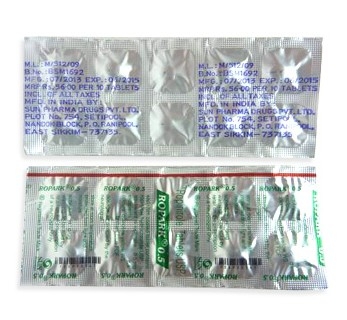
- Form of administration: oral tablets — immediate‑release tablets (0.25 mg, 0.5 mg, 1 mg, 2 mg, 3 mg, 4 mg, 5 mg) taken multiple times daily or extended‑release (XR) tablets (2 mg, 4 mg, 6 mg, 8 mg, 12 mg) taken once daily; usually supplied in blister packs or bottles.
- Onset time: immediate‑release tablets commonly begin to take effect within about 30–60 minutes; extended‑release formulations have a slower onset and reach therapeutic levels over several hours.
- Duration of action: immediate‑release dosing typically covers roughly 6–8 hours per dose (hence TID dosing); extended‑release formulations are designed to provide once‑daily, approximately 24‑hour coverage.
- Alcohol warning: avoid or limit alcohol while taking Requip — alcohol can increase drowsiness, dizziness and the risk of orthostatic hypotension or sudden sleep episodes and may worsen side effects.
- The most common side effect is nausea (other frequent effects include dizziness/lightheadedness, somnolence, headache, constipation and peripheral edema).
- Would you like to try requip without a prescription?



Availability & Price Landscape
- INN (International Nonproprietary Name): Ropinirole
- Brand Names Available In Canada (English): Requip (international), Requip XL (international), Adartrel (some regions), Generic "Ropinirole" from global manufacturers (Teva, Mylan, Sandoz, Accord, Sun Pharma). Note: Requip is discontinued in the US but generics are widely available.
- ATC Code: N04BC04 (Selective dopamine agonists for the nervous system, anti‑Parkinson drugs)
- Forms & Dosages: Immediate‑release tablets 0.25 mg, 0.5 mg, 1 mg, 2 mg, 3 mg, 4 mg, 5 mg; Extended‑release tablets 2 mg, 4 mg, 6 mg, 8 mg, 12 mg. No injectable or topical forms commercially available.
- Manufacturers In Canada (English): Local branded suppliers are not specified in the raw data; global suppliers include GlaxoSmithKline (original) and generics from Teva, Mylan, Sandoz, Accord and Sun Pharma.
- Registration Status In Canada (English): Specific Canadian DIN listings are not specified in the raw data; ropinirole products are approved worldwide for Parkinson’s disease and restless legs syndrome and require national authorisation (DIN in Canada) to be dispensed.
- OTC / Rx Classification: Prescription drug (Rx) in all markets.
Major National Pharmacy Chains (Shoppers Drug Mart, Rexall, London Drugs)
Finding ropinirole at a large chain usually means the pharmacy will stock common immediate‑release and extended‑release tablets or be able to order by DIN.
Shoppers Drug Mart, Rexall and London Drugs commonly dispense generics and can check provincial drug coverage for you.
Regional independents and Jean Coutu (in Quebec) also maintain DIN‑level ordering; ask the pharmacist to confirm the manufacturer and pack size before purchase.
Online Pharmacy Trends In Canada (Including Provincial Restrictions)
Canadian patients increasingly compare in‑store prices to licensed Canadian online pharmacies when searching for ropinirole Canada options.
Some provinces require local dispensing or limit out‑of‑province dispensing, which can affect online orders and provincial drug coverage.
Cross‑border ordering from the US is common but carries regulatory and coverage risks; it can void provincial reimbursement and may not match Canadian DINs.
Always verify pharmacy licensure, DIN and whether the online seller is a licensed Canadian pharmacy before ordering.
Price Ranges By Package Size (With Provincial Differences)
Retail price varies by strength, pack size (common pack counts 21–100 tablets), brand and manufacturer.
Unit cost typically falls with larger packs and when purchasing generics rather than branded products.
Provincial formularies (Ontario Drug Benefit, BC PharmaCare, RAMQ, etc.) list coverage by DIN and may require prior authorisation for Parkinson’s or RLS indications.
Ask your pharmacist for a price comparison: many pharmacies will check provincial coverage and may offer price‑matching on generic ropinirole tablets.
Canadian Patient Insights & Satisfaction Levels
Forum And Review Platforms (Reddit Canada, HealthBoards, AskDocs)
Patients post real‑world experiences on Reddit Canada, HealthBoards and provincial support group forums when researching ropinirole for restless legs or Parkinson’s.
These platforms often highlight differences between immediate‑release ropinirole tablets and extended‑release versions, and real perceptions of efficacy and side effects.
Drug review pages and pharmacy ratings also shape where Canadians choose to buy or switch ropinirole generics.
Reported Benefits And Challenges From Canadian Patients
Many Canadians report clear benefit for RLS at low evening doses, with reduced nighttime leg discomfort and improved sleep.
For early Parkinson’s disease, patients note better motor control and appreciate extended‑release options for once‑daily convenience.
Common challenges during titration include nausea, daytime sleepiness and orthostatic dizziness.
Some patients describe emergence of compulsive behaviours such as gambling or compulsive shopping while on dopamine agonists.
Most patients tolerate switching between brands or generics without loss of effect, though a minority report subtle tolerability differences.
- Top 5 Patient Priorities: efficacy, side effects, cost, dosing convenience, provincial coverage.
Product Overview & Brand Variants
INN And Brand Names Used In Canada
The International Nonproprietary Name is ropinirole.
International brand names include Requip and Requip XL, while Adartrel appears in some markets.
In Canada, generics from manufacturers such as Teva, Mylan and Sandoz are most commonly supplied.
Available forms are immediate‑release tablets (0.25–5 mg) and extended‑release tablets (2–12 mg).
Legal Classification Under Health Canada
Ropinirole is a prescription medication regulated by Health Canada and products must carry a Drug Identification Number (DIN) to be dispensed.
Pharmacies confirm DIN, manufacturer and pack format (blister versus bottle) when filling prescriptions.
Product monographs linked to each DIN provide official indications, dosages and safety information for clinicians and pharmacists to consult.
Indications In Local Canadian Medical Practice
Approved Uses (Health Canada DIN Context)
Health Canada‑authorised uses for ropinirole mirror international approvals: Parkinson’s disease and restless legs syndrome (RLS).
Clinicians select immediate‑release tablets for multiple daily dosing in Parkinson’s or extended‑release for once‑daily convenience as tolerated.
DIN product monographs specify the indicated uses and the dosing schedules for each authorised product.
Off‑Label Patterns In Canadian Healthcare
Occasional off‑label use occurs for other dopamine‑responsive movement disorders or circadian‑related sleep symptoms, but prescribers document informed consent.
For RLS, prescribers favour starting low (0.25 mg in the evening) and monitor for augmentation with continued use.
Hospital or provincial formularies may require step therapy or list preferred DINs and prior authorisation rules for reimbursement.
How It Works In The Body
Layman’s Explanation (Canadian Patient‑Friendly Tone)
Think of ropinirole as a chemical stand‑in for dopamine — a messenger in the brain that helps control movement and sensations in the legs.
When dopamine‑producing cells decline in Parkinson’s, ropinirole helps reduce tremor, stiffness and slowness.
For restless legs syndrome, it quiets the overactive nerve signals that cause the urge to move and improves sleep for many people.
Clinical Detail From Health Canada Resources
Ropinirole is a selective dopamine agonist with ATC code N04BC04 acting primarily at D2/D3 receptors.
Immediate‑release tablets produce shorter plasma peaks and typically require multiple daily doses, while extended‑release tablets give smoother once‑daily exposure.
Product monographs detail onset of action, half‑life, hepatic metabolism and recommended monitoring during dose escalation.
Dosage & Administration
Standard Regimens Per Canadian Guidelines
Parkinson’s disease: start 0.25 mg three times daily and increase slowly, usually weekly as tolerated, up to a maximum of 24 mg daily.
Restless legs syndrome: start 0.25 mg once daily 1–3 hours before bedtime and titrate as needed; usual maximum around 4 mg daily.
Extended‑release products are available in 2–12 mg strengths and allow once‑daily dosing for patients who benefit from simplified regimens.
Adjustments By Patient Type (With Canadian Clinical Notes)
Elderly patients may be more sensitive and should have slower titration with monitoring for orthostatic hypotension and falls.
Severe hepatic impairment is a concern because ropinirole is hepatically metabolised; severe cases may contraindicate use.
Renal impairment: use caution and consider dose adjustment in severe cases.
Children: safety and efficacy are not established and use is not generally recommended.
Contraindications & Side Effects
Common (Health Canada‑Approved List)
Absolute contraindication is known hypersensitivity to ropinirole or any excipients.
Common side effects include nausea, vomiting, dizziness, somnolence, headache, constipation, insomnia, peripheral oedema and orthostatic hypotension.
Patients should be counselled about nausea during titration and measures to reduce dizziness, such as rising slowly from sitting.
Rare But Serious (With Canadian Pharmacovigilance Data)
Serious risks include hallucinations, sudden sleep episodes and impulse control disorders such as pathological gambling or compulsive shopping.
Canadian pharmacovigilance highlights the importance of monitoring for sudden sleep onset and behavioural changes while on dopamine agonists.
If patients experience excessive drowsiness, sudden sleep attacks or new compulsive behaviours, they should contact their prescriber or pharmacist immediately and stop driving.
Comparable Medicines In Canada
Alternatives Table (With DIN References)
| Medicine | Typical Form | Pros | Cons |
|---|---|---|---|
| Pramipexole (Mirapexin/Sifrol) | Oral tablets (immediate and some ER options) | Similar efficacy for early Parkinson’s; familiar dosing options | May cause somnolence and impulse control disorders |
| Rotigotine (Neupro) | Transdermal patch | Continuous delivery, useful for swallowing issues or motor fluctuations | Skin irritation risk; patch cost may be higher |
| Levodopa/Carbidopa | Oral combinations | Gold standard for motor symptom control | Long‑term dyskinesia risk; more complex dosing |
| Bromocriptine, Cabergoline | Oral dopamine agonists (ergot derivatives) | Effective dopamine agonists | Less commonly used due to side effect profiles |
Pros And Cons List
Pramipexole: good alternative with similar benefits but different tolerability profile.
Rotigotine patch: helpful for continuous delivery and adherence but may be costlier and cause skin reactions.
Levodopa: strongest motor benefit but long‑term motor complications are a consideration.
Choice depends on symptoms, side‑effect risk, comorbidities and provincial formulary preferences (DIN‑based).
Current Research & Trends
Major Canadian Or International Studies 2022–2025
Recent research themes include long‑term safety monitoring for impulse control disorders and sleep attacks in dopamine agonist users.
Comparative effectiveness studies look at extended‑release versus immediate‑release formulations for tolerability and adherence.
Real‑world registry data and observational cohorts from Canadian movement‑disorder clinics inform provincial formulary decisions and prescriber practice.
Clinicians and pharmacists should monitor PubMed and Health Canada safety advisories for updates on pharmacovigilance and new trials.
Common Patient Questions In Canada
Can I get ropinirole covered?
Check your provincial formulary (Ontario Drug Benefit, BC PharmaCare, RAMQ) and ask your pharmacist about DIN‑specific coverage or prior‑auth requirements.
Can I switch generics?
Many patients switch between generics without issue; discuss any perceived changes in effect or side effects with your prescriber or pharmacist.
What about driving?
Avoid driving if you experience excessive sleepiness or sudden sleep episodes and report these immediately to your healthcare team.
Pregnancy and breastfeeding?
Use only if benefits outweigh risks; discuss alternatives with your prescriber.
What interactions matter?
Antipsychotics and dopamine antagonists can reduce effectiveness; antihypertensives may worsen orthostatic symptoms; always review the full medication list with a pharmacist.
Missed doses and overdose?
Do not double doses; for overdose symptoms such as severe agitation or hallucinations, seek emergency care immediately.
Regulatory Status
Health Canada Approval Process
Ropinirole products must pass pre‑market review showing quality, safety and efficacy to receive Health Canada authorisation.
Once authorised, products receive a Drug Identification Number (DIN) that links to the product monograph and packaging details.
DIN Number Relevance
The DIN identifies the exact product, strength and manufacturer and is used by pharmacies and provincial payers to determine coverage eligibility.
When ordering or comparing products, ask your pharmacist for the DIN since different DINs can mean different coverage rules even if the active ingredient is the same.
Definitions: DIN = Drug Identification Number; NOC = Notice of Compliance; Product monograph = official prescribing and safety information for that DIN.
Visual Recommendations
Infographic Ideas For Canadian Context
A dosage flowchart that shows IR versus ER dosing pathways with starting doses, titration steps and maximum doses for Parkinson’s and RLS will help patients follow directions safely.
A provincial coverage map linking to Ontario Drug Benefit, BC PharmaCare and RAMQ formulary pages clarifies reimbursement and prior authorisation steps by DIN.
Side‑effect action cards should list what to do for nausea, orthostatic hypotension, sudden sleep episodes and impulse‑control signs.
Comparison graphics showing ropinirole, pramipexole and rotigotine (form, dosing frequency, pros and cons) support shared decision making.
Ensure all visuals use accessible colours, alt text and Canadian English terminology for clarity and conversion.
Buying & Storage Advice
In‑Store Vs. Online Canadian Purchase Tips
Always use a licensed Canadian pharmacy or a trusted chain such as Shoppers Drug Mart, Rexall, London Drugs or Jean Coutu in Quebec.
Verify the DIN and manufacturer before purchase and compare unit prices across stores and licensed Canadian online pharmacies.
For provincial reimbursement, present your prescription and drug plan card; online pharmacies may require faxed or uploaded prescriptions and must follow provincial dispensing rules.
In our online pharmacy, requip is available without a prescription, with discreet delivery to Canada (English) in 5‑14 days.
Proper Storage With Canadian Climate Considerations
Store ropinirole at 20–25°C (68–77°F) with allowable excursions between 15–30°C (59–86°F).
Protect tablets from light and moisture and keep them in the original container out of reach of children.
Due to cold Canadian winters and hot summers, avoid storing medication in vehicles or near heaters; when travelling keep medication in original packaging with a copy of your prescription and DIN.
Guidelines For Proper Use
Canadian Doctor/Pharmacist Advice Style
Start low and go slow when titrating to reduce nausea and dizziness; follow the DIN monograph titration schedule for the specific product dispensed.
Consider extended‑release tablets for adherence if once‑daily dosing is preferred or appropriate for the indication.
Warn patients about sudden sleep onset and advise against driving until stability on therapy is confirmed.
Review interactions with antipsychotics, antihypertensives and CYP1A2 inhibitors and monitor elderly patients closely for falls.
Schedule early follow‑up during titration to assess tolerability and confirm provincial plan claims linked to the DIN.
Delivery Across Canada (English)
| City | Region | Delivery Time |
|---|---|---|
| Toronto | Ontario | 5–7 days |
| Montreal | Quebec | 5–7 days |
| Vancouver | British Columbia | 5–7 days |
| Calgary | Alberta | 5–7 days |
| Edmonton | Alberta | 5–7 days |
| Ottawa | Ontario | 5–7 days |
| Winnipeg | Manitoba | 5–7 days |
| Quebec City | Quebec | 5–7 days |
| Halifax | Nova Scotia | 5–9 days |
| Victoria | British Columbia | 5–9 days |
| Saskatoon | Saskatchewan | 5–9 days |
| St. John’s | Newfoundland and Labrador | 5–9 days |
| London | Ontario | 5–7 days |
Visual Recommendations
Infographic Ideas For Canadian Context (Repetition Removed Where Useful)
Provide a printable dosing flowchart that clearly differentiates IR and ER pathways with starting dose, titration increments and maximum daily doses for Parkinson’s and RLS.
Create a provincial coverage quick‑link map showing where to find Ontario Drug Benefit, BC PharmaCare and RAMQ formularies and typical prior authorisation notes by DIN.
Produce a side‑effect action card summarising what to do for nausea, orthostatic hypotension, sudden sleep episodes and impulse‑control warning signs.
Guidelines For Proper Use (Reiteration For Clinicians And Patients)
Canadian Doctor/Pharmacist Advice Style (Practical Checklist)
Confirm the patient’s provincial drug plan and the DIN before dispensing to ensure reimbursement and correct product selection.
Provide a written titration schedule and a small patient card summarising dosing times, common side effects and emergency contact details for adverse events.
Encourage patients to report sudden sleep episodes or new compulsive behaviours immediately and stop driving until cleared by their prescriber.
Summary And Next Steps
Ropinirole (Requip and generics) is a prescription dopamine agonist used for Parkinson’s disease and restless legs syndrome, available in immediate‑release and extended‑release tablets.
Canadians should check DIN‑specific provincial coverage, discuss titration and side‑effect monitoring with their pharmacist, and report any concerning sleep or behavioural symptoms promptly.
For purchase, always verify DIN and manufacturer and use licensed Canadian pharmacies to minimise legal and safety risks.