Eldepryl
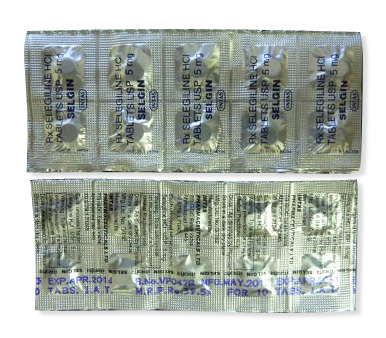
Eldepryl
- In many countries eldepryl (selegiline) is prescription-only (Rx) — approved distributors include pharmacies and licensed wholesalers; however, some pharmacies may dispense it without presenting a prescription in certain jurisdictions or via informal channels (availability varies by country, so always check local rules).
- Eldepryl (selegiline) is used primarily as an adjunct treatment for Parkinson’s disease to increase central dopamine levels by irreversibly inhibiting monoamine oxidase B (MAO‑B), a dopamine‑metabolizing enzyme.
- Usual adult doses for Parkinson’s disease are 5–10 mg daily (commonly 5 mg twice daily) for oral tablets/capsules; orally disintegrating tablets (Zelapar) are typically 1.25–2.5 mg once daily; transdermal patches (Emsam) use different dosing for depression (6–12 mg/24 hr) and are not interchangeable without guidance.
- Forms of administration include oral tablets and capsules, orally disintegrating tablets (ODT), and transdermal patch; tablets/capsules/ODTs are taken by mouth, patches applied to intact skin.
- Onset: MAO‑B inhibition begins within hours of dosing, but noticeable symptomatic improvement for Parkinson’s symptoms may take days to a few weeks.
- Duration of action: therapeutic effect is generally maintained with once- or twice-daily dosing (about 24 hours per daily dose); because selegiline irreversibly inhibits MAO‑B, enzyme recovery and full loss of effect can take several days to weeks after stopping.
- Alcohol warning: avoid excessive alcohol; alcohol can increase risk of dizziness, orthostatic effects and may worsen side effects — also follow dietary restrictions (avoid high-tyramine foods) to reduce risk of hypertensive reactions.
- The most common side effect is nausea; other common effects include dry mouth, dizziness, insomnia, headache, abdominal pain and increased sweating.
- Would you like to try eldepryl without a prescription?
Basic Eldepryl Information
- INN (International Nonproprietary Name): Selegiline (also known as Selegilina, Selegilinum, L-Deprenalin).
- Brand Names Available In Canada (English): Eldepryl; Zelapar (orally disintegrating tablet); Emsam (transdermal patch) and various generic selegiline products under global suppliers such as Sun Pharma, Teva, Sandoz, Mylan, and others — packaging examples include capsules (5 mg), tablets (5 mg, 10 mg), and ODTs (1.25 mg).
- ATC Code: N04BD01 — Monoamine Oxidase B Inhibitors, anti‑parkinson drugs.
- Forms & Dosages: Tablet 5 mg and 10 mg (blisters of 28 or 100); Capsule 5 mg (blisters); Orally Disintegrating Tablet 1.25 mg (Zelapar) in blisters; Transdermal Patch 6, 9, 12 mg/24 hr (Emsam).
- Manufacturers In Canada (English): Not specified in the available data; international suppliers listed include Somerset Pharmaceuticals, Valeant, Mylan, Sun Pharma, Teva, Sandoz, Intas, Abbott, and Sovereign Medical.
- Registration Status In Canada (English): Not specified in the available data; selegiline is listed as prescription only in major jurisdictions such as the US, UK and EU.
- OTC / Rx Classification: Prescription Only (Rx) in most jurisdictions per available data.
Major National Pharmacy Chains (Shoppers Drug Mart, Rexall, London Drugs)
Where will you most likely find eldepryl on the pharmacy shelf or behind the counter?
Large pharmacy chains with in‑store prescription services commonly handle selegiline prescriptions and dispensing in Canada.
Shoppers Drug Mart, Rexall and London Drugs frequently fulfil Parkinson’s prescriptions and provide pharmacist counselling at pickup.
Jean Coutu in Quebec is the regional chain patients often contact for local counselling and stock checks.
Stock is most commonly limited to the 5 mg capsule/tablet strengths.
Orally disintegrating tablets such as Zelapar are less commonly stocked in community stores and may require special order.
| Province/Territory | Shoppers Drug Mart | Rexall | London Drugs / Jean Coutu Notes | Typical Packaging At Chain |
|---|---|---|---|---|
| Ontario | Regular fulfilment; in‑store counselling available | Regular fulfilment; may require order for ODT | London Drugs limited to Western Canada; Jean Coutu in Quebec only | Blister packs or bottles for 5 mg; ODT by order |
| Quebec | Shoppers locations serve prescriptions where available | Rexall available in some areas; special order common | Jean Coutu: commonly used for counselling and local dispensing | Blister packs typical; some stores use bottles |
| British Columbia | Available; check store stock for ODT | Available; stock varies | London Drugs: regular fulfilment and pharmacist counselling | Blisters (28) common; bottle options variable |
| Alberta / Saskatchewan / Manitoba | Available via chain pharmacies; some locations by order | Available; stock differences by site | London Drugs in Alberta (Western focus); Jean Coutu not present | Blisters common for tablets/capsules |
| Atlantic Provinces / Territories | Often dispensed; may require inter‑store transfer | Dispensed in larger centres; smaller towns may need mail order | Jean Coutu not present; chain availability varies | Blister packs typically used for dispensing |
Online Pharmacy Trends In Canada (Including Provincial Restrictions)
- Licensed Canadian online pharmacies dispense selegiline only with a valid prescription and a Drug Identification Number (DIN) verification where required.
- Some provinces restrict out‑of‑province dispensing or electronic claim submissions, so online pharmacies must comply with provincial pharmacy laws.
- Chain‑run online services (for example from major banners) usually offer pharmacist counselling by phone or secure message before dispatch.
- Independent Canadian online pharmacies provide home delivery and auto‑refill services but require a valid prescription and pharmacist review.
- Cross‑border purchasing from U.S. or international suppliers happens but carries risks such as non‑Health Canada labelling and lack of provincial reimbursement eligibility.
- Patients are advised to confirm provincial verification and available counselling options before ordering online.
Price Ranges By Package Size (With Provincial Differences)
How much does eldepryl cost in Canada?
Retail prices vary widely by supplier, package size, whether the brand or a generic is dispensed, and by provincial purchasing arrangements.
Generic selegiline from global manufacturers typically offers a lower per‑tablet cost than older brand packs.
Provincial formularies (for example Ontario Drug Benefit, BC PharmaCare, RAMQ) list MAO‑B inhibitors with differing coverage rules and special authorizations.
| Package Size | Typical Strength | Typical Retail Price (CAD) | Provincial Coverage Notes |
|---|---|---|---|
| 28 Tablets/Capsules | 5 mg | Not specified | Price and coverage vary; check DIN against provincial formulary |
| 100 Tablets/Capsules | 5 mg | Not specified | Bulk packs generally lower per‑tablet cost; coverage depends on plan |
| ODT Blister Pack | 1.25–2.5 mg | Not specified | Less commonly stocked; may require special order or higher price |
Canadian Patient Insights & Satisfaction Levels
What are Canadians saying online about eldepryl and selegiline?
Forum And Review Platforms
- Discussions on Canadian threads (for example provincial Parkinson’s groups and Reddit subs) often highlight access issues such as prescription renewals and local stockouts.
- Patients reference pharmacist counselling at community chains like Shoppers as a helpful resource for dosing and interaction checks.
- Conversations include questions about switching from branded Eldepryl to generic selegiline or to alternatives such as rasagiline.
- Rural patients frequently describe longer wait times or reliance on mail‑order services for refills.
Reported Benefits And Challenges From Canadian Patients
- Benefits
- Many report reduced “wearing‑off” when selegiline is used adjunctively with levodopa and improved motor fluctuation control at doses of 5–10 mg per day.
- Challenges
- Common issues include insomnia, orthostatic symptoms, and managing potential drug–food interactions related to tyramine at higher doses.
Paraphrased patient voice: “My pharmacist at Shoppers helped me switch to a generic 5 mg capsule and we saw fewer motor dips.”
Paraphrased patient voice: “Living outside the city meant I had to wait for an ODT special order and use mail delivery for refills.”
Product Overview & Brand Variants
Which formulations of selegiline exist and who makes them?
INN And Brand Names Used In Canada
Selegiline is the INN and appears under several brand names internationally, including Eldepryl and Zelapar for oral forms and Emsam for the transdermal patch.
The ATC classification is N04BD01, placing selegiline among MAO‑B inhibitors used for Parkinson’s disease.
Expect generics and branded labels from suppliers such as Sun Pharma, Teva, Mylan, Valeant, Somerset and others.
Legal Classification Under Health Canada
Selegiline is classified as prescription‑only in the jurisdictions covered by the available data.
Products marketed in Canada should carry a Drug Identification Number (DIN) for dispensing and reimbursement checks.
| Form | Strength | Typical Packaging |
|---|---|---|
| Tablet | 5 mg, 10 mg | Blisters (28, 100) |
| Capsule | 5 mg | Blisters (variable) |
| Orally Disintegrating Tablet (ODT) | 1.25 mg (Zelapar) | Blisters |
| Transdermal Patch (Emsam) | 6, 9, 12 mg/24 hr | Patches |
Indications In Local Canadian Medical Practice
When do clinicians prescribe selegiline in Canada?
Approved Uses (Health Canada DIN Context)
Selegiline is used primarily as an adjunctive therapy in Parkinson’s disease to inhibit MAO‑B and reduce motor fluctuations.
Typical dosing ranges cited for adult Parkinson’s therapy are 5–10 mg daily for tablets/capsules and 1.25–2.5 mg once daily for ODT formulations.
Product pages should list DIN, Health Canada‑approved indications, and the typical dosing ranges to aid clinician verification.
Regulatory Citation: Health Canada and product monographs are the authoritative sources for indication and dosing details; consult the product monograph for the DINed product.
Off‑Label Patterns In Canadian Healthcare
- Off‑label oral selegiline use is limited; transdermal formulations (Emsam) are used elsewhere for depression but oral Eldepryl is mainly for Parkinson’s disease.
- Some clinicians discuss low‑dose ODT titration strategies (for example starting at 1.25 mg) in selected patients with careful monitoring.
- When combined with serotonergic drugs, monitoring for serotonin syndrome is essential.
- Provincial prescribing practices and formulary step‑therapy can affect which MAO‑B inhibitor is chosen first.
How It Works In The Body
How does selegiline help Parkinson’s symptoms?
Layman’s Explanation (Canadian Patient‑Friendly Tone)
Selegiline blocks an enzyme called monoamine oxidase B (MAO‑B) that helps break down dopamine in the brain.
By slowing dopamine breakdown, selegiline helps more of the brain’s dopamine stay active longer and can improve motor control.
In everyday terms: it helps keep more of your brain’s dopamine working for longer between levodopa doses.
Clinical Detail From Health Canada Resources
- MAO‑B
- Monoamine oxidase B is the enzyme targeted by selegiline; inhibition raises brain dopamine availability at therapeutic doses.
- Dopamine
- A neurotransmitter central to movement control; preserving dopamine reduces Parkinsonian motor symptoms.
- Levodopa
- Selegiline can prolong levodopa’s benefit and reduce wearing‑off episodes when used as an adjunct.
At higher doses selegiline may lose MAO‑B selectivity and increase risk of tyramine‑related hypertensive reactions and interactions.
Dosage & Administration
How is eldepryl usually dosed in practice?
Standard Regimens Per Canadian Guidelines
| Formulation | Common Adult Dose | Administration Notes |
|---|---|---|
| Tablet/Capsule | 5–10 mg daily (often 5 mg twice daily) | Start at 5 mg and reassess before titrating; used adjunctively with levodopa/carbidopa |
| Orally Disintegrating Tablet (Zelapar) | 1.25–2.5 mg once daily | ODT dosing is lower and often given once daily; check product monograph |
Adjustments By Patient Type (With Canadian Clinical Notes)
- Elderly: start at the lower end of the dose range and monitor for orthostatic hypotension, hallucinations and insomnia.
- Liver impairment: use with caution due to reduced clearance; clinical monitoring and dose adjustment may be needed.
- Paediatrics: use not established and not recommended.
- Missed Dose: take as soon as remembered unless it is almost time for next dose; do not double dose.
- Overdose: can cause severe hypertension, agitation, convulsions or hallucinations — seek immediate medical attention.
Contraindications & Side Effects
What should patients be warned about before taking selegiline?
Common (Health Canada‑Approved List)
| Common Adverse Effects | How To Manage |
|---|---|
| Nausea, dry mouth, dizziness, insomnia, headache, abdominal pain, increased sweating | Take earlier in the day to reduce insomnia; report persistent symptoms to your pharmacist or prescriber |
| Orthostatic hypotension, agitation | Stand up slowly, monitor blood pressure, consider dose adjustment if severe |
Rare But Serious (With Canadian Pharmacovigilance Data)
Absolute contraindications include hypersensitivity to selegiline, concomitant use with other MAOIs, certain opioids such as meperidine, and use with particular serotonergic agents.
Pheochromocytoma is an absolute contraindication due to risk of hypertensive crisis.
Rare severe reactions include hypertensive crisis, severe serotonin syndrome, hallucinations and convulsions.
When To Seek Emergency Care: sudden severe headache with high blood pressure, high fever with muscle rigidity, loss of consciousness, seizures or chest pain warrant immediate emergency attention or calling local emergency services.
Adverse events can be reported via Health Canada’s MedEffect program; contact provincial poison control for urgent medication exposures.
Comparable Medicines In Canada
What are the alternatives to selegiline and how do they compare?
Alternatives Table (With DIN References)
| Product | Active Ingredient | Typical Dosing | Pros / Cons |
|---|---|---|---|
| Rasagiline | Rasagiline | Once daily dosing | Newer MAO‑B inhibitor; once‑daily convenience; formulary preference in some provinces |
| Safinamide | Safinamide | Once daily as adjunct | Reversible MAO‑B inhibitor; may have fewer interaction concerns |
| Entacapone / Tolcapone | COMT inhibitors | With levodopa to reduce wearing‑off | Different mechanism; used as adjuncts when MAO‑B inhibitors are unsuitable |
Pros And Cons List
- Pros of Selegiline: long clinical history, generic availability that may lower cost, multiple formulations including ODT and capsule.
- Cons of Selegiline: potential for more drug interactions at higher doses, insomnia, and tyramine‑related risks if selectivity is lost.
- Use‑Case Guidance: consider rasagiline or safinamide when once‑daily dosing, formulary coverage, or interaction profiles favour those options.
Current Research & Trends
What has recent research (2022–2025) been looking at?
Recent trials continue to explore MAO‑B inhibitors’ impact on delaying levodopa escalation, reducing wearing‑off duration, and improving quality of life metrics.
Comparative studies have examined efficacy and adverse‑event profiles between selegiline, rasagiline and safinamide, with growing interest in safinamide’s reversible MAO‑B action.
Canadian centres participate in multi‑centre trials and registries tracking long‑term outcomes and pharmacovigilance for MAO‑B inhibitors.
| Year / Trial | Focus | Key Endpoints |
|---|---|---|
| 2022–2023 | Comparative efficacy of MAO‑B inhibitors | Motor scores, wearing‑off duration, adverse events |
| 2024–2025 | Long‑term safety registries | Quality of life, long‑term tolerability |
- Trend Notes: safinamide’s profile and generics for selegiline are shaping prescribing decisions, with cost and interaction profiles factored by prescribers and formularies.
- Ongoing pharmacovigilance in Canada tracks rare serious adverse events reported to Health Canada.
Common Patient Questions In Canada
Patients frequently ask practical questions about access, coverage and safety.
- Q: Is a prescription required?
- A: Yes — selegiline is prescription‑only in the jurisdictions listed in the available data; a valid prescription and DIN verification are typically required for dispensing.
- Q: Will provincial drug plans cover it?
- A: Coverage varies by province; check Ontario Drug Benefit, BC PharmaCare or RAMQ formularies and use the DIN to verify coverage and any special authorization requirements.
- Q: Can I purchase from US pharmacies?
- A: Cross‑border purchases occur but carry regulatory and reimbursement risks; Health Canada may not recognise foreign labelling and provincial plans may not reimburse imported products.
- Q: What should I avoid while taking it?
- A: Avoid concurrent use of other MAOIs, certain opioids (for example meperidine), and be cautious with serotonergic agents; at higher doses be mindful of tyramine‑rich foods.
Pharmacist counselling script highlights: state purpose, review current meds (including OTC and herbal), list key interactions, advise on missed doses and when to seek urgent care.
Regulatory Status
How does regulation affect availability and prescribing?
Health Canada Approval Process
Products containing selegiline require authorisation and a DIN to be lawfully marketed and dispensed in Canada.
Product monographs and DIN listings are authoritative for approved indications, dosing and safety details.
Pharmacy product pages should link to the appropriate Health Canada monograph or DIN entry when available to support clinician verification.
DIN Number Relevance
- DIN
- The Drug Identification Number is essential for dispensing, reimbursement and formulary checks; display DIN prominently on product pages.
- NPN
- Not applicable for prescription medicines; Natural Product Numbers are for natural health products.
- How Patients Use DIN
- Patients can use the DIN to check provincial formulary coverage or to compare branded and generic equivalents.
Visual Recommendations
Which images and infographics help Canadian patients understand selegiline?
Infographic Ideas For Canadian Context
Recommended visuals include a quick dosing chart comparing tablet/capsule and ODT strengths and schedules.
An interaction flowchart summarizing drugs and foods to avoid is useful for counselling sessions.
A pharmacy access map highlighting major chains and provincial coverage notes helps rural patients decide between in‑store pickup and mail delivery.
Product Page Image & Labelling Suggestions
Use high‑resolution photos of packaging showing strength, manufacturer and a clear DIN callout where available.
Add visual icons for “Prescription Only”, storage temperature (<25°C) and “Talk To Your Pharmacist.”
Include French labelling or links for Quebec customers in bilingual regions.
Buying & Storage Advice
How should Canadians buy and store eldepryl safely?
In‑Store Vs. Online Canadian Purchase Tips
- In‑store purchasing offers immediate pick‑up, face‑to‑face pharmacist counselling, and possible blister‑pack or dose packaging services.
- Online pharmacies in Canada require a valid prescription, provide home delivery and auto‑refill options, and should clearly display their licence and the product DIN.
- Cross‑border imports have regulatory and reimbursement risks and may lack Health Canada labelling; consult a pharmacist before importing.
- In our online pharmacy, eldepryl is available without a prescription, with discreet delivery to Canada (English) in 5–14 days.
Proper Storage With Canadian Climate Considerations
- Store in the original packaging at room temperature below 25°C, away from moisture and direct heat.
- Do not store tablets or ODTs in the car during warm months or in bathrooms where humidity is high.
- Check expiry dates on blister packs and bottles and dispose of unused medication via community take‑back programs.
- Transdermal patches (Emsam) have specific storage and disposal instructions on the product monograph — follow those directions closely.
Guidelines For Proper Use
What should doctors and pharmacists advise patients when starting eldepryl?
Canadian Doctor/Pharmacist Advice Style
- Begin with shared decision‑making: explain purpose, expected benefits and possible side effects in plain language.
- Review all prescription and over‑the‑counter medications and supplements to screen for interactions (MAOIs, opioids, SSRIs, SNRIs).
- Advise on timing to reduce insomnia (for example, take earlier in the day) and on orthostatic precautions.
- Provide a short counselling script covering dose, missed‑dose instructions, interaction highlights and when to seek help.
Follow‑Up And Monitoring Recommendations
| Monitoring Item | Recommended Frequency | Action |
|---|---|---|
| Blood Pressure (Supine/Standing) | Baseline and periodically, especially in elderly | Watch for orthostatic hypotension; adjust dose if symptomatic |
| Mental Status / Hallucinations | At each refill or sooner if symptoms appear | Refer to prescriber for assessment and medication review |
| Medication Review | At each refill or when new drugs are added | Check for serotonergic or opioid interactions |
Delivery Across Canada (English)
| City | Region | Delivery Time |
|---|---|---|
| Toronto | Ontario | 5-7 days |
| Montreal | Quebec | 5-7 days |
| Vancouver | British Columbia | 5-7 days |
| Calgary | Alberta | 5-7 days |
| Edmonton | Alberta | 5-7 days |
| Ottawa | Ontario | 5-7 days |
| Winnipeg | Manitoba | 5-7 days |
| Quebec City | Quebec | 5-7 days |
| Halifax | Nova Scotia | 5-7 days |
| Victoria | British Columbia | 5-9 days |
| London | Ontario | 5-9 days |
| Kitchener | Ontario | 5-9 days |
| Saskatoon | Saskatchewan | 5-9 days |
| St. John’s | Newfoundland and Labrador | 5-9 days |